Quang An kumquat, which is familiar in Vietnamese kitchens, is now used by chefs as a flavor-shaping element for fine dining-style ocean tuna salad.
Tuna salad (tuna carpaccio) in a restaurant that received the Michelin Selected title three years in a row, is a blend of European carpaccio techniques with native Vietnamese ingredients.
Carpaccio is an appetizer of Italian origin, usually made from thinly sliced raw beef, drizzled with olive oil and lemon sauce. Today, this name is extended to all ingredients such as fish, poultry, vegetables or thinly sliced fruit eaten raw, with different sauces and spices. The dish is served cold and tastes fresh.
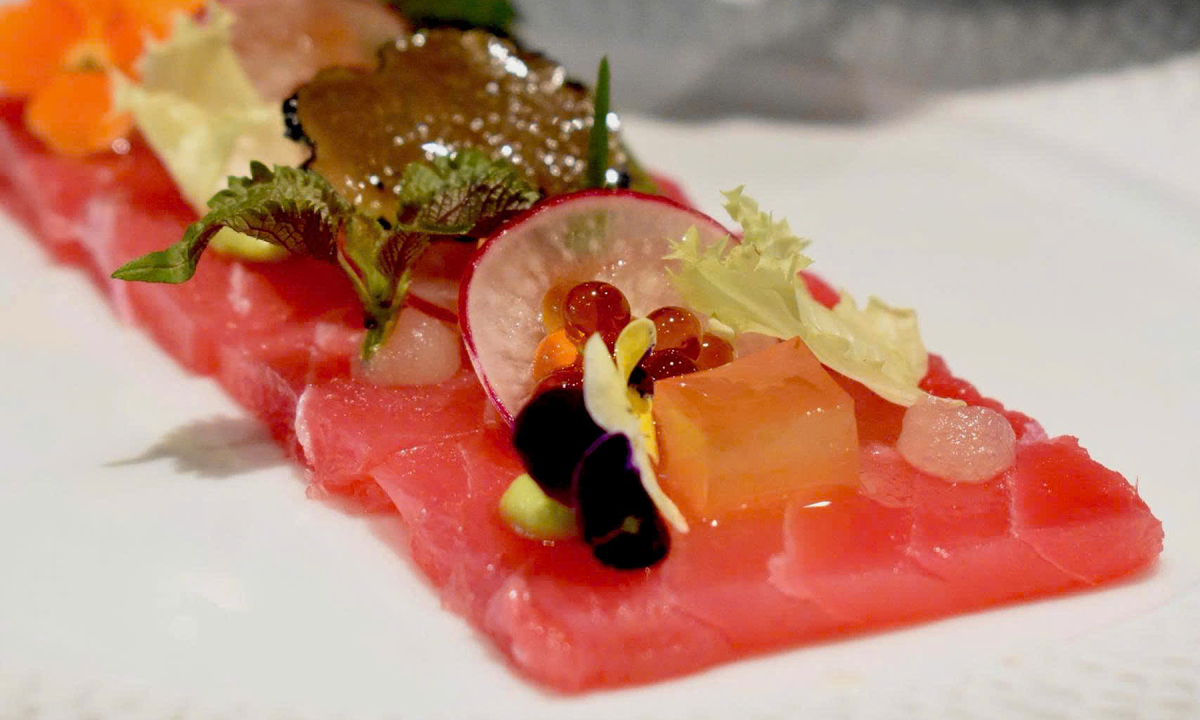
Kumquat sauce with tuna salad. Image: Hemispheres Steak and Seafood Grill.
With “localized” ingredients including Nha Trang tuna and Quang An kumquat, the chef created a duo “from the sea and from the land”. Chef Nam Nguyen of Hemispheres Steak and Seafood Grill said the dish is an appreciation of Vietnamese ingredients, expressed through modern European kitchen techniques.
Fresh Nha Trang tuna, cut about 3 mm thin using the carpaccio method, helps maintain clarity, fat and freshness. The carpaccio technique was chosen because it brings out the original flavors, allowing diners to enjoy each nuance without being affected by the preparation.
“What makes the soul of the dish is not the fish, but also the Quang An kumquat sauce, the most famous kumquat farm in Hanoi, giving it a sour, spicy and fragrant taste,” chef Nam Nguyen added.
Mr. Nguyen chose juicy green kumquats, fragrant essential oils, and a sour taste. The chef and his crew tested and adjusted the spices many times to find a nuance that harmonized with the fresh fat of the tuna. The sauce is made from fresh kumquat juice, salt, sugar and a little chili sauce.
“It’s not by chance that we chose Quang An kumquats. This is a fruit associated with West Lake, where the soil is rich in alluvium, creating a unique aroma and sour taste compared to kumquats in other regions,” the chef said. Using ingredients from the surrounding area is also a way to preserve the spirit of Hanoi with local ingredients in the dishes.
In addition to the main tuna and kumquat sauce, the dish is also decorated with mashed avocado, orange kumquat jelly, lemon gel, ponzu pearls, sliced truffle mushrooms and Vietnamese herbs. “The dish not only brings international spirit to the table, but also brings Vietnamese ingredients to the main stage,” chef Nam Nguyen added.
Enjoying the ocean tuna salad appetizer, Ms. Duong Nguyen in Hanoi rated this as an outstanding dish on the menu. Kumquat sauce brings a fresh flavor, a feeling of “both familiar and strange, in harmony with tuna”. However, the dish is only an appetizer, so it may make diners “a bit regretful” because it is small and the cost is not small.
“Beautiful, eye-catching presentation” is the most impressive thing about Vu Duc diners. He also suggests that diners try pairing it with a glass of rosé instead of following the path of white wine and seafood to see a better harmony.
Ocean tuna salad is included in the 6-course set menu priced from 1.9 million VND or in the restaurant’s à-la-carte menu launched in October, priced from 420,000 VND.
https://gitflic.ru/user/majorvega
https://profile.ameba.jp/rctyorcsrc
https://www.rwaq.org/users/dwtualmtsr-20251210034139
https://community.ops.io/nolan_coopr/casino-bonus-policies-in-2025-355n
https://www.myminifactory.com/users/tbmhbhmrmj
https://opendorse.com/profile/sakfqnfktk-sakfqnfktk
https://ziuma.com/Thread-Finding-the-Right-Information-in-a-Noisy-Digital-World
https://3dwarehouse.sketchup.com/user/b440e529-c08d-4551-903f-ba6620822072
https://routinehub.co/user/vxyzepkgdd
http://www.activewin.com/user.asp?Action=Read&UserIndex=4809841
https://www.abclinuxu.cz/lide/lukecampbell48
https://log.concept2.com/profile/2774203
https://backloggd.com/u/LoganReed29
https://liamrogers10.stck.me/profile
https://myforexreviews.com/the-four-best-forex-brokers-in-the-united-states-us/
https://www.shippingexplorer.net/en/user/gabrielwhite56/230273
https://www.4shared.com/office/Nk0wYRpvjq/Attorney_Mortgage_Options_Help.html
https://www.ferrarichat.com/forum/members/softsignal.306453/
https://dev.to/jedidiahhayes
https://promosimple.com/ps/42901/tbmhbhmrmj
https://aprenderfotografia.online/usuarios/eliasmorales74/profile/
https://telegra.ph/httpssteroidskaufencomnl-12-15-2
https://kumu.io/vatnhiapct/vatnhiapct#untitled-map
https://promosimple.com/ps/4256d/https-www-improvemarketing-co-uk
https://graph.org/httpswwwbusinesspallycommoving-appliances-checklist-12-01