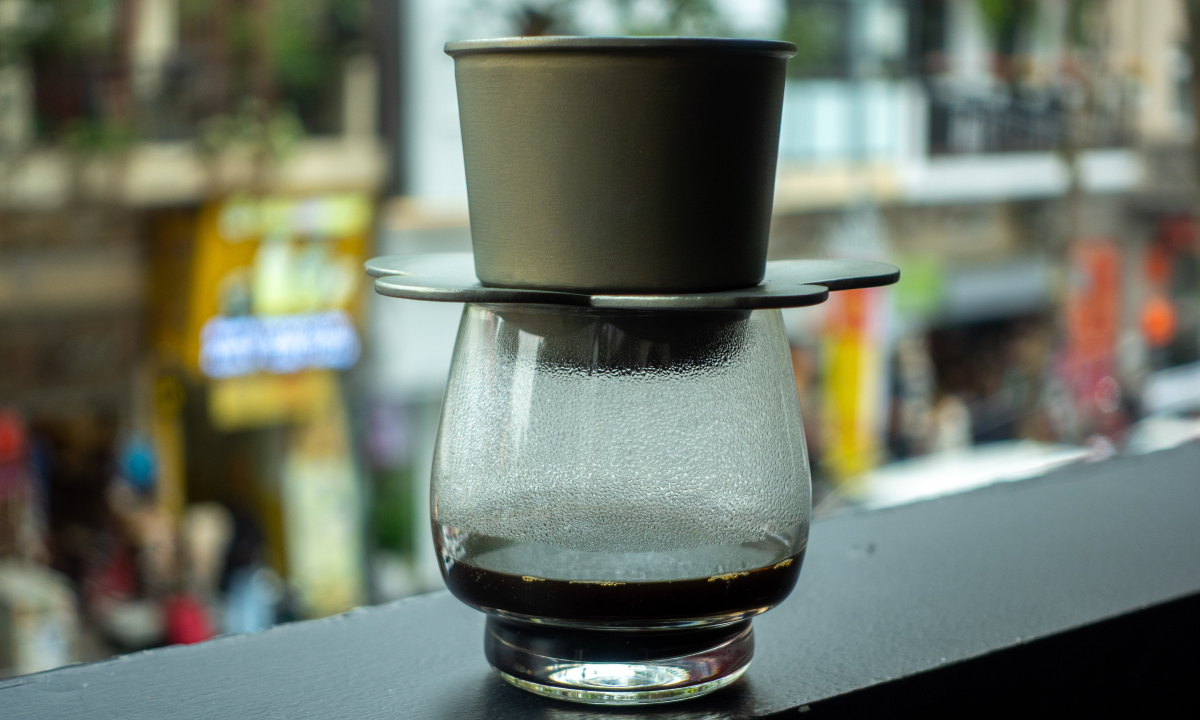
The filter made from grade 23 titanium with nine red-haired horse motifs caused controversy when sold for nearly 27 million VND.
On January 21, a specialty coffee brand in Hanoi launched a filter, introduced to be made from titanium, selling for 26.8 million VND, limited quantity of 54 pieces. The filter model is inspired by the legend of Son Tinh – Thuy Tinh, with the lid shaped like a horse with nine red feathers.
The manufacturer said that every time the filter is mixed, a part of the Son Tinh – Thuy Tinh war is recreated through the image of a sprint, leaving behind “a horse with nine red hairs slowly revealing itself, proudly”. The number of 54 cars represents 54 ethnic groups in Vietnam.
Although highly appreciating the cultural integration factor, the coffee-loving community also argues about the unacceptably high price of a filter – usually priced from several tens of thousands of dong on the market.
“Live long enough to see a filter cost more than 26 million VND,” commented Mr. Le Long. Meanwhile, Mr. Thinh Truong believes that just a cheap aluminum filter, combined with a good grinder, is enough for a delicious cup of coffee. He also commented that the price the manufacturer offered was too high even though it was not “Gucci or Louis Vuitton”.
The prototype of the filter costs nearly 27 million VND. Image: Tu Nguyen
Mr. Hoang Minh, owner of a traditional coffee shop in Hanoi, said it was “very shocking” that the filter was sold at such a high price.
“A good filter helps make better coffee, but there’s no way it can go from 6 points to 10 points,” he said, saying the Titanium filter is more decorative than practical.
According to him, the material used to make the filter can affect the quality of the finished product if it retains heat well. In addition, the way of processing is also important to ensure the water flow is fully extracted, without clogging the filter or flowing too fast.
According to experience, the filter is quite comfortable to hold, depending on the lighting conditions it will create a number of different color ranges. The bottom of the filter is made thicker than the top, helping to increase heat retention during extraction. The finished coffee cup has a good flavor when brewed, mainly from the beans, not entirely from the titanium material.
Mr. Vu Dinh Tu, brand owner of the 26.8 million VND filter, said that mixed opinions about a newly launched product are normal. The target customer group includes people with aesthetic taste, who like to collect and experience new things. After three days of being on sale, a number of titanium filters had owners.
According to him, the selling price accurately reflects costs from research and product development to material quality and manufacturing techniques. Titanium grade 23 is a high-grade titanium, often used in aerospace, heavy industry, and medicine. Durable material, good bearing capacity, less damaged over time. The medical industry uses this material for long-term placement in the patient’s body.
“If you use metal materials in coffee making tools, you must pay close attention to safety issues, otherwise you will easily encounter the problem of metal contamination,” he said.
The official filter set is placed in a gift box. Image: NVCC
According to him, many cheap aluminum filters sold widely on the market are made from recycled aluminum, often containing heavy metals. When the anode layer (oxide that protects the aluminum surface) is lost, coffee can come into direct contact with bare aluminum, causing concern about the risk of metal migration during long-term use.
The brand owner said he gives a lot of consideration to the material used to make the filter. The team spent 10 months researching and testing. Initially, the production team thought of gold and silver, but the “flashy, shiny” appearance did not match the design philosophy.
The group considered using bronze (derived from the idea of Vietnamese bronze drums), testing the method of casting dewaxed bronze (shaping it with wax, pouring bronze in and then sucking the wax out). However, the group also eliminated copper material because it is difficult to control lead levels. When making coffee with a copper filter, the scent is more or less affected.
In the end, the team decided to choose titanium – a durable, future-oriented material. Mr. Tu hopes that the filter will be passed down through many generations.
Around the world, some companies specializing in providing camping equipment also use titanium for coffee making products. Most use grade 1 titanium with a ratio of about 97% pure titanium, so the price is cheaper, about 2 million VND for a 400 ml thermos.
Titanium is classified by “grade” to serve different uses, not the higher the better or the more expensive. The value of the material depends on technical requirements and application standards, not on the grade number. However, grades 5 and 23 belong to the titanium group with high technical requirements, used in aviation, biomedicine and specific applications. Therefore, production and inspection costs are significantly higher than pure titanium grades commonly used in household appliances (1-4).
According to Mr. Tu, investing time and money to research and make a product and only sell 54 units – maybe not even all of them – is not economically effective. However, this is the conquest of materials that he aims for when continuously innovating traditional filters.
Before that, he also launched a plastic filter – a material that has long been used by many coffee equipment manufacturers – but also faced controversy from traditional filter lovers. He hopes that next year he can continue to research and develop new materials and shapes for the familiar filter, contributing to bringing Vietnamese coffee culture to international friends.