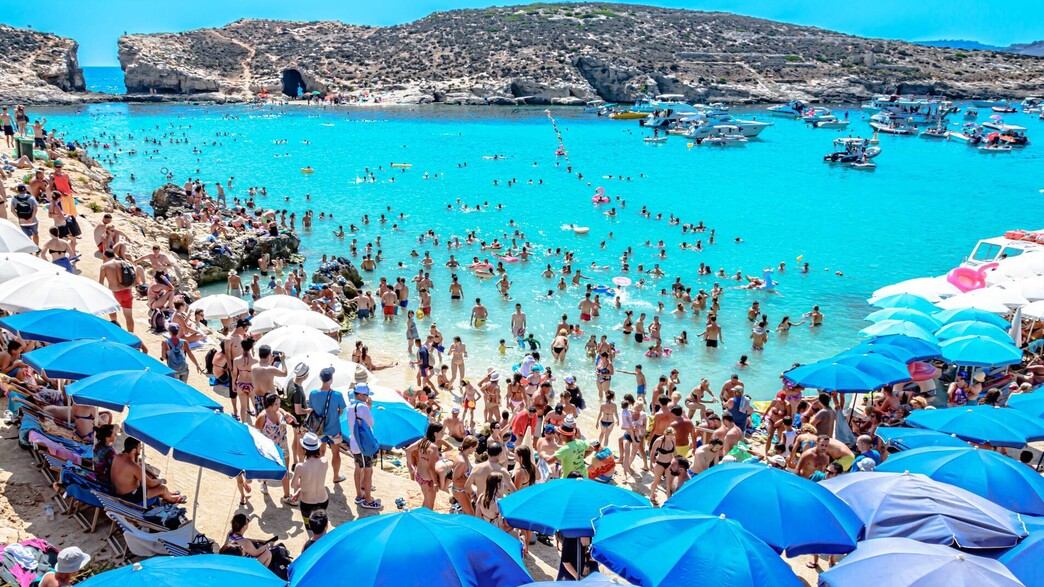
The United Kingdom’s Foreign Office, the (FCDO), has updated the travel guidelines for Malta and clarifies that the possibility of a terrorist attack in the island nation cannot be ruled out against the background of the ongoing global threat. The updated version, published on February 9, 2026, is part of a wider move by the UK government to expand its “global risk” warnings in relation to popular tourist destinations. According to the official clarification, the update does not stem from a concrete threat or from targeted information about planning an attack in Malta, but reflects a broader assessment of the situation regarding terrorist threats.
The announcement states that there is a possibility of “indiscriminate” attacks, that is, those that may occur in public places where foreigners and tourists congregate, such as tourist sites, recreation areas and transportation hubs. Travelers are asked to be alert and aware of their surroundings at all times.
A destination that is considered safe
Over the years, Malta has been considered one of the safest countries in Europe when it comes to terrorism. It has no history of domestic terrorism, rebellions or large-scale attacks in city centers, such as those experienced by other European capitals in the past. The most serious incident related to Malta occurred in 1985, when an EgyptAir plane was hijacked and forced to land on the island. During the rescue attempt, 60 people were killed. However, this was an incident within the framework of an international conflict, which was not directed against Malta itself or its inhabitants.
In recent years there have been two additional cases in which hijacked aircraft were diverted to Malta. In 2016, an Afriqiyah Airways plane was hijacked on an internal flight in Libya and diverted to land on the island. The kidnappers surrendered, and the grenades they claimed to be carrying turned out to be imitations. In 2019, a merchant ship was diverted towards Malta after rescuing migrants at sea, until the local security forces recaptured the vessel.
Security analysts tend to rate the overall level of terrorism risk in Malta as low to medium. The risk of domestic terrorism is defined as very low, since there are no active extremist organizations in the country. However, Malta’s location as a major tourist destination in the Mediterranean and as a significant maritime junction places it within the wider context of cross-border threats.
There is no concrete threat
It is important to emphasize that no targeted or immediate threat to Malta has been identified. Other international bodies also continue to rate the island at the lowest risk level. The United States Department of State and the Irish Department of Foreign Affairs classify Malta at the lowest warning level and recommend that only routine precautions be taken. The Israeli MAL also classifies Malta at warning level 1, the lowest, that is, without a concrete travel warning.
A security presence is evident in the area itself, especially in busy tourist areas. In the national risk assessment report recently published by the authorities in Malta, it was stated that the main concern is the financing of terrorism, that is, the transfer of funds through the financial system to terrorist organizations, more than the probability of a physical attack on the territory of the country.
Although the chance of being caught up in a terrorist incident is defined as low, the British Foreign Office emphasizes that it is recommended to be vigilant in public spaces as part of the general precautionary guidelines currently used in relation to most European countries. In practice, for most visitors to Malta, everyday risks including pickpocketing in crowded areas are considered far more likely than the threat of terrorism.
https://mostbet-tajik.com/slots
https://mostbet-tajik.com/support
https://mostbet-tajik.com/withdrawal
https://mostbet-pakist.com
https://mostbet-pakist.com/apk
https://mostbet-pakist.com/app
https://mostbet-pakist.com/bonus
https://mostbet-pakist.com/casino
https://mostbet-pakist.com/deposit
https://mostbet-pakist.com/download
https://mostbet-pakist.com/faq
https://mostbet-pakist.com/legal
https://mostbet-pakist.com/login
https://mostbet-pakist.com/mirror
https://mostbet-pakist.com/mobile
https://mostbet-pakist.com/payments
https://mostbet-pakist.com/problems
https://mostbet-pakist.com/promocodes
https://mostbet-pakist.com/reviews
https://mostbet-pakist.com/slots
https://mostbet-pakist.com/support
https://mostbet-pakist.com/withdrawal
https://mostbet-bang.com
https://mostbet-bang.com/apk
https://mostbet-bang.com/app