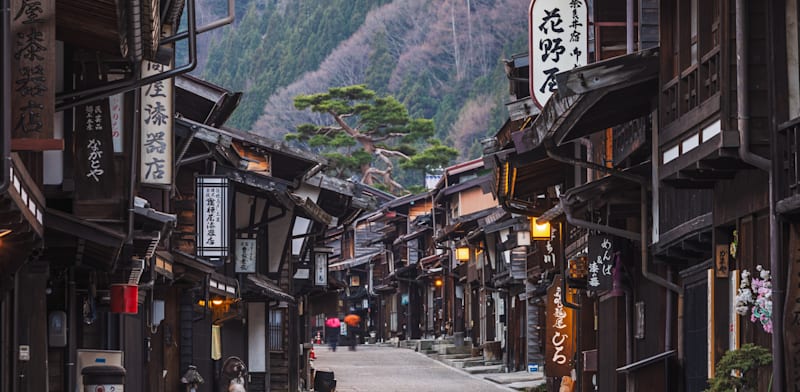
When Melanie Oy and Christian Peloso-Serrano received the keys to their new home in the Japanese port city of Uno, they were stunned.
The house looks impressive, standing out from the main road with its traditional wooden architecture and curved roof tiles. The sales agent said that it is believed to be an old tea ceremony school built in the 1950s and it looks like a castle on the hill.
Then they went inside.
The garden was deserted and the kitchen smelled of mildew. They later discovered termites under the tatami mats. This is what happens when you buy a house that’s been empty for seven years – after you’ve toured it via FaceTime.
“The process is not for the faint of heart,” said Oi, 47.
The couple, who moved from Portland, Oregon, are part of a growing number of foreigners buying Japan’s “akiya” – a word that translates to empty or vacant houses. There are more than nine million such properties, which remain unpopular with locals who prefer new homes in central areas. Some towns even tried to give them away for free.
But for foreigners who don’t shy away from renovation, buying an akia is an opportunity to own something permanent in Japan. Against the weak yen, many of them can be relatively affordable.
Oi used to live in Japan and always wanted to run a guest house. Peloso-Serrano, 30, dreamed of living in the Japanese countryside. They were looking for something that could be used as both a home and a hostel, and the property of about 185 square meters fit the bill.
Traditional houses in one of Japan’s suburbs / Photo: Shutterstock
Many buyers choose properties and buy them remotely. The tours are conducted virtually and contracts can be signed through a proxy. The day buyers pick up the keys may be their first day inside the building.
Oi and Peloso-Serrano paid $91,000 and transferred the entire amount in cash because foreigners cannot take out loans.
What is behind the door? From crumbling houses to historic gems
“We arrived the night before and we were so stressed,” Peloso-Serrano said. “I mean, this could be the biggest mistake we’ve ever made.”
The quality varies from house to house. There are hundred-year-old historical gems in the countryside, or simple houses in the suburbs. Sometimes the roof collapses and sometimes these are well maintained properties whose owners just left.
Buyers often inherit the seller’s belongings as well. For Tony Gallardo and his partner, David Carroll, closing a deal on a $7,000 property as far away as Australia was the easy part. More challenging was the emotional cost of disposing of the belongings of the previous deceased owner.
Family photos were still on the wall and notes were tucked around a calendar. Japan’s garbage disposal laws required them to hire a licensed company to dispose of everything.
The heirs who receive the property have an incentive to keep the houses standing, since demolishing them involves paying a higher tax. The crumbling structures may attract pests and become an environmental nuisance.
Take Kurosawa and Joey Stockermans, two friends, saw Ekea as a way to own property when they felt that real estate prices in their home countries, the US and Canada, were too expensive for them.
The duo, who met while studying in Tokyo, spent $40,000 on their first akaya in the hot spring town of Beppu. They destroyed walls they were not supposed to destroy, with the intention of renovating the house themselves. When they realized they were getting into something bigger than them, they spent an additional $40,000 on renovations through a contractor.
“All my friends in Tokyo say to me, ‘Why the hell are you buying this piece of junk?'” Kurosawa said.
A platform that connects foreigners to opportunities in Japan
So far they have already bought six properties. In 2023, they co-founded AkiyaMart, a platform that helps foreigners find and buy real estate in Japan. They say AkiyaMart has grown from about 8,000 users to more than 60,000 in the past year, and they’ve directly helped more than 150 clients, including Oi and Peloso-Serrano.
Buying an abandoned property in Japan is not a way to obtain residency. Foreign owners can usually only stay for the duration of their tourist visa. Applying for a “business manager” visa used to be a popular route to becoming a resident, but that route became more difficult last year after the country raised the minimum capital required to qualify.
Traditional living room with access to the garden designed by Karesansui / Photo: Shutterstock
Cultural differences may also be complex. Japanese sellers can be offended by attempts to negotiate, said Haruka Ueda, who advises buyers.
Sometimes they are also afraid to sell to foreigners. Deborah and Jason Brown had to submit a letter of intent before they could inspect a 150-year-old house that had been empty for 12 years. The columns of the house were missing and some of the floorboards showed signs of decay. Many renovations were required to transform what used to be a sake brewery into a habitable place.
Traditional bedroom with tatami flooring and shoji screens in Onsen, Japan / Photo: Shutterstock
They received approval for the purchase with one condition: a promise to stay in the country for at least six months a year. Fortunately that really was their plan. “We have a full life in Australia and a full life there,” said Deborah. “This is a big commitment for us.” When in town, the Browns go to the community center to help clean the river and read English books to the kindergarteners.
Oi and Peloso-Serrano opened the doors of Sadou Inn last April. The neighbors helped them clean the windows and weed the garden. A friend recommended a carpenter who helped with the termites and the more complex renovations. Also, the couple maintains an open door policy for curious neighbors.
“When you tell them you’ve invested in their community,” Oi said, “they welcome you.”
For your attention: The Globes system strives for a diverse, relevant and respectful discourse in accordance with the code of ethics that appears in the trust report according to which we operate. Expressions of violence, racism, incitement or any other inappropriate discourse are filtered out automatically and will not be published on the site.
https://codepen.io/Paula-Carlisle/pen/JoROMva
https://follow.it/udacny-i-zanos-v-biskeke-i-cestny-i-otzy-v-ob-igre?pub
https://imdeprollc.wixsite.com/my-site-2
https://medium.com/@fertilityfusion
https://justpaste.me/7uWu1
https://bestessaysservices.com
https://follow.it/evernavarro?pub
https://peatix.com/us/event/4951456
https://hanson.net/users/IlyaBondarev
https://medium.com/@dalemeade/top-7-companies-leading-ai-agents-for-enterprise-automation-148eb13fe4ce
https://www.molecularcloud.org/p/-9726
https://servodriven.com/forums/users/chiefmale60/
https://biomolecula.ru/authors/133900
https://start.me/w/eKorBz
https://velog.io/@webbinsight/How-Does-Thesis-Writing-Contribute-to-Academic-Development
https://uberant.com/article/2157619-praga-przewodnik-twoja-brama-do-magiczej-stolicy-czech/
https://www.pearltrees.com/laurenbender/item788519698
https://www.gaiaonline.com/profiles/daniilmalyshev3/50655107/
https://atomcraft.ru/user/spaintie89/
http://csmouse.com/user/dadquill3/
https://writexo.com/share/c2588034983f
https://www.thenewangel-nh.co.uk/the-psychology-behind-why-we-love-the-holidays-so-much/
https://stackoverflow.qastan.be/?qa=user/beadthroat76
https://alenasamples.livejournal.com/7035.html
https://dev.to/wilfredovarela/mi-recomendacion-de-catracho-en-pinup-si-gane-pisto-y-retire-rapido-sin-tanto-tramite-2f1a