An Nvidia representative said that AI is completely changing the chip design process, turning complex tasks that require a team of engineers to work for months to be completed overnight.
In a video chat with Jeff Dean, chief scientist at Google, recently posted on Nvidia’s website, William Dally, Nvidia’s Chief Scientific Officer, revealed how the company brings AI into every stage of chip design to minimize product development time.
Specifically, previously, porting a standard cell library to a new production process required 8 engineers in 10 months. Now Nvidia has replaced it with the NB-Cell reinforcement learning system, allowing a GPU graphics processor to complete that entire workload overnight.
The company also develops large in-house language models such as Chip Nemo and Bug Nemo, trained on proprietary design documents from every GPU they have ever produced. “The Nemo chip is like a patient mentor,” he said. Instead of bothering experienced engineers, a group of young designers can ask Chip Nemo questions to learn how complex hardware blocks work. This frees up senior engineers’ resources to focus on more important tasks.
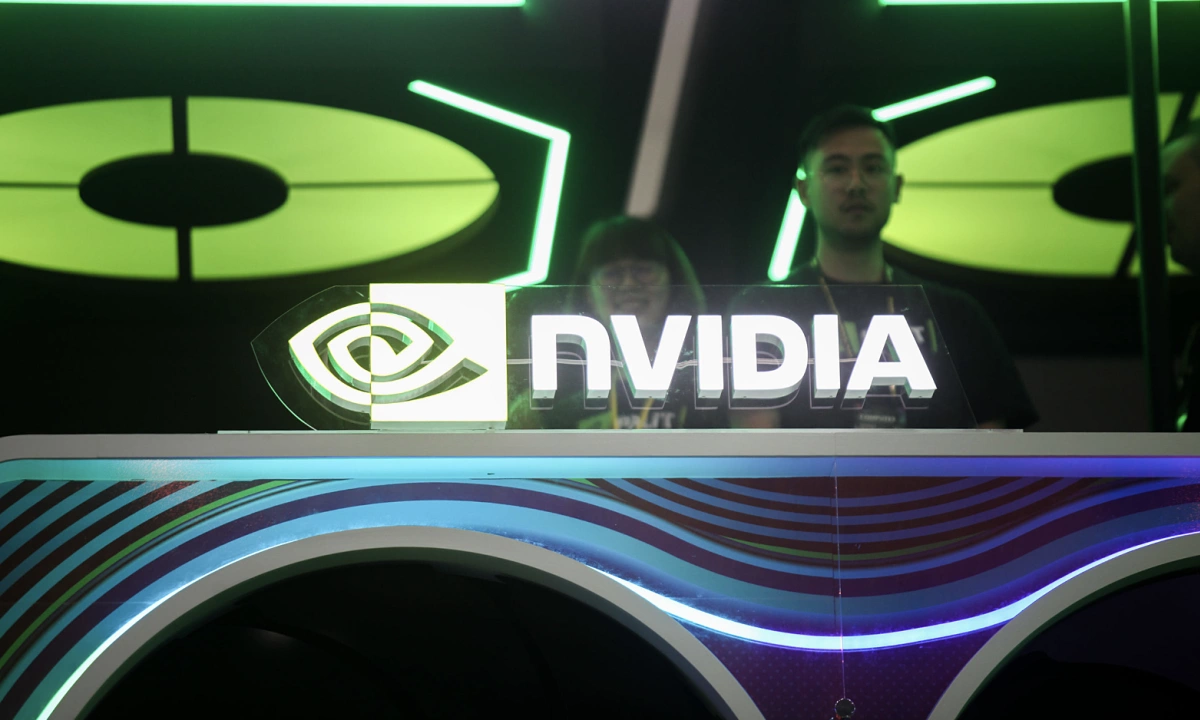
Nvidia logo at Computex 2024. Photo: Khuong Nha
Not stopping at support, AI also participates directly in optimizing circuit design through trial and error method. The system is capable of coming up with design options that Nvidia’s Chief Scientific Officer describes as “completely bizarre” that humans would never have thought of. Some of these designs are 20% to 30% better in area, power and performance than human designs.
AI is also applied in testing, one of the longest phases of the chip development cycle, to prove designs work stably in the shortest time.
Despite progress in productivity, William Dally asserts that artificial intelligence is still not really close to being able to design a processor entirely on its own. “I’d love to get to the stage where I can just say ‘design me a new GPU’, but we’re a long way from that goal,” he said.
In the long term, Nvidia predicts the chip development process will shift to a multi-agent model, where specialized AI systems work together to handle each part of the design, similar to how teams of human engineers operate today.
https://kandiyohirecords.us/
https://kandiyohirecords.us/arrest-records
https://kandiyohirecords.us/court-records
https://kandiyohirecords.us/criminal-records
https://kandiyohirecords.us/divorce-records
https://kandiyohirecords.us/inmate-search
https://kandiyohirecords.us/property-records
https://kandiyohirecords.us/warrant-search
https://kayrecords.us/
https://kayrecords.us/arrest-records
https://kayrecords.us/court-records
https://kayrecords.us/criminal-records
https://kayrecords.us/divorce-records
https://kayrecords.us/inmate-search
https://kayrecords.us/property-records
https://kayrecords.us/warrant-search
https://kenaipeninsularecords.us/
https://kenaipeninsularecords.us/arrest-records
https://kenaipeninsularecords.us/court-records
https://kenaipeninsularecords.us/criminal-records
https://kenaipeninsularecords.us/divorce-records
https://kenaipeninsularecords.us/inmate-search
https://kenaipeninsularecords.us/property-records
https://kenaipeninsularecords.us/warrant-search
https://kendallrecords.us/