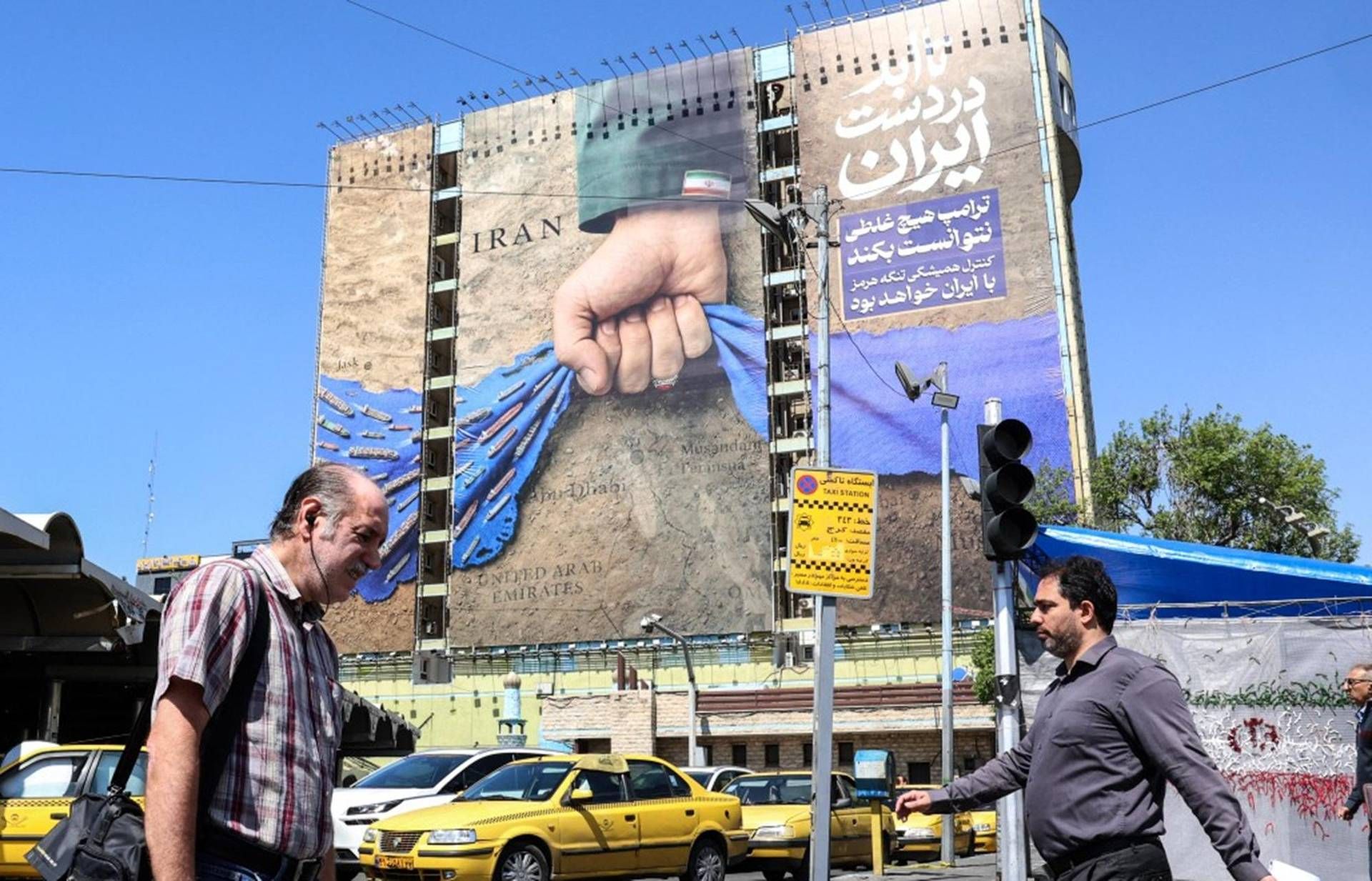
Oil, Strait of Hormuz and uranium enrichment. A window opens for a new round of talks between The United States and Iran to put an end to the war, frozen for now by the truce which expires on April 21st. Meanwhile the key issues – on which the agreement in Islamabad stalled – do not change in the framework that Donald Trump has outlined in the last few hours with his usual hurricane of declarations. “The war is almost over, a new truce is not necessary”, is the summary of the position of the president of the United States, who returned to attack Prime Minister Giorgia Meloni and the NATO allies in general for the second time in two days: “Italy takes a lot of oil from Hormuz. We pay billions for NATO, but when we need the allies they don’t help us”.
Hormuz stalemate, the positions of Tehran and Washington
On the cross-strait front, the situation is currently in a stalemate phase: Hormuz remains blocked by the United States and Tehran continues to threaten heavy retaliation – the latest of which is a possible stop to commercial traffic in the Red Sea – if the United States were to continue its naval blockade against its ports, thus compromising the already fragile ceasefire in force since 8 April.
From the Iranian sidethe military advisor to Iranian Supreme Leader Mojtaba Khamenei warned that Iran would sink American ships in the Strait if the United States decided to “police” this crucial hub for maritime traffic.
“Trump wants to become the policeman of the Strait of Hormuz. Is this really your task? Is this the task of an army as powerful as that of the United States?”, thundered Mohsen Rezaei, former commander in chief of the Iranian Revolutionary Guards, now appointed military advisor by Khamenei, on state TV in recent hours. “These ships of yours will be sunk by our first missiles and have created a great danger for the US military. They can definitely be hit by our missiles and we can destroy them,” threatened Rezaei, who appeared in military uniform on the state broadcaster.
According to General Ali Abdollahi, commander of the Khatam al-Anbiya Central Headquarters, maintaining restrictions and creating “insecurity for Iranian merchant ships and oil tankers” they would constitute “the prelude” to the breaking of the truce.
In response, the general added in statements reported by state TV, Tehran could therefore react by blocking maritime traffic along the main routes in the region. “The powerful armed forces of the Islamic Republic will not allow any exports or imports to the Persian Gulf, the Gulf of Oman or the Red Sea,” he warned.
But that’s not all. Any external intervention on cross-Strait security risks “further complicating the situation”then warned the spokesperson of the Iranian Foreign Ministry, Esmail Baghaei, commenting on the hypothesis of a European coalition to guarantee maritime security in the area two days after the video conference in Paris. Responding to a question on the initiatives of the EU and some countries, including Germany, also available for direct talks with Tehran on the issue, Baghaei – as reported by the Irna news agency – reiterated that the security of the Strait has been guaranteed by Iran “for decades”.
“In these 40 days, the only reason why security in this waterway has been at risk was the war imposed by the United States and the Zionist regime,” said the spokesperson, who then warned against new external initiatives. “I believe that any movement and any intervention in regional affairs will only further complicate the situation,” he said.
Baghaei added that Tehran looks favorably on the fact that “many European countries have the wisdom not to fall into the trap” set by Washington and Israel, underlining that the Islamic Republic, together with the countries of the region, is able to guarantee the security of the Strait of Hormuz “provided that the interventions and wars imposed by the United States in the region cease”.
For now, the hypothesis of a European intervention seems to be the only point of agreement between the USA and Iran. According to the American president Donald Trump the alleged European plan to reopen the Strait of Hormuz without the involvement of the United States, revealed in preview by the Wall Street Journal, would indeed be “very sad”. “The Strait of Hormuz is already reopening, there are ships entering and exiting – he told Fox News -. But how can you stay with a group of countries with this attitude? Look at Greenland: we needed it to protect the world from Russia and China”.
“China – the tycoon added – is very happy that I am definitively reopening the Strait of Hormuz. I am also doing it for them and for the whole world”.
The uranium node
No major changes in positions on either uranium node. While the USA continues to ask for the dismantling of nuclear plants and the removal of stocks of 60% enriched uranium from the country, in the last few hours the Iranian Foreign Ministry has reiterated the Tehran’s “indisputable” right to enrich uranium, to a level which it has nevertheless defined as “negotiable”. The right to civil nuclear power cannot be “revoked under pressure or through war”, the spokesperson then said.
“Regarding the level and type of enrichment, we have always said that the issue was negotiable. We insisted that Iran should be able to continue enrichment according to its needs,” he added.
More soldiers in the region, the new US strategy
To increase pressure on Iran, the United States is sending approximately 10,000 military personnel and several warships in the Middle EastAmerican officials revealed to the Washington Post, according to which the move represents the heart of the new administration strategy led by Trump, which strengthens its presence in the region. The deployment – which includes aircraft carriers and Marine units – adds to the approximately 50,000 US troops already operating in the area, giving Washington more options should negotiations fail, including possible strikes or even ground operations.
Among the arriving forces – writes the newspaper – are around 6,000 men on board the USS George HW Bush aircraft carrier and its naval group, as well as around 4,200 soldiers from the Boxer Amphibious Ready Group with the 11th Marine Expeditionary Unit. The military reinforcement coincides with the expiry of the two-week truce and integrates with the units already present, including the aircraft carriers USS Abraham Lincoln and USS Gerald R. Ford. According to military sources, the objective is to guarantee field commanders greater operational flexibility in the event that the confrontation with Tehran were to intensify.
New round of talks in Islamabad, the opening
After the rumors chased by the media, the White House has meanwhile confirmed that the United States is discussing a possible second round of negotiations with Iran which, if confirmed, would most likely take place again a Islamabad. “Discussions like this take place, but nothing is official until we confirm it,” said spokeswoman Karoline Leavitt, expressing optimism about the prospect of an agreement. Pakistan “is the only mediator” in these negotiationshe added.
“I saw some reports, again, incorrect reports, that we had formally requested an extension of the ceasefire. This is not true,” Leavitt then clarified, answering journalists’ questions and reiterating that “right now we remain very committed to these negotiations, these talks.”
“You heard directly from the vice president and the president this week that these conversations are productive and ongoing, and that is where we are now,” Leavitt added, assuring that the United States “feels confident about the prospects for a deal” with Iran. Then, when asked by a reporter whether a potential second round of talks with Iran would be held in Islamabad again, the spokeswoman responded that the negotiations “will most likely be held in the same place as the previous time.”
United States and Iran they could therefore meet again as early as next weekexplains Sky News, which cites a similar indiscretion from the Wall Street Journal, speaking of an agreement “in principle” for a new meeting, even if the date and logistical details remain to be defined. AND there would also be an “agreement in principle” to extend the ceasefire between the two countries reports the Associated Press, citing regional sources, according to which mediators are closer to extending the fragile truce before it expires on April 21, in an attempt to avoid a new escalation.
In particular, the United States and Iran are considering extending the truce by two weeks, various international media reports including al-Arabiya, which relaunch a Bloomberg story. According to a person informed of the facts cited by the news agency, the mediators are working to start technical talks aimed at resolving the most delicate issues of the confrontation.
https://tollandrecords.us/warrant-search
https://tuolumnerecords.us/
https://tuolumnerecords.us/arrest-records
https://tuolumnerecords.us/court-records
https://tuolumnerecords.us/criminal-records
https://tuolumnerecords.us/divorce-records
https://tuolumnerecords.us/inmate-search
https://tuolumnerecords.us/property-records
https://tuolumnerecords.us/warrant-search
https://tuscolarecords.us/
https://tuscolarecords.us/arrest-records
https://tuscolarecords.us/court-records
https://tuscolarecords.us/criminal-records
https://tuscolarecords.us/divorce-records
https://tuscolarecords.us/inmate-search
https://tuscolarecords.us/property-records
https://tuscolarecords.us/warrant-search
https://unionrecords.us/
https://unionrecords.us/arrest-records
https://unionrecords.us/court-records
https://unionrecords.us/criminal-records
https://unionrecords.us/divorce-records
https://unionrecords.us/inmate-search
https://unionrecords.us/property-records
https://unionrecords.us/warrant-search