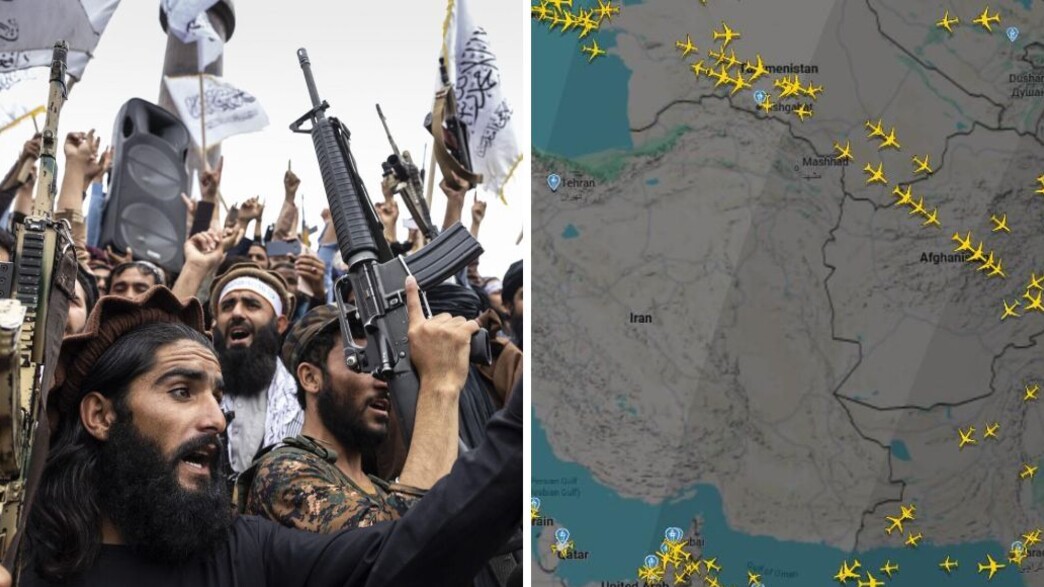
While the global map of conflicts continues to change, passengers on the airlines between Europe and Asia discover that their summer vacation has become more expensive by thousands of shekels. However, contrary to the initial estimates, it is not only the fuel prices that push the airlines to the wall. An investigation by the German “Der Spiegel” magazine reveals a cynical geopolitical reality: the Taliban regime in Afghanistan is taking advantage of the closure of airspace in Russia and Iran to collect exorbitant transit fees, which turn Kabul into an unexpected profit center at the expense of the Western traveler.
The air bottleneck
The dramatic changes in flight routes are a consequence of the security reality in 2026. Since the invasion of Ukraine, Russian skies have remained closed to European airlines, and at the same time, the war across the Middle East has made flying over Iran and the Persian Gulf impossible for many of them. As a result, airlines are forced to crowd into a “narrow corridor” that runs through Turkey, Azerbaijan, Turkmenistan and Afghanistan.
According to the latest aviation data, the number of daily flights crossing Afghanistan’s airspace has jumped fivefold since the withdrawal of Western forces in 2021, reaching an average of about 280 flights a day. The Taliban recognized the West’s complete dependence on this route and raised the transit fees to an amount of approximately NIS 2,600 ($700) per plane. This is one of the highest rates in the world, especially considering the fact that the country does not provide basic aviation services in return.
The most worrying aspect for aircrews is the complete absence of Air Traffic Control (ATC) services in Afghanistan. Experts in the international organization of aviation experts OPS Group describe a reality in which flight controllers from neighboring countries, such as Turkmenistan, say goodbye to pilots at the Afghan border with the words “radar activity suspended, good night”. From this point on, the responsibility for flight safety passes exclusively to the pilots. In Afghan airspace, modern passenger planes are forced to operate by old-fashioned methods: manually maintaining time differences of 15 minutes between Plane to plane and using radio communication networks to update each other on position and altitude. For pilots of many European companies, this is a challenge that requires special training in simulators, since any mistake in coordination could lead to disaster in space where there is no supervising electronic eye.
The surge in prices and the risk of landing
The financial burden of the “Taliban tolls” and the excess fuel required for these routes is passed on directly to the consumer. Ticket prices on the main routes have reached high amounts, and data from the consulting company Alton Aviation show that a flight from Bangkok to Frankfurt, which previously cost about NIS 1,500, has jumped to a price of about NIS 9,150. A ticket from Hong Kong to London reached a price of about NIS 10,600, and a flight from Sydney to London already crosses the NIS 12,300 mark.
Beyond the economic costs, a significant security risk hovers over these flights. While the airlines state that in the event of a serious technical fault they will land at airports in Afghanistan, security experts warn that the reality on the ground is different. Due to the lack of infrastructure and the sensitive political situation, an emergency landing in Kabul is considered a last resort and extremely dangerous, which many in the industry compare to a forced landing in the middle of the sea.
In the current situation, the main beneficiaries are airlines such as Turkish Airlines, which benefit from a strategic geographic location that is not subject to the same restrictions, and Chinese companies that are allowed to continue flying over Russia. For the rest of the world, the journey to the East is now through unmonitored skies, with the indirect funding of the Taliban regime. It is important to note that, in principle, Israeli planes are prohibited from flying over Afghanistan, and it is defined as a country with a very high threat level that is on the list of countries prohibited from air transit.
https://waltonrecords.us/criminal-records
https://waltonrecords.us/divorce-records
https://waltonrecords.us/inmate-search
https://waltonrecords.us/property-records
https://waltonrecords.us/warrant-search
https://wardrecords.us/
https://wardrecords.us/arrest-records
https://wardrecords.us/court-records
https://wardrecords.us/criminal-records
https://wardrecords.us/divorce-records
https://wardrecords.us/inmate-search
https://wardrecords.us/property-records
https://wardrecords.us/warrant-search
https://warrenrecords.us/
https://warrenrecords.us/arrest-records
https://warrenrecords.us/court-records
https://warrenrecords.us/criminal-records
https://warrenrecords.us/divorce-records
https://warrenrecords.us/inmate-search
https://warrenrecords.us/property-records
https://warrenrecords.us/warrant-search
https://warrickrecords.us/
https://warrickrecords.us/arrest-records
https://warrickrecords.us/court-records
https://warrickrecords.us/criminal-records