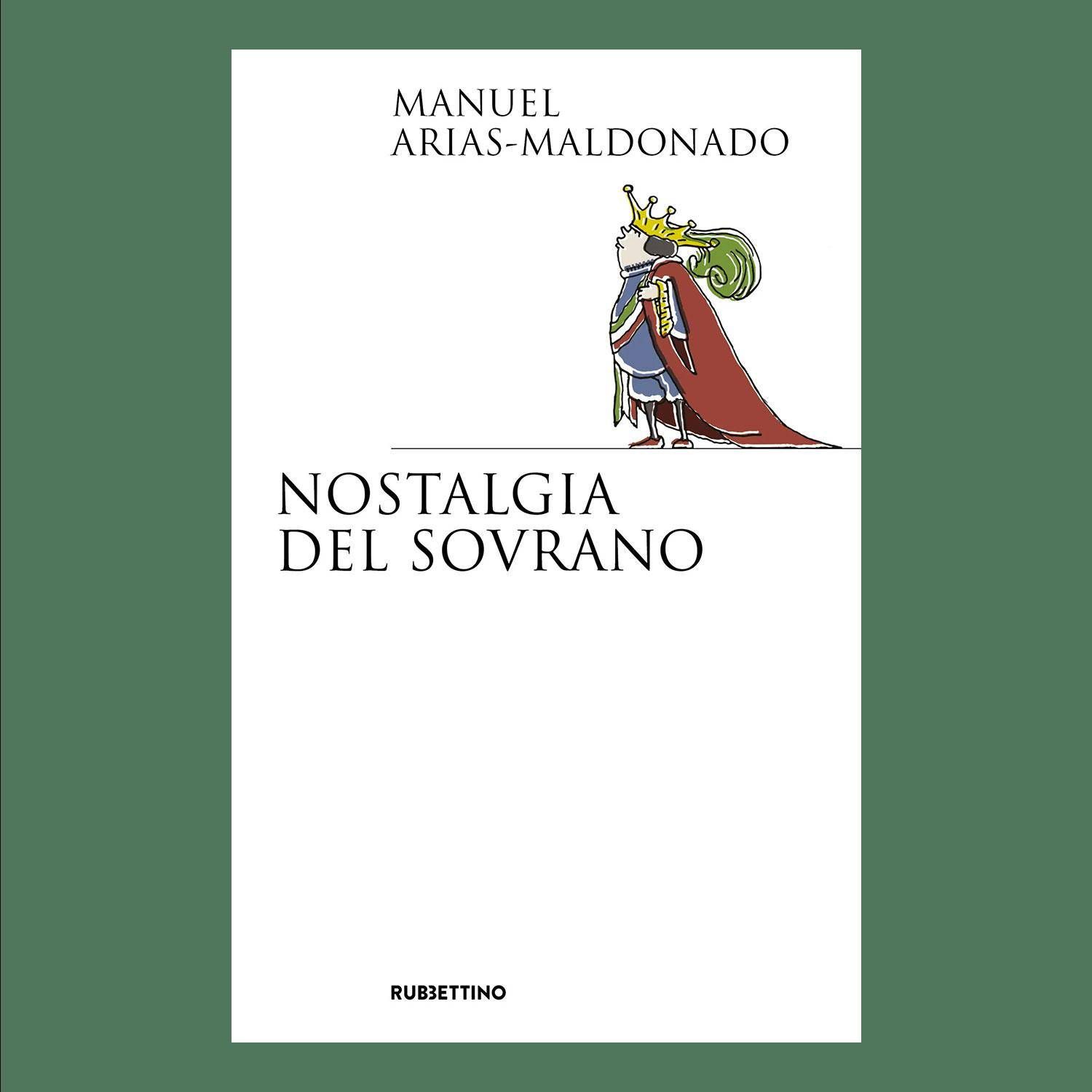
There is an increasingly widespread feeling in Western democracies: that of living in a present that can no longer imagine the future. The promises of progress, growth and continuous improvement – which have accompanied the legitimation of liberal systems for decades – seem to have cracked under the weight of economic crises, technological transformations and growing political instability. It is in this scenario that the work of the Spanish political scientist Manuel Arias-Maldonado, professor at the University of Malaga, is inserted, who in his new essay “Nostalgia of the sovereign” (Rubbettino) proposes a clear and counterintuitive interpretation: many of the contemporary political tensions do not arise only from economic or institutional problems, but from a deeper void, that of trust in the future.
According to Arias-Maldonado, this void produces a precise political effect: the return of a “nostalgia for the sovereign”, that is, the desire for a strong, unitary power, capable of imposing order where complexity dominates today. This is not, the author clarifies, a nostalgia for a specific historical era. Nobody, or almost nobody, really wants the return of absolute monarchy or old forms of authoritarianism. The point is more subtle: what re-emerges is the symbolic idea of the sovereign as a figure capable of deciding, simplifying, resolving.
“The nostalgia for the sovereign”, claims Arias-Maldonado, “is the result of a sum of different insecurities: economic, cultural and political. But also of the perception that democracy is no longer able to keep its promises”. Very different phenomena fit into this framework: the success of populism, the growth of nationalism, the distrust towards political and institutional elites. All elements which, according to the political scientist, converge in the same implicit question: who is really in charge?
A central part of the book is dedicated to the history of the concept of sovereignty. Arias-Maldonado reconstructs the transition from the theological-monarchical origins of power – in which the sovereign was an almost sacred and indivisible figure – up to democratic modernity. With modern revolutions, sovereignty does not disappear but changes location: from the king to the people. However, the author observes, this transformation does not completely eliminate the original idea of the unity of power. The notion of “general will”, developed in the modern political tradition, in fact retains a strong tendency to imagine the political body as a single subject. And it is precisely here that the tension arises with contemporary societies, which are instead pluralistic, fragmented and crossed by permanent conflicts.
According to Arias-Maldonado, one of the most persistent illusions of modern democracies is that of an omnipotent politics, capable of quickly solving complex problems if only there is sufficient will. But this idea, argues the Spanish political scientist, clashes with reality: liberal societies are not unified bodies, but spaces of plurality. And any attempt to reduce this complexity inevitably produces exclusions, conflicts or authoritarian tendencies. It is no coincidence that, during the great economic crises of recent decades, the demand for “strong” and immediate decisions has forcefully re-emerged, often accompanied by a growing intolerance towards the long periods of democratic mediation.
The theoretical response that the book proposes is that of a “tempered and skeptical sovereignty”. Not the abolition of sovereignty, but its reduction: no longer as absolute power, but as a set of limited and distributed functions. From this perspective, democracy is not the place of final decision, but of continuous conflict management. A system that does not eliminate uncertainty, but makes it governable. “There are no magic solutions,” notes Arias-Maldonado. “Democracies must improve their ability to respond to citizens’ concrete problems, but also accept plurality as a structural condition, not as a defect.”
The most radical point of the book “Nostalgia for the Sovereign” is perhaps this: democracies do not work because they promise order, but because they allow us to live in uncertainty. The “nostalgia for the sovereign” thus becomes the sign of a deeper difficulty: that of accepting a world in which no power can guarantee a completely predictable future. In this key, Manuel Arias-Maldonado’s work is not only an analysis of the contemporary political crisis, but also a reflection on the relationship between society and the future. An invitation to think of democracy not as a promise of salvation, but as a fragile balance between freedom, conflict and uncertainty.
Manuel Arias-Maldonado gave a long interview to Adnkronos on these topics.
Q: In your book you talk about “nostalgia for the sovereign” as the desire for a power capable of imposing order. How much of this nostalgia arises from the economic and social insecurity of contemporary societies, and how much from a crisis of confidence in democratic institutions?
A: “This is a fundamental question for a correct diagnosis of the current state of liberal democratic societies, which does not allow for simple answers. Those who experience anxiety in the face of uncertainty or feel deprived of material goods may be right, in the sense of having lost purchasing power or being denied access to housing or good public services, but they may also feel this way due to the intoxicating power of populist or nihilistic political discourse. At the same time, society is heterogeneous and not all social groups suffer from the same problems: there are those who react to the normative threat that technology or migration represent in their eyes, just as there are those who have seen their expectations disappointed (as in the case of younger generations). But this discontent, whose origins can be so different, flows into nostalgia for the sovereign, or for a strong power capable of responding decisively to these different requests. The feeling that democracy does not keep its promises, naturally, reinforces this tendency”.
Q: You reconstruct the genealogy of sovereignty from its theological-monarchical roots to modern democracies. How do these roots continue to influence the idea of “general will” in contemporary democracies today?
A: “These roots undoubtedly exert considerable influence, and this is of course problematic to the extent that liberal societies are ideologically, ethnically and religiously diverse: they are not inclined towards unification and consensus is achieved within them only with great difficulty. While the sovereignty of the absolute monarch had theological roots and depicted political power as omnipotent, the general will, as it emerged in Rousseau’s theory, transferred sovereignty to the people, but continued to idealize the sovereign body and the power it is capable of exercising. This in turn has influenced traditions of thought that have come to reject pluralism: from Marxism to populism, and even civic republicanism. In presidential democracies, as in the United States or France, this mythical vision of the sovereign is symbolically preserved, while in parliamentary democracies the opposite happens and every election offers the image of a fragmented body politic. Pluralism, after all, is the main obstacle to any return to the old conception of sovereignty”.
Q: Your proposal for a “tempered and skeptical sovereignty” seems to want to save democracy without falling back into the myth of strong power. What concrete tools can make this idea practicable in today’s pluralistic democracies?
A: “Normative proposals represent the most problematic part of any book on political theory: formulating a diagnosis or suggesting new concepts is easier than solving the world’s problems. Yet we must try, although both analysis and conceptual work can be of great help in understanding social phenomena. In this case, the most urgent task would be to dispel the myth of an omnipotent political power that awaits the recognition of voters or social movements before it can act decisively and solve the numerous problems that afflict societies In fact, sovereignty disappears in liberal democracies: there are only constitutional functions to perform. In international relations, as we are seeing lately, the question is different, since being sovereign means being able to defend one’s own political order, but within a democracy, the citizen must understand that the old model of sovereignty can today only operate in a coercive way – thus limiting our freedoms – and without any guarantee of success: liberal democracies work better than authoritarian regimes.
Q: What to do so that this vision spreads?
A: “There are no magic solutions, since sensitive elites and responsible voters are not created by decree. What we need, however, is clear: effective democracies in addressing the material concerns of citizens and a greater emphasis, by representatives, public intellectuals and social movements, on the irreducible plurality of liberal societies and, consequently, on the need to coexist without imposing our vision of the world on others. The latter is a fundamental lesson that, again (think of the wars of religion), we must learn”. (by Paolo Martini)
https://chandanpurup.com/zavantazhiti-parimatch-nate-andro%d1%97d-rukhomiy-r%d1%96znovid-zastosuvannya-bukmekersko%d1%97-f%d1%96rmi-apk-v%d1%96zm%d1%96t-telefon/
https://ravel-przeprowadzki.pl/przeprowadzka-polska-niemcy/verbove-na-zhurnal-bk-parimatch-v%d1%96dpov%d1%96d%d1%96/
https://site-web-fiduciaire.be/zavantazhiti-addenda-par%d1%96match-na-dro%d1%97d-a-takozh-ayfon-bezkoshtovno/
https://3dprintcustomz.com/2026/03/16/bk-parimatch-stavki-otrima%d1%94te-ta-rozpish%d1%96tsya-sport-znizhki-ta-verbne-na-zhurnal/
https://ktpsic.com/bukmekerska-adm%d1%96n%d1%96strats%d1%96ya-parimatch-by-oglyad-stavok-na-sport-otrima%d1%94te-ta-rozpish%d1%96tsya-na-of%d1%96ts%d1%96ynomu-sayt%d1%96/
http://www.energysolutions.co.th/bk-parimatch-dodatok-nate-dro%d1%97d-skachati-z-of%d1%96ts%d1%96ynogo-veb-saytu-bukmekersko%d1%97-f%d1%96rmi-parimatch-uk/
https://navigate-global.com/2026/03/15/promokod-par%d1%96-na-daniy-moment-zhovten-2025-promokodi-pari-nate-fr%d1%96bet/
https://firenspice.com/par%d1%96match-fr%d1%96bet-znizhka-parimatch-tisyacheyu-bez-re%d1%94strats%d1%96%d1%97/
https://ccdent.mk/parimatch-parimatch-bukmekerska-kontora-parimatch-zareyestruvannya-na-parimatch-z-bonusom-interaktivniy-vidpovidi-shchodo-bk/
https://navitrustlogistic.com/2026/03/17/parimatch-dagestan-zaregistrirovanie-i-verbovoe-stavki-nate-sport-a-eshche-igornyy-dom-tsepey/
https://www.0462.ua/list/554151
https://nezlamni.info/2026/03/18/sayti-parimatch-v-uzbekistan%d1%96-posadoviy-zhurnal-parimatch-com/
https://galaxephone.fr/parimatch-promokody-a-kak-priobresti-i-aktivirovat-skidki/
https://thebooks.lms.weonlite.com/parimatch-otrimayte-ta-rozpish%d1%96tsya-andro%d1%97d-kz-addenda-parimatch-kz-nate-avtomat-bezkoshtovno-rukhoma-var%d1%96ats%d1%96ya-umovi-dogovornyak
https://takween.ws/parimatch-kz-bukmekerskaya-kontora-ofitsialnyy-sayt-parimatch-kz-vo-kazakhstane-stavki-vozmite-aviasport-onlaynovyy-vo-usloviya-dogovornyak/
https://decavisa.com/addendum-parimatch-skachati-parimatch-otrimayte-ta-rozpish%d1%96tsya-androyd-bezkoshtovno-of%d1%96ts%d1%96yniy-dzerkalo/
https://descarc.ro/arhive/32291
https://daigneaultservice.com/uncategorized/zavantazhiti-dodatok-superechka-match-v%d1%96zm%d1%96t-dro%d1%97d-z-posadovogo-saytu-bezkoshtovno/
http://116.90.60.141/~ahsccom/bk-par%d1%96match/
https://thepastry.nl/igornyy-dom-parimatch-belarus-veb-obozrenie-bonusy-sloty-2025/
https://group.braindex.co.uk/?p=192305
https://navigato.io/2026/03/19/parimatch-ukra%d1%97na-verbove-ta-shche-re%d1%94strats%d1%96ya/
https://carbuy.com.ua/stavki-na-sport-interaktivniy-parimatch/
http://www.yresearch.com.au/zakachat-parimatch-na-android-bezvozmezdno-zakachat-dopolnenie-parimatch-nate-android-s-ofitsialnogo-veb-sayta-bk/
https://filtro.ru/main/276219-dodatok-parimatch-vizmit-dro%d1%97d-de-zavantazhiti-i-yak-vvesti-vizmit-budka-bez-google-play.html