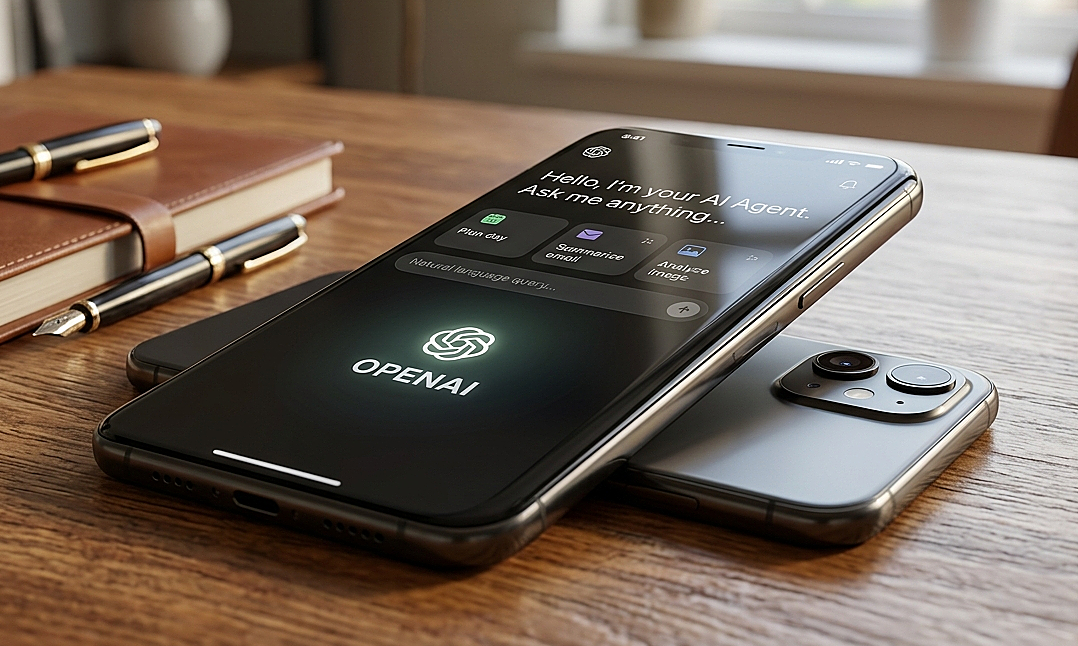
OpenAI is said to cooperate with Qualcomm and MediaTek to develop smartphones that operate through AI agents instead of traditional applications.
According to famous analyst Ming-Chi Kuo from TF International Securities, ChatGPT development company is quietly building a separate hardware ecosystem. Instead of just being an application on Apple or Google platforms, OpenAI wants to hold a terminal device like a smartphone to optimize the power of artificial intelligence.
The big difference on this smartphone compared to iPhone or Android phones is the disappearance of applications. Instead of opening each application to book a ride, order food, or check email, users will interact with an AI agent.
Mr. Kuo said that building its own hardware and operating system helps OpenAI break down the system barriers that Apple and Google are setting up. Thanks to that, AI can deeply intervene in all features of the phone without restricting access. The device will use a combination of a small AI model running directly on the device to ensure speed and privacy, and a large model in the cloud to handle complex tasks.
An AI smartphone idea from OpenAI. Image: Gemini
OpenAI’s idea is similar to the comments of Carl Pei, CEO of phone company Nothing, when he once declared “applications will eventually disappear”. To realize ambitions, according to TechCrunchOpenAI is establishing alliances with leading names in the semiconductor and manufacturing industries.
Regarding the processor, the company cooperates with MediaTek and Qualcomm to develop specialized chips, optimized for processing large language models right on the device. Luxshare, Apple’s important assembly partner, is expected to take on the main production role.
The information quickly caused Apple shares to drop 1.7% on April 27. If OpenAI truly enters the smartphone market, where Apple and Samsung hold 40% of the global market share, it will create a more fierce competition. Owning your own phone helps Sam Altman’s company access a huge source of data about users’ habits and usage contexts, something that is difficult to do with an additional installed application. With the number of weekly ChatGPT users approaching the one billion mark, this is considered a reasonable step for OpenAI to expand its influence.
According to analyst Ming-Chi Kuo, the technical specifications and list of component suppliers for the project will be completed by the end of 2026 or early 2027, before mass production in early 2028.
Previously, Chris Lehane, OpenAI’s global public relations director, revealed that the company “is on track to announce its first hardware product in the second half of 2026”. Many sources predicted that this device could be a wireless headset model with integrated AI, before the “super phone” was officially revealed.
OpenAI’s participation in the hardware field, in parallel with Amazon’s plan to re-enter the phone market, shows that smartphones will still play a central role in people’s lives, but in a new, smarter form and free from the constraints of traditional app stores.
https://udenlandskecasino.it.com/