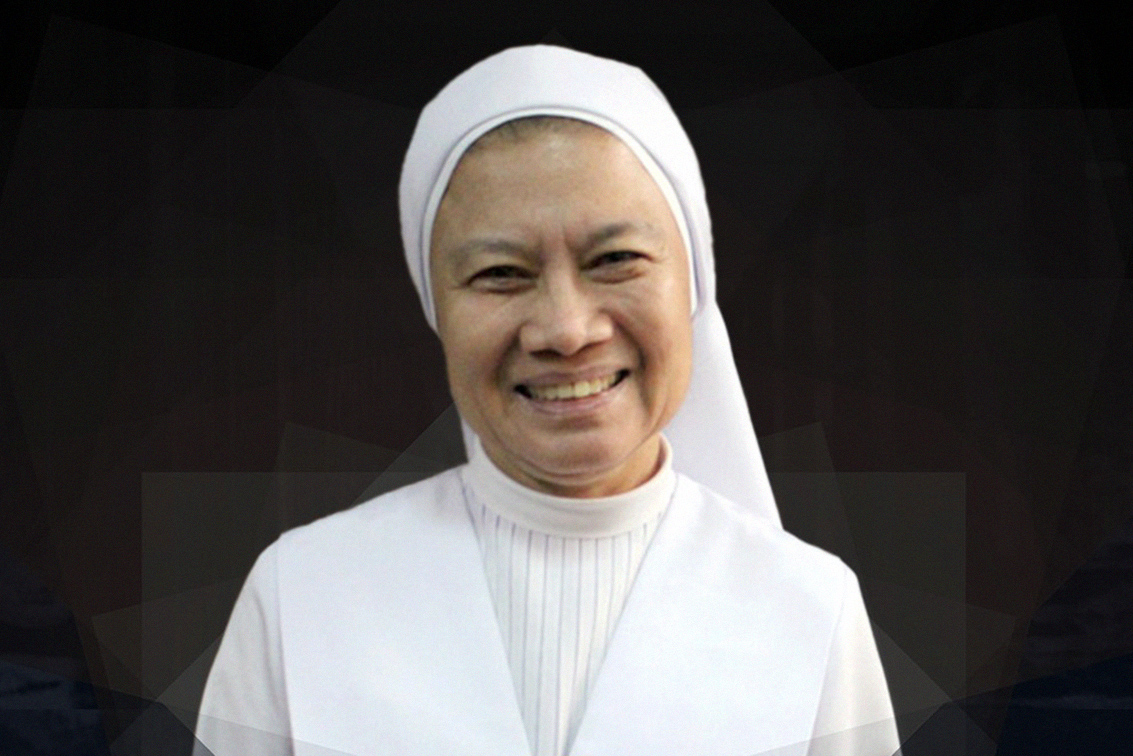
MANILA, Philippines — Sister Eva Fidela Maamo, a Catholic nun and surgeon known throughout the Philippines as the “Healing Nun” for her decades of providing free medical care to the poor, has died at the age of 85. She passed away on April 14, according to Nossa Senhora da Paz Hospital, which announced her death the following day. In the 1970s, Sister Eva performed surgery on an indigenous woman using a bamboo table and coconut water to keep the patient alive in Lake Sebu in the southern Philippines. Urgent action was necessary because getting to the nearest hospital required hours of walking and crossing several rivers.
Her life of service and sacrifice had a profound impact on people, particularly the poor who benefited most from the nun’s medical and pastoral care. “I remember her vividly during my years as an intern and resident at Manila Doctors Hospital, seeing her patients,” said Dr. Anthony Leachon, MD. “Her quiet strength, her devotion to the sick and the poor, and her example of servant leadership shaped not only the lives of those she treated, but also the young doctors who learned under her guidance,” he added. Sister Eva was born on September 17, 1940, in Liloan, Southern Leyte. She studied at the Velez College of Medicine in Cebu, in the central Philippines, and worked for a time in her family’s clinic in Liloan. She later joined the Sisters of St. Paul of Chartres to be a nun and missionary in 1974, serving as a doctor in Lake Sebu and later in other parts of the country.
One of his unshakable convictions was that health is a right for everyone, not a privilege for a few. Being a surgeon, she was not limited to an operating room. He visited public hospitals, communities and places with very limited access to healthcare. Sister Eva’s role went beyond that of a doctor who must treat illnesses; she made sure to work for people’s dignity — interacting with patients where they lived, seeing their existential realities. “In this way, she showed the human face of healing and caring while witnessing God’s mercy,” Maria Martineze, a volunteer, told EWTN News. The nun’s silent and consistent commitment tried to bridge the existing gap — need and access to healthcare, but also working for inclusion and people’s right to access healthcare, Martineze explained.
She trained “barefoot doctors” — men and women trained to treat common illnesses and provide basic care in remote and rural areas where access to health care has always been a challenge. According to Sister Eva, “barefoot doctors” are not trained doctors, but are trained to treat common illnesses. Sister Eva trained 17 barefoot doctors in Lake Sebu in 1974. Over the years, she expanded the initiative across the country, training 274 barefoot doctors from 110 indigenous communities.
Sister Eva had a distinctive character — going to the outskirts — as a missionary and doctor. In her heart, she had a special love for the indigenous people and geographically and socially isolated communities in the country, including the T’boli, Aeta and Manobo. She trained them in basic medical skills like cardiopulmonary resuscitation, physical exams and minor surgeries, enabling them to become healthcare providers for their tribes. One of the indigenous people, the Aeta, displaced by the eruption of Mount Pinatubo in 1991, was cared for by the nun. The nun worked with them for years, empowering leaders and the community, strengthening their dignity, resilience and physical well-being. With their efforts, up to 146 families with 500 people were able to resettle. Some eventually converted to Catholicism. “She spent her life healing and serving with compassion and love for indigenous people,” Lourdes Balinta, an Aeta teacher, told EWTN News.
The Our Lady of Peace Mission Foundation was established in 1984 by Sister Eva and American Jesuit priest James Reuter to meet the needs of the poor. Furthermore, in 1992, Our Lady of Peace Hospital in Parañaque, Metro Manila was built to provide the poor with affordable access to quality healthcare, including food and livelihood programs for the poor in Metro Manila and other areas. “Through her foundation and hospital, she has brought healing, dignity and hope to countless marginalized communities across the Philippines, providing free medical care, shelter and livelihood opportunities,” said a message from the Ramon Magsaysay Award Foundation. “Small in stature but immense in spirit, Sister Eva’s life stands as a powerful testimony to the compassion of the Gospel lived in action,” he added.
“Sister Eva’s life was marked by extraordinary compassion and service to the poor, embodying the Christian spirit of selfless love and dedication,” said Precious Bishop D. Cantillas of Maasin. Her tireless work as a healer and advocate for the marginalized was a profound testimony to her faith in Christ and love for humanity, she added. The remarkable legacy she leaves behind—her ministry and compassion—has touched countless lives. “May your example continue to motivate us to live lives of service and fidelity to God’s mission,” said the prelate.
In 1997, Sister Eva was awarded the Ramon Magsaysay Prize, often considered Asia’s Nobel Prize, for her dedicated service to poor communities through medicine. In 1992, she received the Mother Teresa of the Philippines Award. In 2006, the nun was recognized as a recipient of the Lasallian Star of Faith Award, recognizing her decades of dedicated service as a nun and surgeon whose life embodied faith in service.
Although Sister Eva has passed away, her legacy remains in people’s hearts. “She was a hardworking, humble, caring woman of God — a physician leader whose hands healed and whose heart uplifted countless lives,” Leachon said. “Multi-awarded but always down to earth, she embodied the true spirit of service.” “His life reminds us that medicine is not just science, but also love in action,” he added. “May her memory continue to inspire generations of healers and advocates. Her light lives on in the lives she touched.”
https://inflexmagazine.com/what-to-look-for-in-a-high-quality-senior-living-community/
https://embapparels.com/independent-living-vs-assisted-living-how-to-choose-whats-right/
https://littledbrewfest.com/the-impact-of-storytelling-on-senior-identity-and-connection/