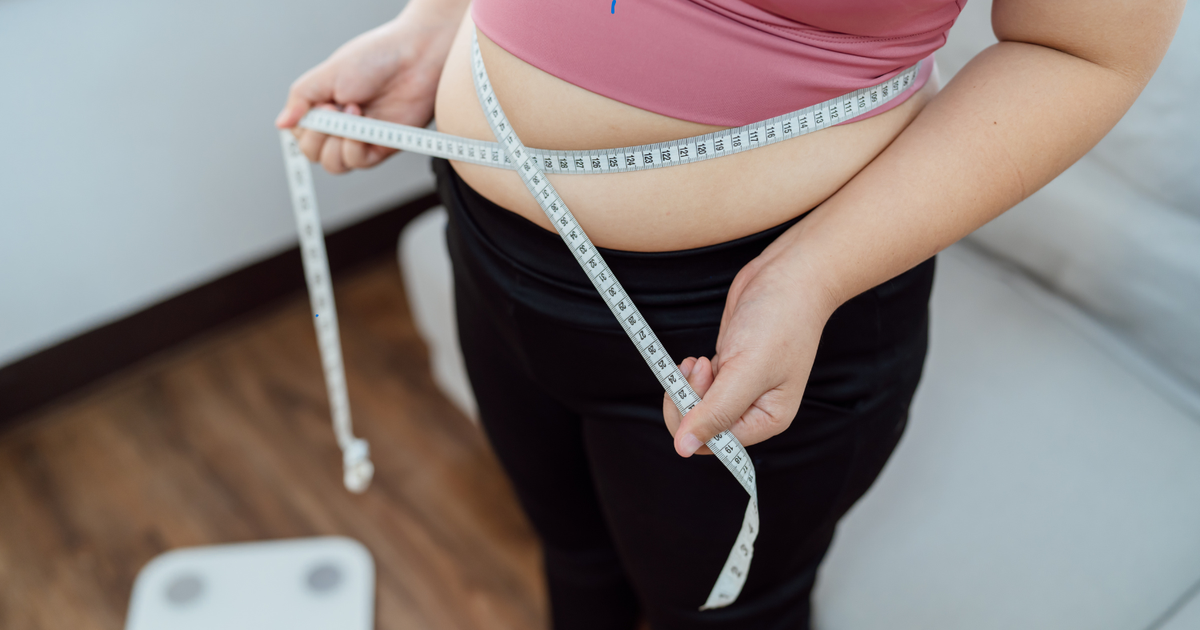
British scientists have developed a new tool that could shed light on who is most at risk of obesity-related diseases and thus help identify people who would benefit most from weight loss drugs. This innovative approach, based on artificial intelligence, offers a more personalized risk assessment than that currently used.
Fighting the growing obesity epidemic
The latest figures show a worrying picture of the nation’s health in England, where around two-thirds of adults are overweight or obese. According to the Health Survey for England for 2024, almost 30 percent of adults were living with obesity, which is the highest recorded figure since monitoring began in 1993. The situation has caused great concern among health professionals, as obesity represents one of the biggest public health challenges and a huge burden on the National Health Service (NHS). Diseases associated with obesity, such as heart disease, type 2 diabetes, certain types of cancer and diseases of the musculoskeletal system, not only reduce the quality of life, but also and generate huge costs. The total annual cost of obesity to the UK economy is estimated to be £126 billion.
“Obscore” – a personalized approach to risk assessment
In response to this problem, researchers have developed a tool that they claim offers an accurate and personalized approach to identifying those at risk for obesity-related conditions. A tool called “Obscore” could be useful for prioritizing the approval of interventions, such as popular weight-loss injections, given that their access within the UK health system is limited and currently based solely on high body mass index (BMI) and the existence of specific health problems associated with obesity.
In the journal Nature Medicine, a team of scientists from the University of Cambridge and Queen Mary University of London described how they applied a type of artificial intelligence known as interpretive machine learning. They analyzed data from almost 200,000 participants in the long-term UK Biobank project, each of whom had a BMI of 27 or more, meaning they were classified as overweight or obese. This ultimately enabled the team to identify 20 health, lifestyle and demographic characteristics – including age, gender, total cholesterol and creatinine levels – that could predict the 10-year risk of 18 different obesity-related complications, from gout to stroke.
More rational distribution of limited resources
Professor Nick Wareham from the University of Cambridge, one of the authors of the study, emphasized that the aim of this measure is not to expand the use of certain therapies, but rather to to ensure that they reach those who need them most.
- This is about the development and validation of tools that can help with a more rational distribution of resources. So, can we prescribe therapy to those people who are most likely to need it and who will benefit the most from it – which is what we should be doing within the NHS – he said.
The risk does not depend only on the body mass index
The researchers said that their work showed that participants of the same age, gender and body mass index can have very different risks for various obesity-related diseases. This supports the idea that the tool could help inform strategies for prioritizing who should receive weight loss interventions. Moreover, for some conditions, including type 2 diabetes, the highest risk category included a substantial proportion of people who were classified as overweight rather than obese.
- They are a population of individuals that could be overlooked if we only look at BMI and not other risk factors – said Kamil Demircan, co-author of the study from Queen Mary University in London.
The team also applied a version of the tool to data from participants in a randomized controlled trial for the weight loss drug tirzepatide. They confirmed that people who would be predicted to be at the highest risk of obesity-related diseases would experience similar weight loss as others, further confirming the tool’s utility in targeting therapy.
Skepticism and the need for further development
Despiteč promising results, some experts call for caution. Naveed Sattar, a professor of cardiometabolic medicine at the University of Glasgow, who was not involved in the work, said that many obesity-related diseases are closely related, and for some even more so. there are robust and easier-to-apply risk assessment tools. In addition, he noted that several metrics used in the study are not routinely available within the NHS, which could hinder immediate clinical application.
“Overall, this work represents a thoughtful attempt to move toward more holistic risk prediction for multiple obesity-related conditions,” Sattar said in a statement to The Guardian. “But significant further development and validation will be required before such an approach can be translated into routine clinical practice.”
https://www.chasehatchery.com/group/chase-hatchery-group/discussion/bb66e096-ccd0-42cc-a6e3-fe14020bdfe7
https://www.pearltrees.com/sergiomaq/item793906798
https://scrapbox.io/eritreabonusesfinder/online_gaming_10
https://globbook.com/blogs/72927/online-gaming
https://forums.digitalpool.com/showthread.php?tid=19471
https://submeet.vet/forum/topic/3188?page=1#post-5426
https://www.jerseyshorecarshows.com/group/introductions-new-member-welcome/discussion/159846ba-f3f7-4740-b0ca-ba1fc4a8e4c3
https://managementmania.com/en/personal/social_groups/online-gaming-71
https://blankslate.io?note=1302205
https://medium.com/@pinupcasinoonlinebonuses/online-gaming-386e465f66b2?postPublishedType=initial
https://www.thepartyservicesweb.com/board/board_topic/3929364/8245814.htm?page=1
https://www.sunemall.com/board/board_topic/8431232/8245813.htm?page=1
https://www.driedsquidathome.com/forum/topic/147977/online-gaming
https://international.projectwet.org/discussion/online-gaming-10
https://www.finder.ac.id/group/my-site-group/discussion/cad85627-8fac-4422-8536-c0903125ddc7
https://international.projectwet.org/discussion/online-gaming-8
https://eprofile.ogapatapata.com/blogs/163151/online-gaming
https://education.montrealtherapy.com/forum/topic/online-gaming-10/#postid-696
https://www.g23lcs.com/group/newyork-newyork-crazy-about-it/discussion/8cd3c5e7-4c82-4510-9d8c-966df1462e07
https://www.avtiming.com/group/events-chat-transfers/discussion/569639ca-aa42-4d83-a714-e496510e9e43
https://education.montrealtherapy.com/forum/topic/online-gaming-12/#postid-700
https://www.thepartyservicesweb.com/board/board_topic/3929364/8245576.htm?page=1
https://www.sunemall.com/board/board_topic/8431232/8245577.htm?page=1
https://hallbook.com.br/blogs/964971/online-gaming
https://www.rushpassport.com/group-page/bedtime-stories-tales-from-our-commmunity/discussion/709ce0c0-7874-495f-a55e-cd298f1d57d7