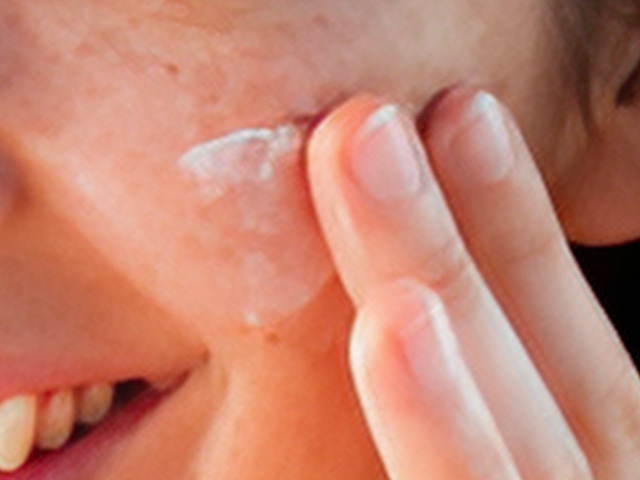
Sunscreen is essential to protect your skin, but it also has its drawbacks: many products leave a greasy residue, quickly lose effectiveness, and choosing the right option can be difficult. In addition, some components of sunscreens harm coral reefs, so scientists are looking for more environmentally friendly alternatives in nature. One unexpected source of such substances may be bacteria.
Researchers have found that the E. coli bacterium is capable of producing the compound gadusol, a natural ultraviolet filter that some marine organisms use to protect themselves from the sun. The work was published in the journal Trends in Biotechnology. Gadusol is rare in nature, for example in the eggs of some fish, and it is difficult and environmentally unfriendly to obtain. To solve this problem, the team introduced a genetic mechanism for producing gadusol into E. coli bacteria, borrowed from the zebrafish. After changing the genes and growing conditions of the bacteria, the volume of the substance produced increased almost 93 times – from 45.2 milligrams to 4.2 grams per liter.
Preliminary tests have shown that gadusol, obtained in the laboratory, effectively protects against ultraviolet radiation. Moreover, the substance showed antioxidant properties comparable to vitamin C, which may help cells fight free radicals caused by sun exposure. The scientists also developed a simple test to select bacteria that produce more gadusol. During the reaction, the substance neutralizes free radicals, causing the violet indicator to change color to yellow.
Despite the promise of the discovery, Gadusol is not yet ready to replace conventional sunscreens. Scientists have not yet compared its effectiveness with existing treatments, studied long-term safety, or tested the feasibility of mass production. In addition, the compound must undergo regulatory approval. However, researchers believe that the first products with gadusol may appear on the market in the next two years.
https://vinnumbercheck.ca/vehicle-vin-decoder/lamborghini/
https://vinnumbercheck.ca/car-history-report/recalls/mitsubishi/
https://vinnumbercheck.ca/vehicle-vin-decoder/plymouth/
https://vinnumbercheck.ca/car-history-report/market-value/
https://vinnumbercheck.ca/car-history-report/specs-by-vin/
https://vinnumbercheck.ca/car-history-report/recalls/gmc/
https://vinnumbercheck.ca/feed/
https://vinnumbercheck.ca/author/cronixm1/feed/
https://vinnumbercheck.ca/locations.kml
https://vinnumbercheck.ca/car-history-report/recalls/subaru/
https://vinnumbercheck.ca/car-history-report/recalls/cadillac/
https://vinnumbercheck.ca/vehicle-vin-decoder/ram/
https://vinnumbercheck.ca/vehicle-vin-decoder/lincoln/
https://vinnumbercheck.ca/car-history-report/recalls/chevrolet/
https://vinnumbercheck.ca/blog/vin-country-codes/
https://vinnumbercheck.ca/car-history-report/recalls/land-rover/
https://vinnumbercheck.ca/car-history-report/recalls/mini/
https://vinnumbercheck.ca/car-history-report/recalls/volvo/
https://vinnumbercheck.ca/vehicle-vin-decoder/hyundai/
https://vinnumbercheck.ca/vehicle-vin-decoder/mercury/
https://vinnumbercheck.ca/vehicle-vin-decoder/mini/
https://vinnumbercheck.ca/vehicle-vin-decoder/nissan/
https://vinnumbercheck.ca/car-history-report/recalls/tesla/
https://vinnumbercheck.ca/car-history-report/recalls/dodge/