It was a memorable one, downright dark election night in Colombia. And it could be a sign of what lies ahead for democracies in which the margins are becoming ever stronger and the traditional political forces of the center ever weaker.
The tone of the evening was initially set by left-wing populists Ivan Cepedawhich came second in the first with 40.9 percent presidential election ballot crossed the finish line. Perhaps it was due to disappointment that the former communist Cepeda, who was actually considered the favorite in the polls, lost his temper, insulted his opponent and branded him a “right-wing extremist fascist”.
Even worse, however, is the attempt by the Colombian left to doubt the election results in the best Trump style. The job was done by none other than the incumbent head of state Gustavo Petro. As president, he does not accept the results of the preliminary count of the Bautista brothers’ private company, Petro said on the social network X. This raises the possibility of election fraud. Cepeda then spoke of discrepancies. Now both will have to provide verifiable evidence. That evening, Cepeda and Petro exclusively considered their own camp to be democratic.
“Final battle for the fatherland”
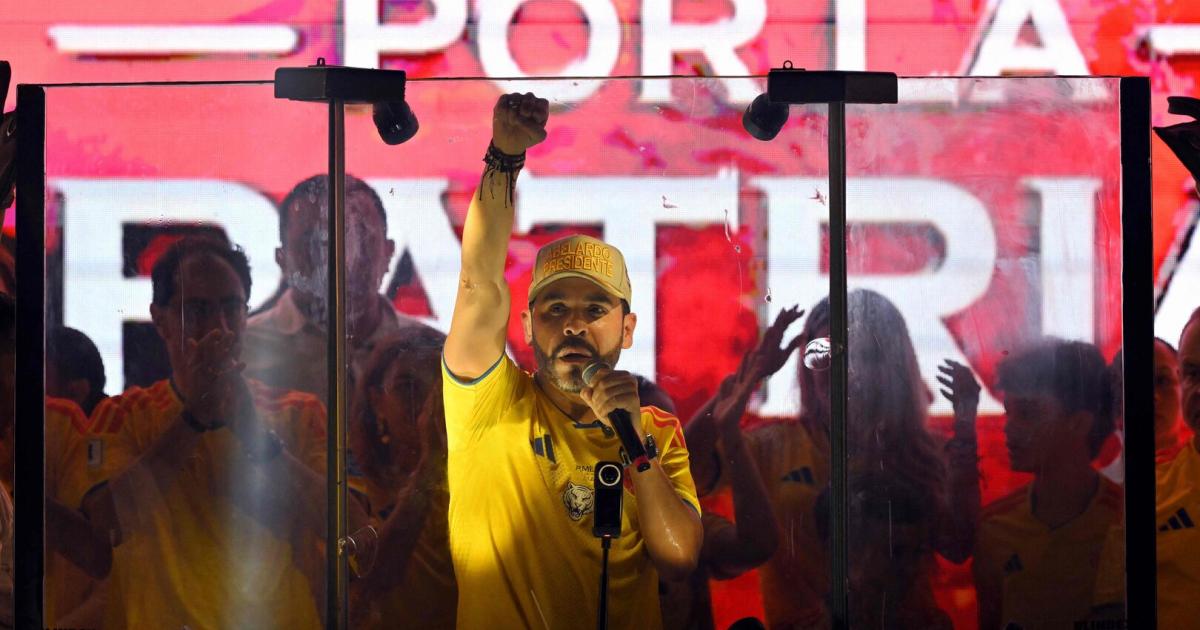
The appearance of the disappointed left would actually have been a great assist for the surprise winner of the first round. But Abelardo de la Espriellaan economically very successful lawyer with some controversial clients, for his part fueled the polarized mood even further: “You, Mr. Petro and Mr. Cepeda, are a few bandits that we will get out of the way,” shouted the right-libertarian hardliner with anything but statesmanlike confidence. He gave his speech behind a centimeter-thick pane of bulletproof glass; a few weeks ago two of his close supporters were shot. The Runoff election on June 21st he stylized it as the “final battle for the fatherland.” He wants to build mega-prisons and is considered a Trump supporter. His trademark is the military salute, and on election night he appeared wearing the Colombian national team jersey. “Presidente” was written on the back. It is also interesting that the trend of right-wing Christian influencers taking up more and more space in election campaigns is continuing in Colombia.
There is little space left for the traditional forces. They came crushed and marginalized by left and right wingers Conservative Candidate Paloma Valencia to just seven percent. She announced her support of Da la Espriella that evening. Her political future is just as uncertain as that of her classic Conservative Party CD. Finished in fourth place Sergio Fajardo (four percent), like the completely defeated former mayor of the capital city Bogota Claudia Lopez was once a beacon of hope for the Colombian Greens. They are now just a footnote in Colombian politics. They now determine radical loudspeakers from the two fringes, who either consider themselves to be the defenders of the fatherland (de la Espriella) or of the people (Cepeda).
In the age of social networks, their riotous course seems promising. Whether this verbally unforgiving radicalism is good for a society in which assassination attempts on politicians are still part of everyday life is a completely different question.
https://bostonmarijuana.clinic/
https://bostonmarijuana.clinic/telehealth
https://bostonmarijuana.clinic/about
https://worcestermarijuana.clinic/
https://worcestermarijuana.clinic/telehealth
https://worcestermarijuana.clinic/about
https://springfieldmarijuana.clinic/
https://springfieldmarijuana.clinic/telehealth
https://springfieldmarijuana.clinic/about
https://lowellmarijuana.clinic/
https://lowellmarijuana.clinic/telehealth
https://lowellmarijuana.clinic/about
https://brocktonmarijuana.clinic/
https://brocktonmarijuana.clinic/telehealth
https://brocktonmarijuana.clinic/about