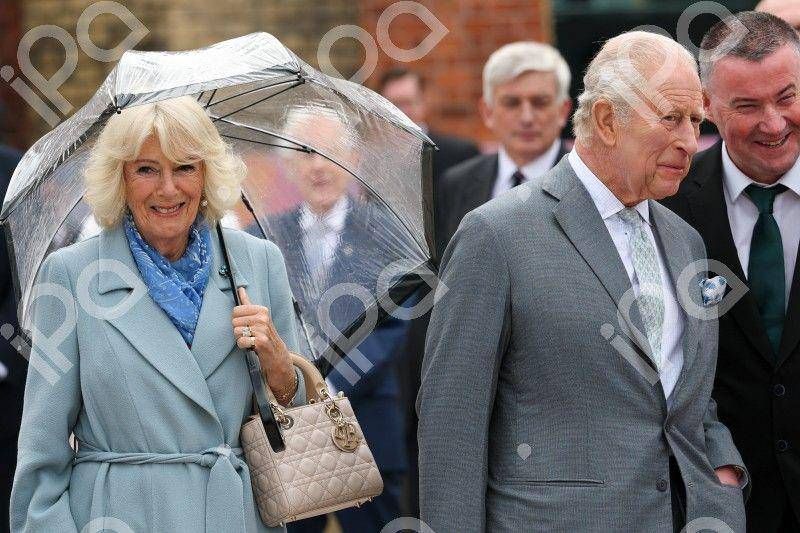
From Queen Elizabeth to Queen Camilla, from Lady D to the Princess of Wales, from Megan Markle to her beloved grandmother Elizabeth Bowes-Lyon. Lovely, distant, cold, inaffectionate, but also in love, irreplaceable and ‘non-negotiable’. ‘Le donne di Carlo’, written by the journalist Ilaria Grillini, will be released by Rai Libri and explores the stages of the sovereign of the United Kingdom in a ‘female way’, from his birth to the present day, between public and private. Women loved, tolerated, suffered, sometimes cumbersome, have influenced his choices, but have often been bright beacons that have marked the path and destiny. “The Queen has served the people with incredible devotion and I want to do the same for as long as God gives me, serving you with love, respect and loyalty. My beloved mother has been a source of inspiration for me”: these are the words of Carlo III in her first speech to the nation remembering the sovereign who passed away at the age of 96 on 8 September 2022. “Queen Elizabeth II and her son are two rather different people. She was famous for her absolute confidentiality and discretion, he was known for being more explicit in his opinions, but they shared a love for horses, for nature, although Charles III with greater emphasis and environmental sustainability”, writes Ilaria Grillini. Very close to her grandmother, wife of George VI, Queen Elizabeth “had always encouraged Charles to be himself, to listen to his own sensitivity, even if this went in the opposite direction compared to rigid royal etiquette. She was a bit of his confidant – Grillini writes – She disapproved of the divorce from Lady Diana and it is said she was not particularly enthusiastic about Camilla, but she never abandoned her grandson, she was a solid presence and always maintained an attitude of discretion and affection”. His secret, well known at court? He loved starting the day with gin and Dubonnet. She too, it seems, was ironic about her passion.
She has always been his most trusted advisor, the king’s ‘right hand’ for her absolute dedication to the crown, for King Charles, the most important, perhaps irreplaceable, figure in the royal ecosystem. Princess Anne has always had a very special relationship with the sovereign, since she was a child, even though she has always been deeply aware that her older brother had been prepared to reign from birth. The first of her children to divorce (after her marriage to Captain Mark Phillips she married, without fanfare and with only 30 guests, Vice Admiral Timothy Laurence), the protagonist of a singular sentimental quadrilateral when she, at a very young age, had a flirtation with Andrew Parker Bowles, very engaged to the then unknown Camilla Shand, with whom Charles had fallen in love and who she would later crown Queen of the United Kingdom.
Nothing united the Prince of Wales and Lady D, born Diana Frances Spencer. He is a golden bachelor now 32 years old, she was only 20 years old. “He was thoughtful, interested in architecture and philosophy, while Diana was more sociable and eager for affection and emotional connection – Ilaria Grillini underlines in her book – Yet she was the woman he had dreamed of. According to the statements of one of his valets at the time, Carlo had a very specific recipe for the perfect woman. She had to be ‘tall, blonde, curvy, with an English rose-coloured complexion'”. An ideal of a woman not far from Lady D. But fate had decided differently even if “Carlo was attracted by her freshness and spontaneity, while Diana was fascinated by her charm. One of the most painful aspects of that marriage was Diana’s emotional loneliness – writes Ilaria Grillini – Carlo was unable to provide her with the affection she desired, despite the birth of two much loved sons, William and Harry. Diana felt neglected and alone and often not even understood by the other members of the royal family with whom he had a tense and difficult relationship”. And if the Prince of Wales apparently continued to see his ex-girlfriend Camilla, married Parker – Bowles, now elevated to the rank of ‘official lover’, the Princess of Wales was talked about, for her relationships and the English tabloids rejoiced. The cavalry officer James Hewitt, the wealthy English antiques dealer Oliver Hoare, the Pakistani doctor Hasnat Khan and later the Egyptian-born businessman Dodi Al Fayed who died in the tragic accident on the Pont de l’Alma in Paris, but at the base there was something that no woman would ever accept. “There were three of us in this wedding – Lady D confessed on TV – A slightly too crowded wedding”. Yet according to the testimonies collected by the journalist and writer Ilaria Grillini, Charles and Diana, especially during the first years of their marriage, loved each other, indeed between the two, according to Dickie Arbiter there was “true love and happiness” and the royal biographer Ingrid Seward had revealed, a few weeks before her death, that the Princess of Wales would have wanted to publish the love letters that Charles wrote to her. He wanted to let the world and their children know how much they loved each other.
But history sometimes takes sudden turns and returns to the starting line. After all, everyone knew (especially the then Prince of Wales and heir to the throne of the United Kingdom) that his great, true love was Camilla Shand, ‘the only non-negotiable woman’, he would later say. Not beautiful, but certainly charming, self-confident, ironic and with a strong sense of humour, a lover above all of horses. Theirs was a love story that managed to resist time and reason of state. The scandalous Camilla, the ‘family ruiner’, that that during one of the first meetings with the heir to the throne he addressed him smiling, ‘do you know that my great-grandmother was the lover of your great-great-grandfather?’, referring to Alice Keppel and Edward VII, and that Charles in some intimate phone calls, too intimate perhaps for a future king, declared his ‘red light’ love for her ‘I would like to be your Tampax’, he confessed to her. And she replied… ‘Why not an entire box so you could go on for a while?’ Not exactly the style and class of two future sovereigns. Yet, with a careful communication restyling operation, Camilla managed to enter the hearts of all English people without utterances, without feeling sorry for herself, never a word out of place, only smiles, faithful to the motto, as Ilaria Grillini recalled in her precious book, ‘do nothing and everything will be fine. she speaks and first composes herself. Today she is a loved and respected figure, not ‘queen consort’, but simply queen, as Elizabeth II strongly desired.
But Charles’ ‘Women’ are also the representatives of the new generation such as Catherine Middleton, wife of his first-born William, mother of his beloved grandchildren, George, Charlotte and Louis, ‘the daughter he never had’, royal biographer Sally Bedell Smith recently told ‘People’. A commoner, as are Letizia of Spain, Mary of Denmark, Maxima of the Netherlands. A skilled diplomat, educated in the best colleges and universities in the United Kingdom (the spark with William struck in Scotland at the University of St. Andrew), the Princess of Wales, whom King Charles calls ‘my beloved daughter-in-law’, has had a favorable impact on relations between her father and Prince William, also attempting an impossible (at the time) pacification between her husband and his brother Harry. The Meghan Markle affair remains, “arrived like a cyclone, unlike Catherine who tiptoed into the royal family”, comments Ilaria Grillini.
Yet the Dukes of Sussex were seen as a symbol of modernity and openness of the monarchy, also linked to Megan’s Afro ancestry which a few years after entering the court was transformed into ‘Megxit’ (a term that echoes Brexit, used by the English media to indicate the exit of the Dukes of Sussex from their role as ‘senior’ members of the royal family). And from then on everything changed. The escape from the United Kingdom, the choice to reside in California in Montecito with her children Lillibet and Archie, the interviews and the release of books (‘Spare-The Minor’) which sparked controversy and indignation, not only at court. Among the Windsors, Grillini recalls, there is “privacy, dignity, public silence”. Harry and Meghan spoke too much, partly also ‘betraying’ the monarchical institution. “Too much has been said. There is no turning back if they continue to talk”, Charles III reportedly confessed. Even if reconciliation is not ruled out, the distance from his American grandchildren continues to be a source of great suffering for the English sovereign.
https://maxbet-sk.sk/
https://maxbet1.sk/
https://mega-casino.eu.com/
https://mega-casino.org.es/
https://mega-casinoes.com.es/
https://mega-casinoes.es/
https://mega-pari.si/
https://megacasino.gr.com/
https://megacasinos.eu.com/
https://megapari-si.com/
https://megapari-si.eu/
https://megapari-si.net/
https://megapari-si.org/
https://merkur-casino.de.com/
https://merkur-casino.eu.com/
https://merkur-casinode.com/
https://merkur-de.eu.com/
https://merkur-slots.com.de/
https://merkur-slots.de.com/
https://merkur-slots.eu.com/
https://merkur.com.de/
https://merkur.eu.com/
https://merkurbet.bet/
https://merkurbet.de.com/
https://merkurbets.de.com/