The Onkalo bunker, located at a depth of 430 m and designed to store nuclear waste for 100,000 years, could become operational later this year.
The Finnish Radiation and Nuclear Safety Authority (STUK) is expected to issue a final assessment of the Onkalo nuclear waste bunker later this month, paving the way for the issuance of an operating license and the facility’s commissioning. Onkalo, which means “cave” in Finnish, is considered the world’s first deep geological repository designed to permanently dispose of spent nuclear fuel.
“We hope to be able to start operations at the end of this year or, more likely, early next year,” Philippe Bordarier, CEO of nuclear power company Teollisuuden Voima Oyj, told AFP.
According to STUK, the assessment includes a comprehensive analysis of long-term safety, technical protection layers, operating procedures and the effectiveness of the bentonite clay system to prevent radioactive material from spreading. Nuclear waste management company Posiva has completed major tests and said it is entering the “countdown phase” to deploy industrial-scale waste treatment operations.
Located near the Olkiluoto nuclear power plant in Eurajoki, southwestern Finland, the tunnel is dug more than 430 meters deep into bedrock that is 1.9 billion years old. The project has attracted global attention because most countries with nuclear power programs are still storing spent fuel in temporary facilities and discussions are underway about a long-term disposal solution.
Posiva started building Onkalo in 2004 with an estimated total cost of about 1.16 billion USD. The project includes many tunnels, each 300 m long. Onkalo is designed to store up to 6,500 tons of nuclear fuel from Finland’s five operating reactors for at least 100,000 years.
The waste will first be kept sealed in corrosion-resistant copper tanks, then lowered into a drilled burial hole under the tunnel, covered with bentonite clay – an additional layer of protection to prevent water intrusion and radioactive leakage. Once full, the tunnels will be sealed with reinforced concrete.
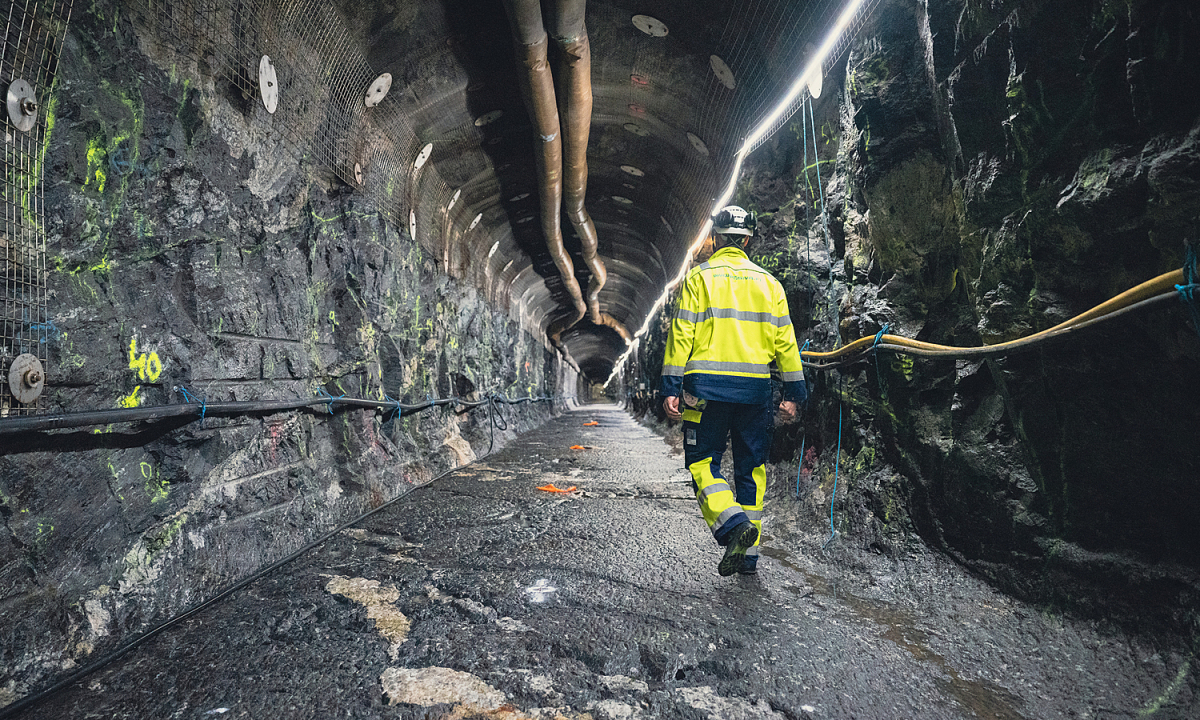
Workers walk in a tunnel at the Onkalo nuclear waste repository in Eurajoki, southwestern Finland, May 18, 2026. Image: AFP
Theo Interesting EngineeringOnkalo’s importance goes far beyond Finland. Sweden, France, Canada, the United States and many other countries have spent decades studying deep geological storage as the preferred solution for disposing of highly radioactive spent nuclear fuel. But to date, no country has put into operation a commercial facility for permanent disposal.
Supporters say deep geological storage is the safest long-term solution available today because it combines layers of technical protection with a stable geological structure that can remain unchanged for hundreds of thousands of years. However, the opposition argues, no storage facility can be guaranteed to be safe over such a long period of time and there are still many uncertainties regarding geological changes and the risk of containers corroding.
https://spinanga-no.co.no/
https://spinanga-no.org/
https://spinanga-si.eu.com/
https://spinanga-si.net/
https://spinanga-si.org/
https://spinanga-sk.eu.com/
https://spinanga-sk.net/
https://spinanga-sk.org/
https://spinanga-sk.sk/
https://spinanga.co.no/
https://spinanga.com.pt/
https://spinanga.org.es/
https://spinanga1.co.no/
https://spinanga1.eu.com/
https://spinanga1.si/
https://spinanga9.com/
https://spinangacasino.co.no/
https://spinangaes.org/
https://spinangano.co.no/
https://spinangas.co.no/
https://spinangas.com.es/
https://spinangas.eu.com/
https://spinangas.si/
https://spinaway-no.com/
https://spinaway-no.eu.com/