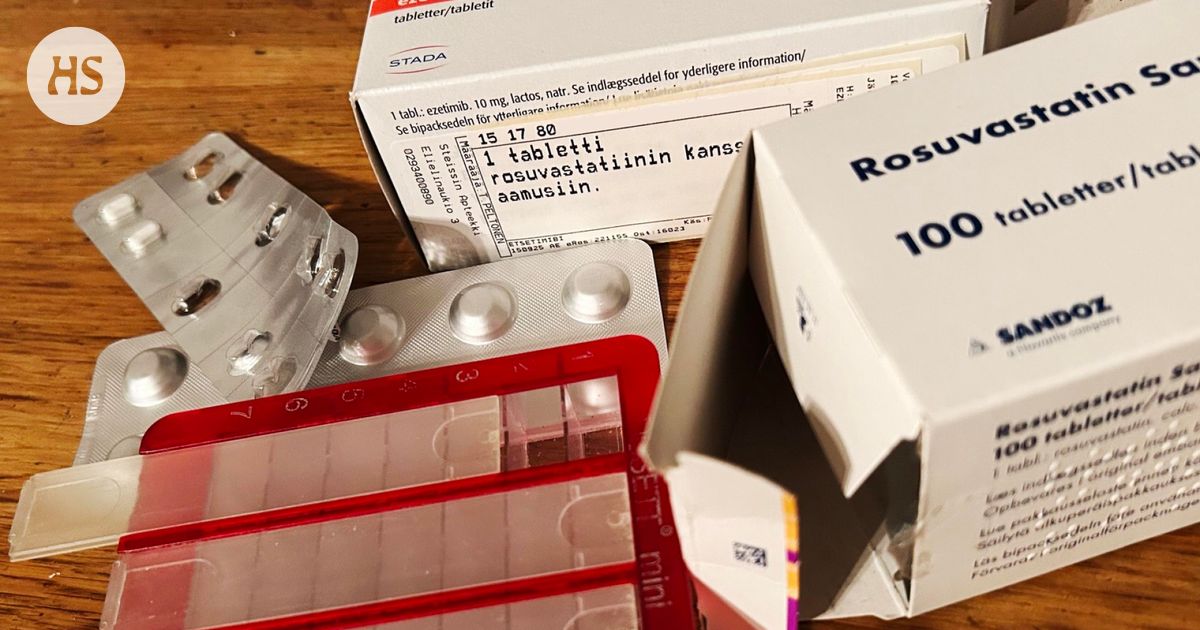
Cerebral infarction a person who has it receives a bunch of medicines at home, which should prevent new blockages in the blood vessels.
For one patient, the same drug can be a lifesaver, for another, a much worse choice for genetic reasons. Now, a Finnish-led study is trying to find out whether a genetic test can tell right from the start who needs another drug.
Usually, after a cerebral infarction, the patient receives standard medication.
Professor of pharmacogenetics and chief physician of the Hus Diagnostic Centre Mikko Niemi spoke last Thursday to science journalists on the occasion of the University of Helsinki and Husin Toivo Day. According to Niemi, there is a big difference between patients in how well the drugs work and what kind of harm they cause.
Now he is leading a European study to find out whether a genetic test can help select a medication that is more effective or better tolerated for some patients to prevent another heart attack.
Medicines gene tests predicting efficacy and potential harm have been performed on patients at Hus for a long time. Since 2022, a wider test package has been in use, which covers 12 gene forms that affect medical treatments.
The use is particularly focused on cancer, psychiatry and cardiology.
“In the current treatment recommendation for depression, a gene test for antidepressants is recommended especially for patients for whom the drugs easily cause harm or whose depression has not eased despite drug treatment,” says Niemi.
The package also includes a gene test that predicts the harms of chemotherapy drugs used in the treatment of breast cancer and colon cancer. It can prevent serious side effects leading to death.
According to Nieme, the test package is exceptionally cheap considering the information it provides.
“I’m proud of the Husi test because it’s cheap, reliable and fast,” says Niemi. In Hus, the test costs approximately the same as, for example, a comprehensive respiratory infection test.
Since the test is performed practically once in a lifetime and at the same time provides information on several genes that are significant in terms of drug treatment, Niemi describes it as a truly inexpensive way to individualize drug treatment.
About to start the genes examined in cerebral infarction research are already included in the Husi test package.
The idea is that the doctor could already at the beginning choose for the patient a drug that prevents blood clots and a statin that are most likely to work and that the patient can use.
It is already known that genes can affect the effectiveness and harm of both blood thinners and statins. The assumption is that the genetic test can reduce brain and heart attacks by about 30–35 percent.
The study is being launched because the benefit has not yet been demonstrated with a strong enough screen in cerebral infarction patients. Only a randomized study will show whether the genetic test really improves treatment results.
In research let’s look at two things. First of all, according to Nieme, one third of patients cannot get the full benefit of clopidogrel, which prevents blood clots, because the medicine is not activated properly due to their inheritance.
Another problem is statins. Their disadvantages, especially muscle pains, can lead to stopping the medication or taking too little a dose.
“Muscular symptoms weaken adherence to statins, as a result of which their benefit in the prevention of cerebral infarctions and myocardial infarctions is missed,” says Niemi.
The effectiveness of the gene test in statin treatment has yet to be demonstrated in a randomized trial.
The Spock study compares conventional treatment with gene test-guided treatment after a cerebral infarction or a TIA attack, i.e. a transient cerebrovascular accident.
The study tests whether new serious cardiovascular events are reduced when treatment is selected with the help of genetic information and not according to standard practice. In addition to Finland, there are university hospitals from Sweden, Denmark and Spain. Patient recruitment is supposed to start in the fall.