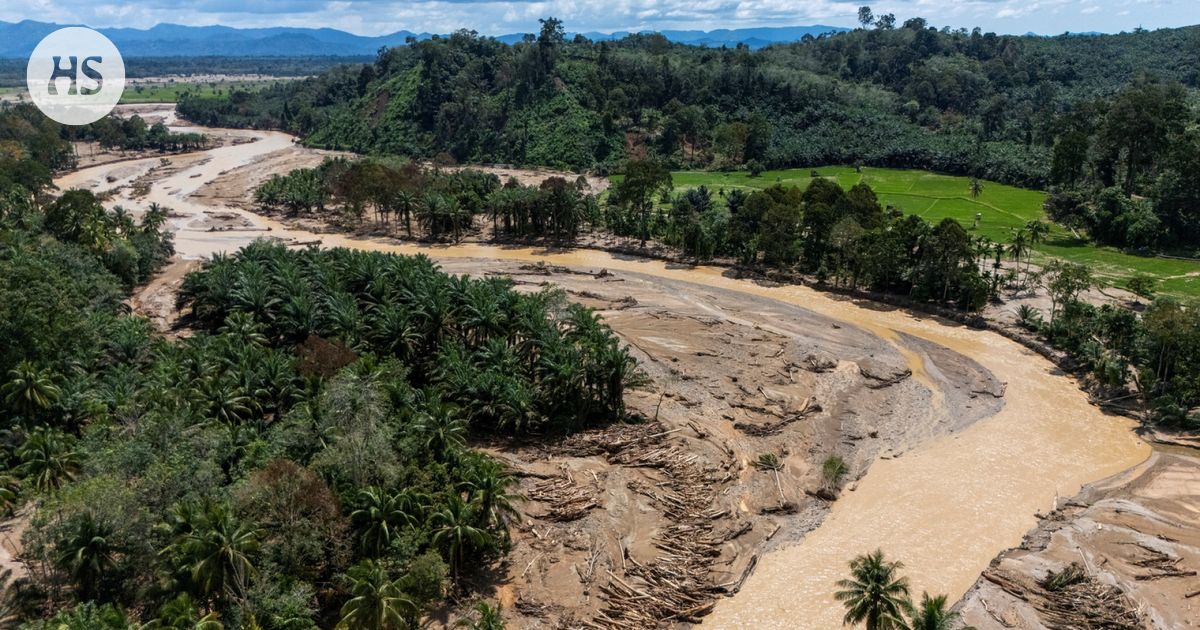
Four Last November, extreme rains that lasted for days killed an estimated 58 tapanuli orangutans in Sumatra, Indonesia, says in the journal Current Biology published recent research. The number corresponds to about seven percent of the entire world’s tapanuli orangutan population.
The tapanuli orangutan is one of the world’s three orangutan species. With a population of less than 800 individuals, it is the least numerous of them. The tapanuliranki is the world’s rarest great ape.
According to the study, exceptionally heavy rains caused extensive landslides in the Batang Toru rainforest area of North Sumatra, which destroyed the habitat of orangutans. Over the course of four days, it rained in some places over a thousand millimeters of water.
The landslides triggered by the rains destroyed approximately 8,300 hectares of forest, which corresponds to almost 12 percent of the area’s most important habitat for tapanuli orangi.
According to the researchers, there is practically no food for tapanuli oranges in landslide areas for the next 5–10 years.
Tapanuliorankeja occurs only in three separate subpopulations in the Batang Toru area. Landslides hit the largest of them, the western part of Batang Toru. Based on satellite images and previous population estimates, the researchers estimated that approximately 58 individuals lived in the area affected by the landslides, i.e. approximately 11 percent of the population in the western region.
According to the researchers, the results provide the first quantitative evidence that extreme rainfall can pose an immediate threat to the survival of great apes.
The losses are exceptionally severe for the species because the tapanuli orange reproduces slowly and its populations are small and isolated. Previous studies have shown that additional annual losses of just one percent can lead to the species disappearing from the wild in the long term.
According to the authors of the study, climate change has increased the probability and intensity of such extreme rains. They demand more effective protection of the Batang Toru area than is currently the case in order to ensure the survival of the species.
https://WaterfordLandscaping.us/lawn-care/hydroseeding
https://WaterfordLandscaping.us/lawn-care/lawn-aeration
https://WaterfordLandscaping.us/lawn-care/lawn-edging
https://WaterfordLandscaping.us/lawn-care/lawn-grubs-control
https://WaterfordLandscaping.us/lawn-care/lawn-installation
https://WaterfordLandscaping.us/lawn-care/lawn-leveling
https://WaterfordLandscaping.us/lawn-care/lawn-mowing
https://WaterfordLandscaping.us/lawn-care/lawn-renovation
https://WaterfordLandscaping.us/lawn-care/lawn-seeding
https://WaterfordLandscaping.us/lawn-care/sod-installation
https://WaterfordLandscaping.us/lawn-care/weed-control
https://WaterfordLandscaping.us/yard-clean-up
https://WaterfordLandscaping.us/yard-clean-up/green-waste-disposal
https://WaterfordLandscaping.us/yard-clean-up/gutter-cleaning
https://WaterfordLandscaping.us/yard-clean-up/junk-removal
https://WaterfordLandscaping.us/yard-clean-up/leaf-removal
https://WaterfordLandscaping.us/yard-clean-up/tree-removal
https://OldLymeLandscaping.us
https://OldLymeLandscaping.us/gardening
https://OldLymeLandscaping.us/gardening/brush-removal
https://OldLymeLandscaping.us/gardening/flower-bed-maintenance
https://OldLymeLandscaping.us/gardening/flower-planting
https://OldLymeLandscaping.us/gardening/hedging
https://OldLymeLandscaping.us/gardening/mulching
https://OldLymeLandscaping.us/gardening/plant-removal