“I’m about to die,” Thao Vy, 36 years old, told her husband when her heart was pounding and she had difficulty breathing in the middle of the night, not knowing it was a sudden panic attack on top of an anxiety disorder.
Vy’s heart was pounding, her breathing was short and rapid, her hands were numb, and she felt like her chest was being squeezed. Even though she was taken outside to breathe and have her health checked immediately afterward, she still thought she was in serious danger. The panic attack lasted about 15 minutes but left her with fear that lasted for days, making her constantly worry the same thing would happen again.
Three years ago, after a period of prolonged work pressure and taking care of sick relatives, Vy began to worry too much. Every day, she constantly thinks about things that haven’t happened yet, such as fear of losing her job, fear of something happening to her child, fear of getting a serious illness. At night, women have insomnia and often toss and turn until 2-3 am. The body is always in a state of tension, fatigue, headaches, and palpitations.
Thinking that she was just suffering from normal stress, Vy tried to endure it until her symptoms became more and more severe. After examination, Dr. Hoang Quoc Lan, psychologist, Phuong Dong General Hospital, diagnosed her with an anxiety disorder.
Similarly, Hai, 45 years old, recounted one afternoon at the end of the year when he was in a meeting at work when a panic attack suddenly struck. “My heart suddenly beat very hard, like someone was squeezing my chest,” he said.
My heart rate skyrocketed, my hands trembled, sweat poured down my palms. Numbness spreads from fingertips up arms and around the mouth. What scared Hai the most was the feeling of being close to death, thinking he might faint or suddenly die on the spot.
The doctor determined that he was experiencing an acute panic attack on top of a long-term anxiety disorder. After treatment with medication combined with psychotherapy, symptoms are gradually controlled.
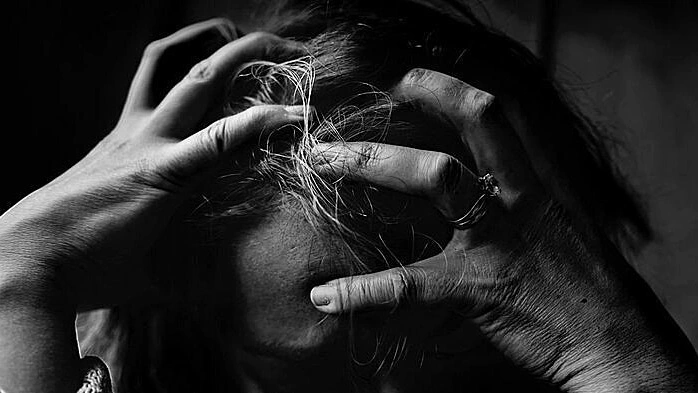
People with anxiety disorders often experience sudden panic attacks. Illustration photo: Psychology today
A panic attack occurs when the brain and body react as if facing mortal danger, even though there is no actual threat. Patients often have symptoms such as rapid heartbeat or palpitations, difficulty breathing, tightness in the neck, dizziness, tremors, and feeling about to faint. Most prominent is the intense fear that one is about to die or lose control.
According to Dr. Lan, a panic attack usually lasts 5-20 minutes, rarely longer. When the attack passes, the body is often tired but medical test results are mostly normal.
Theo MSD Manualspanic attacks are quite common, occurring in approximately 8-23% of adults during their lifetime. Most recover without treatment, but some may develop panic disorder. Panic attacks can occur in people with anxiety disorders, depression or other mental health problems. Some attacks occur when encountering specific triggers, for example, people with snake phobia may panic when encountering snakes. However, others have panic attacks without any triggers.
Research above NCBIexperts surveyed the incidence of panic attacks among patients at an anxiety disorder clinic, and found that 39.4% of patients had sudden panic attacks, without a trigger.
According to Dr. Lan, in people with anxiety disorders or depression, the brain easily sends out false warning signals. The nervous system constantly puts the body in a state of alarm, making stress, insomnia and prolonged stress more likely to trigger new attacks. The more afraid the panic attack will return, the higher the risk of recurrence.
Master of Psychology Nguyen Thi Huong Lan, Head of Psychology Department, BHIU Training Institute, said that the brains of people with anxiety disorders are often in a state of excessive vigilance. The “fight or flight” response can be triggered even when there is no real danger. At that time, the body releases stress hormones such as adrenaline, causing the heart to beat faster, blood pressure to increase, breathing to become rapid and a series of unpleasant symptoms to appear. Therefore, patients can have attacks even while working, watching TV, driving or sleeping.
Panic attacks themselves rarely cause death or physical harm, but can seriously affect your quality of life. Many people, because of fear of recurrence, avoid going to work, limit communication, and do not dare to go far or go to crowded places.
Experts recommend that the more you try to resist or panic because the symptoms will last longer. Some things that can be done are as follows:
– Remind yourself: “This is a panic attack, it will pass.”. Properly identifying the condition helps the brain reduce the feeling of danger and prevent the spiral of anxiety from escalating.
– Focus on your breathing. People having a seizure often breathe quickly and shallowly, making the feeling of shortness of breath increase. You can try inhaling through your nose for 4 seconds, holding the breath for 2 seconds, then exhaling slowly for 6 seconds. Repeat several times until your breathing becomes more stable. The important thing is not to breathe deeply, but to breathe slowly and evenly.
– Use the “5-4-3-2-1” technique. This is a method to help bring attention back to reality, including seeing 5 objects around you, touching 4 things that can be felt, listening to 3 sounds, recognizing 2 scents, paying attention to 1 taste you are feeling. This technique helps the brain escape ongoing catastrophic thoughts.
– Don’t run away immediately if the place is safe. Many people tend to immediately leave supermarkets, elevators, meeting rooms or crowded places. However, if conditions permit and the environment is safe, staying and waiting for the attack to pass can help gradually reduce fear in the long run.
– Relax your body: Actively relax your shoulders, jaw, neck and hands. Muscle tension often causes the brain to misunderstand that the body is in danger.
– Limit constant body checks. Many people constantly measure their blood pressure, check their pulse, or look up symptoms online. This action often increases anxiety instead of providing reassurance.
If a panic attack occurs for the first time or is accompanied by persistent severe chest pain, fainting, severe shortness of breath, limb weakness or a history of cardiovascular disease, seek medical attention to rule out physical causes.
Криптоказино: почему игроки массово уходят в биткоин-слоты и в чем главные риски?
Фриспины, кэшбэк и бездепы: какие акции Pinco kazino действительно выгодны, а какие – просто маркетинг? | app-s.ru
Что делать, если казино не выводит выигрыш: чарджбэк, жалобы регулятору и частые причины блокировок в Pinko
Pinco kazino — надежная онлайн-платформа для игроков Азербайджана
Безопасная игра в Pinco Casino: как сохранить контроль и комфорт
Секреты Live Casino в Pinco: правила, стратегии и советы игрокам
Обзор платформы Pinco, бонусы и способы оплаты для игроков 2026
Guide to Online Casinos for Beginners and Pinco
afe Gaming Strategies, Player Protection and Pinko kazino
Популярные игры в Pinco casino — категории и как начать играть
Guide to Online Casino Benefits and Risks – Pinco AZ
Обзор бонусов Pinco 2026: как активизировать и вывести выигрыши
В Яковлевском районе начал работу новый молочно-товарный комплекс
Digital-дайджест. Выпуск 1 (92)
ООО «Строэкт»
КонсультантПлюс Краснодар – Юристу от 5 января 2025 года
Стало известно, как Валерий Меладзе и Альбина Джанабаева назвали дочь | Новости Татарстана и Казани
Alim G%C9%99Nc%C9%99Li Haqqinda
Les bienfaits de la sapote noire
3658 Pirkanmaan Harrastesarjan Ilmoittautuminen
Кому и зачем выгодны столь гигантские, но бесполезные затраты из кармана налогоплательщиков? – депутаты «Ак жола» подняли проблему неоправданных рисков размещения МЦПС «Хоргос» в русле селеопасной реки
IF Goiano é vencedor em premiação nacional do INPI
553313 M%C9%99Qs%C9%99Dl%C9%99Riniz %C3%Bc%C3%A7%C3%Bcn Oyun Meydan%C3%A7As%C4%B1N%C4%B1 Nec%C9%99 Se%C3%A7M%C9%99K Olar
TechDogs – Discover the Latest Technology Articles, Reports, Case Studies, White Papers, Videos, Events, Hot Topic: AI, Tech Memes, Newsletter
Kazinolarda Bank Kartlar%C4%B1 Il%C9%99 Ba%C4%9Fl%C4%B1 Probleml%C9%99Rd%C9%99N Nec%C9%99 Qa%C3%A7%C4%B1Nmaq Olar.56221