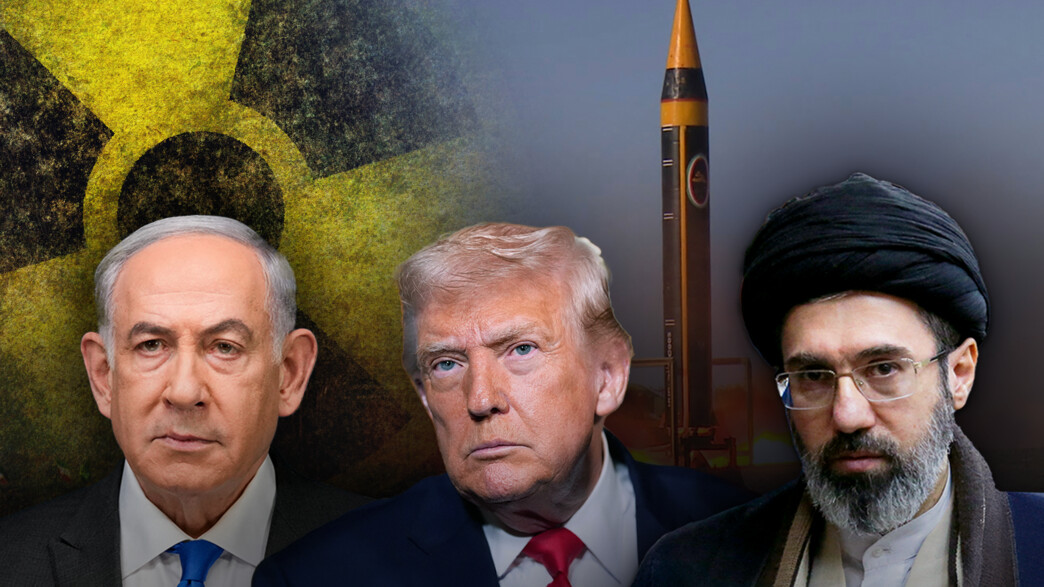
The support for Israel and the war with Iran cause a shock to both the Democrats and the Republicans • Senior Democrats are frightened by the success of anti-Israel candidates • A sharp attack in the Republican Party on the agreement and on the support for Israel
The debate surrounding the foreign policy of the United States towards Israel and Iran is deepening the rifts within the Democratic Party and the Republican Party, and is becoming one of the most important and influential issues in the congressional election campaign. According to a New York Times analysis, these controversies not only affect the midterm elections, but may also shape the 2028 presidential race.
In the Democratic Party, the controversy surrounding Israel has already left a big mark. Last week, two sitting members of Congress in New York lost in the primaries to candidates who presented them as not sufficiently critical of Israel. The background for this is a large drop in public support for Israel among Democratic voters since the beginning of the war in Gaza almost three years ago.
Even in the Republican Party, there are sharp conflicts regarding Israel and Iran, especially within the “America First” camp of President Donald Trump. Many supporters of the separatist approach, who supported Trump due to his promises to avoid wars overseas, claim that they were disappointed by his decision to intervene in the war against Iran. According to them, the intervention also led to an increase in the cost of living and prices in the United States.
Against this background, the struggle at the top of the Republican Party is intensifying, which may also signal the battle for the presidential nomination and the right to succeed Trump. Thus, on the one hand, Vice President J.D. Vance, who symbolizes the opposition to war, the support for a compromise with Iran and the desire to focus on internal affairs in the US, is being established – and along the way, attacking and deposing ministers in Israel against the background of their opposition to the agreement with Iran. On the other hand, Foreign Minister Marco Rubio is becoming established, who expresses great support for Israel and implicit reservations about the agreement with Iran, and continues to try and promote US military moves in the world, for example in Cuba.
In addition to the war itself in Iran, another point of contention has opened up. After Trump began negotiating with Iran, he was also criticized by the hawkish wing of his party. The same sources express disappointment that, in their view, the war did not achieve its goals, did not sufficiently damage Iran’s military and nuclear capabilities, and did not lead to the overthrow of the regime in Tehran.
The New York Times writes that these divisions are already affecting the results of the primary elections. Some moderate Democrats are losing in the primaries, and more candidates are in danger in the upcoming elections. At the same time, some Republican voters are choosing not to go to the polls, a phenomenon that could harm the party if it continues in the general election in November.
These developments encourage critics within both parties to try to reshape their ideology and political platform, a struggle that will likely continue in the run-up to the 2028 presidential race. Among the leadership of the Democratic Party there was a special concern following the success of the radical left candidates in New York. The voters gave the party’s nomination to two democratic socialists who expressed very critical positions towards Israel.
The Democrats are terrified of the anti-Israelites
Matt Bennett, one of the founders of the moderate Democratic research institute Third Way, said that there is a feeling of pressure in the party due to the fear that the strengthening of extreme left candidates will alienate Jewish and moderate voters. According to him, the Democrats must find a way to deal with the controversy “so that it does not disintegrate the party”.
Criticism of some of the rhetoric of the progressive left is also heard among Democrats belonging to the political center. Scott Stringer, former Comptroller of the City of New York, said that some of the pro-Palestinian statements of the left-wing candidates are clearly anti-Semitic. According to him, if there are elements that try to use anti-Semitism as a political tool, a fierce internal struggle within the party is expected.
However, so far most of the victories of left-wing candidates have occurred in districts that are considered safe for the Democrats, so no change in the balance of power in Congress is expected. The real fear of the Democratic Party leadership is that candidates from the left wing will also win in competitive districts, but will have difficulty attracting centrist voters in the general elections, where economic issues are expected to be more central.
The national struggle of the progressives from the left
Trump has already used these developments to attack the Democrats, calling the socialist candidates who won in New York “communists”. On the other hand, the CEO of the Democratic Jewish Council of America, Haley Swifer, claimed that these are exceptional cases and that such candidates cannot win in most parts of the country.
However, more progressive candidates are running in states like Colorado, Michigan and Wisconsin. They hope to prove that candidates with distinctly left-wing positions can win even in swing states and attract some of Trump’s voters.
One of the main focuses is the Senate primary in Michigan in August. The leadership of the Democrats sees these elections as a particularly important test on the way to trying to gain a majority in the Senate. Senate Minority Leader Chuck Schumer is backing moderate candidate Haley Stevens against Abdul al-Sayed, a progressive candidate and former public health official.
A pollster from Michigan, Richard Chuba, estimated that one should not draw any conclusions from the New York results regarding the vote in Michigan, because it is a different electorate, older, less educated and with a higher proportion of black voters. According to him, although the war in Gaza is important to many of the democratic voters in the country, it is at the bottom of the list of issues that motivate them to go to the polls.
In contrast, El Said argued that Michigan residents share the same sense of frustration that exists in New York. According to him, voters are fed up with politicians who prefer to collect donations from corporations instead of dealing with the cost of living, food prices, rent and the possibility of purchasing an apartment. He added that the war in Gaza is also an economic issue for him, because the public understands that their tax money is financing the fighting.
Turmoil in the Republican Party as well
There is also a clear division among the Republicans, especially between the generations. According to a New York Times poll, 53% of Republicans under the age of 45 are not satisfied with Trump’s handling of the war with Iran, while three-quarters of older Republicans actually support it.
The controversy stems, among other things, from the change the party has undergone since the rise of Trump in 2016. Trump built the party around a message of reluctance to military involvement overseas, and therefore his extensive support for Israel and the decision to attack Iran aroused opposition among some voters of the MAGA movement.
On the same day that the socialist candidates won in New York, former congresswoman Marjorie Taylor Green announced that she was leaving the Republican Party due to her opposition to the war with Iran. It was preceded by a similar announcement by the conservative and influential media personality Tucker Carlson, who left the party for the same reason.
Popular television and podcast host Megan Kelly recently said that instead of arguing with the left, conservatives have found themselves waging a “kind of civil war” internally over the Iran issue. Despite this, Trump’s position in the party is still considered very strong, and most of the candidates he supports continue to win primaries.
The agreement with Iran is in focus
In recent weeks, the focus of the debate has changed once more. After the Trump administration reached an initial agreement with Iran, some of the Republican hawks, who enthusiastically supported the war, criticized the transition to diplomacy. Fox News anchor Mark Levin called the move “one of the most surprising military and diplomatic coups he’s seen.”
Even from a political point of view, the picture is still not clear. Congressman Thomas Massey of Kentucky, who was one of the fiercest critics of the Iran war within the Republican Party, lost in the primary to a candidate supported by pro-Israel donors.
In fact, only after the mid-term elections will it become clear how deep the rifts and fissures are within the two parties. Their full impact may not be felt until the 2028 presidential race, when new candidates will be required to redefine their position on the role of the United States in the world, relations with Israel, and policy toward Iran.
http://www.q-zine.org
MY SITE TITLE – Just another WordPress site
DEKO de l'eau – Décoration intérieure spécialisée en design scandinave
Innowa
Effective Change Management – NetSuite Implementation Specialists
Code To Winning
Postcards from History – Postcards From History
About Us – Futuristic Home
arknova.com.tr
Hev
2coins.us
Welcome – royalalphamoversandpacker.com
Empresa de eventos y espectáculos Huelva | Bernal Ⓡ 2024
1Board | Innovative e-Learning platform supports your business, mLearning, LMS,
MMR Tavares – Maquinas de Costura Indústrial, Doméstica, Bordado, Acessórios, Peças e Assistência Técnica
Överby biltvätten
Tim Felius – Radio-DJ & Voice-Over
http://www.godblessu.co.in
Помогаем в закупках — Сделаем Ваш процесс закупок простым!
Yeral IT and Cloud services – IT Solutions and Cloud Services
Bharat Toys
Simple Recipes. Big Flavor. Joyful Meals
Trang chủ – Quản trị cuộc sống
Concern for the Girl Child – Empowering the Girl Child
CM BAT – Entreprise de construction, maçonnerie, rénovation