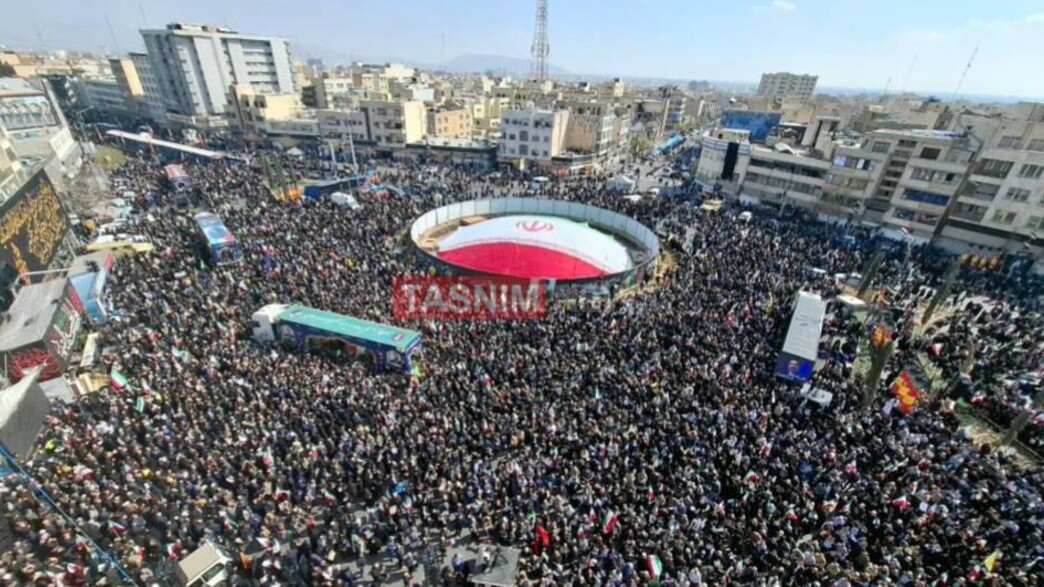
The funeral of the assassinated Iranian leader will begin tomorrow and end next week.
Iran is preparing for the funeral of Ali Khamenei, in what is expected to be the biggest event in the history of the Islamic Republic. The late leader’s funeral will be held as a large-scale state event that will last about a week – starting tomorrow and ending next Thursday, and will be spread across several major cities in Iran and Iraq. The ceremonies will take place in Tehran, Qom and Shahid, with a short foray to Iraq as well.
According to the schedule published in the official media and reported in Iran, a tribute to foreign representatives and leaders is expected to take place in Tehran tomorrow, and according to the reports, representatives from dozens of countries are expected to participate. On Saturday and Sunday in July, public farewell ceremonies will be held in the capital, and on Monday the main funeral procession will take place in Tehran. On Tuesday, ceremonies will be held in the city of Qom, and on Thursday the burial event will take place in Mashhad. It is estimated that the coffin may also reach the cities of Najaf and Karbala in Iraq, which are holy to Shiites.
In Iran, the event is presented as one of the largest mourning ceremonies in the country’s history, and according to estimates published in the media, millions of people are expected to participate. The mayor of Tehran estimated that 15 to 20 million participants may gather in the capital city alone, alongside millions more in the other cities.
The security forces are preparing for a large-scale operation to secure the events. According to reports, the Basij forces and the Revolutionary Guards will be responsible for crowd management, transportation and logistics. As part of the preparations, the possibility of canceling flights is taken into account, and large parking areas and reception complexes will be established. Schools, mosques, sports halls and universities may serve as accommodation for participants.
The extensive preparation comes at the height of tensions with the US and Iran, and in Tehran they are determined to present a large and impressive event that “goes smoothly” and is conducted without a hitch. In the extensive sequence of events, many senior Iranian officials are expected to participate, starting with President Pashkhian, the Speaker of the Parliament Kalibaf and many others. At the same time, there is a big question mark if this time we will see the new Iranian leader Mujtaba Khamenei for the first time, and if he will attend his father’s funeral ceremony, as well as, for example, the commander of the Revolutionary Guards, Ahmed Vahidi, who has not been seen in public since he was appointed to the position after his predecessor was assassinated during the war.
Iran is well aware of security sensitivities, and this morning Ali Abdullahi, the commander of Khatam al-Anbiya, the joint emergency command of Iran’s armed forces, issued an express threat to Israel and the United States “against any miscalculation” during the funeral, saying that there would be “severe and unfortunate reactions” from Iran’s security forces. Along with the fear in Iran of the possibility of an attempted attack by Israel or the United States, there are There are also many concerns in the field of internal security, due to the gathering of so many people in a specified place, and the appearance of leaders and public figures. In this context, Iran remembers the ISIS attack on the anniversary of the assassination of Qasem Soleimani two and a half years ago, which claimed the lives of about a hundred people.
Beyond the religious significance, in Iran the funeral is also seen as an event of political importance. To a certain extent, it is considered a test of loyalty for the new leadership and an attempt to present the strength, cohesion and stability of the regime after the war and after the postponement of the burial date.
The delay in holding the funeral also became part of the political story. The ceremony was supposed to take place months earlier, but was postponed due to the war and security considerations. Critics of the regime have used the postponement to deride attempts to organize mass participation, while supporters of the regime present the events now as proof of the regime’s durability and legitimacy.
Crash giochi: perché conquistano i giocatori e cosa li rende così coinvolgenti – Tutto Bologna Web
Bonus online: come sono cambiati da benvenuto a VIP
Tips Voor Het Organiseren Van Een Gratis Game Avond
Hoe Statistieken Helpen Bij Motocross Wedden
Gokbudget Beheren: Praktische Tips & Spelregels
Britsino Casino Review & Ratings ᐈ (2026)
How Storage Bags Are Transforming Daily Life in BD
Rising Demand for Storage Solutions in Bangladesh
Rising Demand for Storage Bags in BD: A Closer Look
Rising Demand For Storage Solutions In Bangladesh 7Ab1Ed3B7Ef4
Rising Demand for Storage Bags in Bangladesh – Corbin Robbins
Understanding the Popularity of Pomodoro Timers in Bangladesh
Understanding The Rising Popularity Of Pomodoro Timers In Bangladesh
Rising Interest in Pomodoro Timers in Bangladesh
Understanding the Pomodoro Timer Market in Bangladesh
Exploring the Rising Trend of Pomodoro Timers in Bangladesh
Browbomb49
Mathews's صفحة الملف الشخصي
Bladeroom24
George Cheng's Σελίδα Προφίλ
Pandora Archive
Error: The URL cannot be retrieved.
Newsline.Pl
DanitaSchmitz (@DanitaSchm69970) on X
Pin on Health