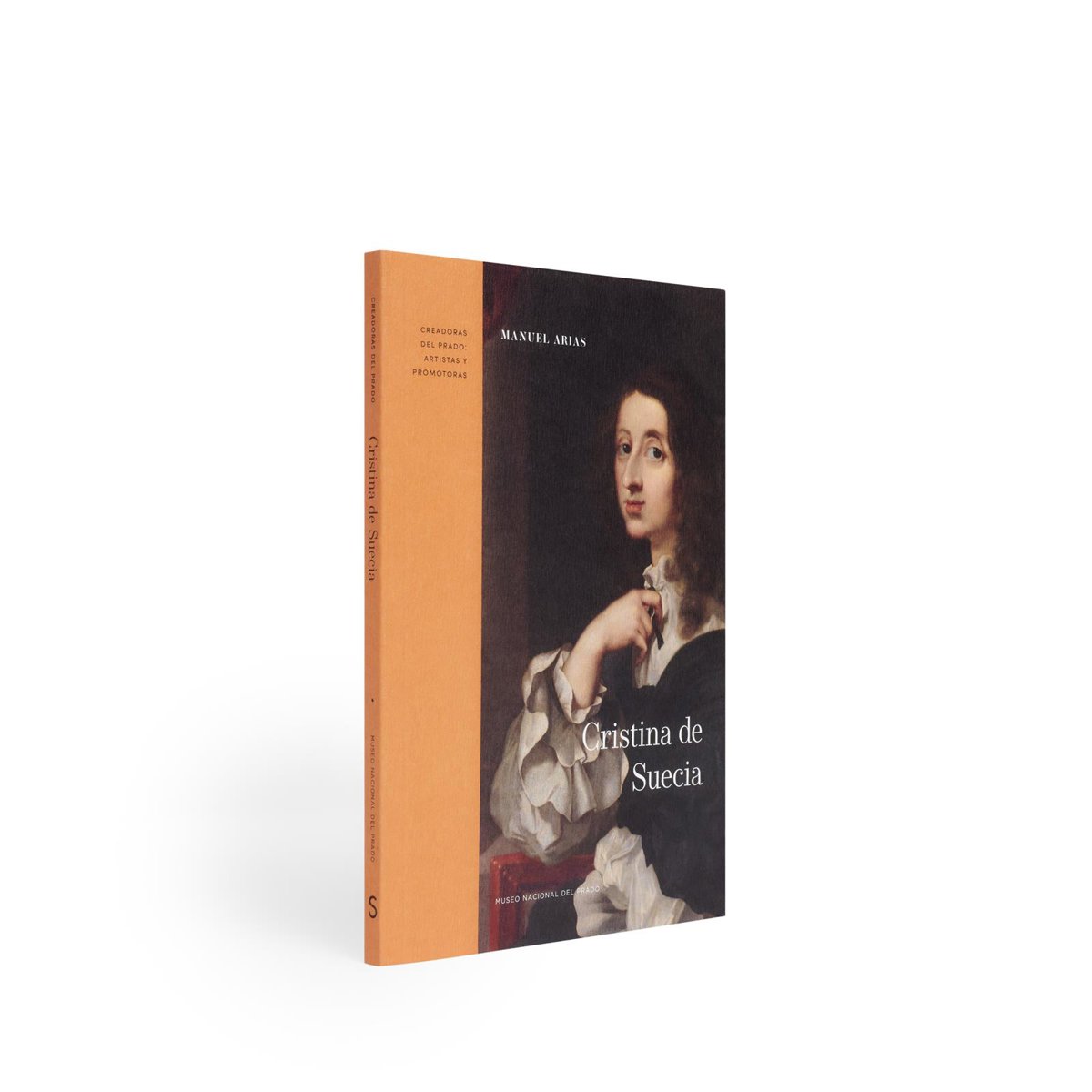
The National Prado Museum presents ‘Creators of the Prado’a new editorial series co-published with Sílex Ediciones that will reinforce research on the role of women in the history of art and which the gallery inaugurates with a publication dedicated to Cristina of Sweden.
Thus, it is directed by the professor of Art History and director of ‘El Prado en feminine’, Noelia García Pérezand the institution’s 19th-century painting conservator, Carlos G. Navarro.
The collection will bring together a total of fifteen volumes dedicated to female figures whose work was “fundamental” in the configuration of the museum’s heritage and thus joins other editorial lines such as ‘Gender and Art in the Museum. The Prado Collection’co-published with Routledge and aimed at the international projection of this line of research.
This first volume analyzes the role of Queen Christina of Sweden in the creation of the museum’s classical sculpture collection and her influence on European Baroque culture.
Furthermore, on the occasion of the 400th anniversary of her birth, which is commemorated this year, the Prado Museum has prepared a program of activities aimed at highlighting the figure of the queen and the significance of her artistic legacy.
Each publication will address the career of female personalities such as María of Hungary, Sofonisba Anguissola, Isabel Clara Eugenia, Clara Peeters, Artemisia Gentileschi, Cristina of Sweden, Mariana of Austria, Mariana of Neoburgo, Isabel de Farnesio, Isabel de Braganza, Rosario Weiss, Rosa Bonheur, Isabel II, Antonia de Bañuelos or María Blanchard.
After Cristina of Sweden, those dedicated to Isabella of Farnese and Mariana of Austria, all protagonists of the Prado’s exhibition programming, will be published this year.
The first volume is written by the head of the Sculpture Collection until 1700 at the Prado Museum, Manuel Arias, who analyzes the figure of this sovereign.
“Known as the ‘Minerva of the North’, Cristina of Sweden turned art, thought and collecting into instruments of power“explains the art gallery.
His career, marked by the abdication of the Swedish throne and his conversion to Catholicism, culminated in his settling in Rome, where he established an influential intellectual and artistic center in the Riario Palace. From there he assembled an outstanding set of classical sculptures that, over time, became an essential part of the Prado collections.
Hastelloy C276 Tubes
Incoloy 800 800H 800Ht Tubes
Incoloy 825 Tubes
Inconel 625 Tubes
Inconel 718 Tubes
Monel 400 Tubes
Nickel Alloy 200 Tubes
Nickel Alloy 201 Tubes
Sa249 Tubes
Stainless Steel 304 304L Welded Tubes
Stainless Steel 310 310S Tubes
Stainless Steel 316 316L Tubes
Stainless Steel 316 316L Welded Tubes
Stainless Steel 316Ti Tubes
Stainless Steel 317 317L Tubes
Stainless Steel 321 321H Tubes
Stainless Steel 347 347H Seamless Tubes
Stainless Steel 904L Tubes
Stainless Steel 904L Welded Tubes
Super Duplex Steel Uns S32750 Tubes
Emergency Exit Doors Manufacturer in Angola
Emergency Exit Doors Manufacturer in Ankleshwar
Emergency Exit Doors Manufacturer in Argentina
Emergency Exit Doors Manufacturer in Baddi – mp swastik doors
Emergency Exit Doors Manufacturer in Ballari – mp swastik doors