Once in surplus supply, memory chips are now being “sucked” to the point of exhaustion in the AI fever, pushing the consumer electronics market into a period of sharp price increases.
Early last week, Apple suddenly announced that all of its devices, except iPhone, Apple Watch and AirPods, had raised prices 15-25% higher than before. The reason cited is the increasing cost of memory chip components. CEO Tim Cook even told WSJ that its impact was like “a once-in-a-hundred-year flood”, that he “hadn’t seen anything like it in 40 years in the industry”.
Fortune and The Verge Together, they assessed Apple’s move as “shocking”, because they have always been prioritized by the supply chain, showing that the memory chip market is much harsher than it seems. Western media named the crisis RAMageddon – RAM apocalypse.
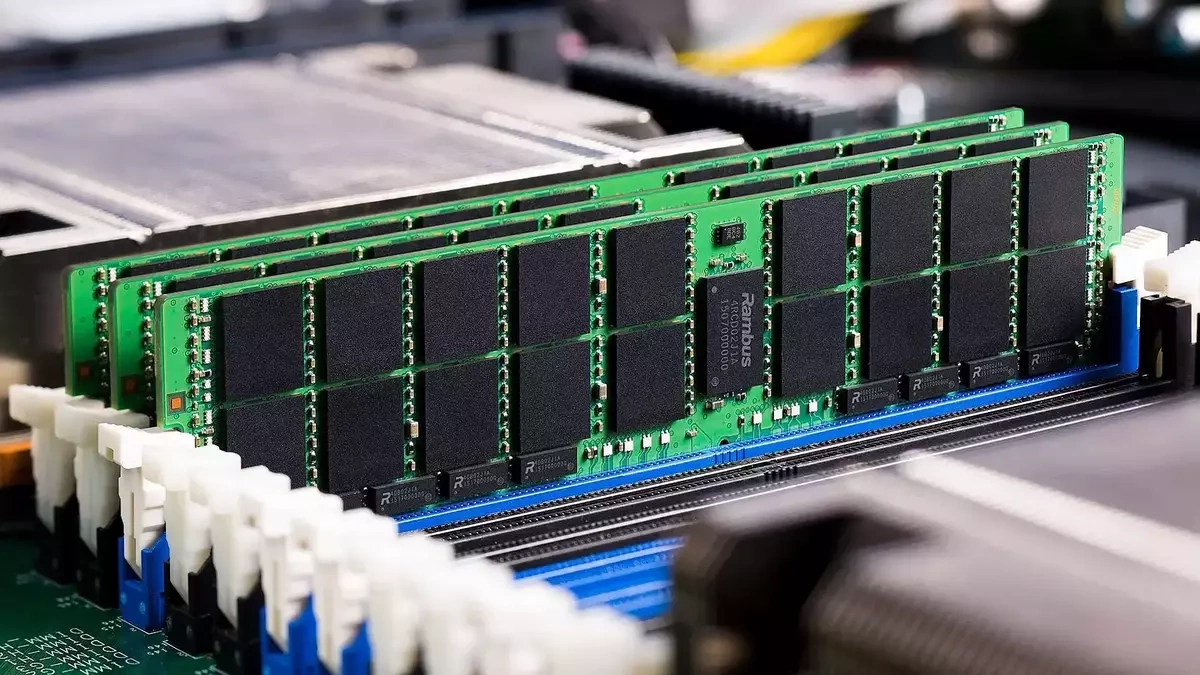
Some Rambus brand RAM sticks mounted on the motherboard. Image: Rambus
Not only Apple, the consumer electronics market recorded a series of other technology companies increasing product prices. Microsoft announced an increase in the price of Xbox game consoles by 100-150 USD depending on the version, and at the same time stopped selling the highest-end 2 TB memory model. Dell, HP, Lenovo and Asus adjusted their product portfolios by raising prices or reducing memory capacity. In the smartphone segment, companies such as Samsung, Xiaomi, Oppo, Vivo, Honor and Huawei offer higher starting prices for some new phone lines.
In mid-May, Goldman Sachs warned that the global memory chip market was facing the most serious supply-demand imbalance since 2011 due to AI-related causes. This investment bank predicts that shortages of both DRAM and NAND flash will continue and worsen, lasting until 2028 as supply struggles to keep up with the constantly increasing demand of data centers.
A plate for the “gluttonous giant”
For many years, memory chips such as DRAM and NAND Flash mainly served business servers, personal computers, smartphones, wifi routers and other consumer electronics devices. Demand is assessed to be relatively stable, even surplus, and increasingly cheaper due to continuous improvement in production technology, according to Reuters.
However, stability gradually disappears from the end of 2025, when most AI systems such as OpenAI’s ChatGPT, Anthropic’s Claude or Google’s Gemini switch form from processing to inference and need more memory. From here, the consumer electronics market fell into difficulty.
Memory is one of the two most important components on any computer system. If the CPU plays the role of the “brain” of the device and processes large amounts of information at extremely fast speeds, memory is where data is stored and provided to the processor, like a plate containing food.
The problem becomes worse when AI data centers favor high-bandwidth memory (HBM) – a specialized type that stacks multiple chips on top of each other, allowing for higher throughput for AI inference. HBM has very high profit margins, so manufacturers decided to focus production and technical investment on this segment. That means they have to reduce their focus on conventional DRAM and NAND.
As a result, there are not enough “plates” of food for all the “gluttonous giants”, according to Fortune. Cloud computing companies are spending hundreds of billions of dollars to build AI data centers and acquire a large amount of HBM memory supply, while computer, phone, and consumer device manufacturers compete for the remaining small portion.
“Memory chip manufacturing is becoming a zero-sum game,” said a study on the memory crisis published by Deutsche Bank on June 18. “For every additional wafer for HBM and AI servers, the supply for phones, computers and cars is reduced. This situation pushes up memory prices and affects many economic sectors. At this time, memory chips are no longer a common commodity, but become a clear macroeconomic variable.”
Four stages of scarcity
Theo Tom’s Hardwarethe memory chip crisis can be divided into four stages. First, at the end of 2025, when companies like Samsung, SK Hynix or Micron start reducing production of DDR4 and popular NAND to switch to HBM with a slight “increase” in price.
Percentage chart of DRAM and NAND price increase from the second quarter of 2024 to the second quarter of 2026, with the peak increase occurring in the first quarter of 2026. Source: TrendForce/Dramwatch
By the first quarter of 2026, data recorded by market research company TrendForce showed that DRAM prices increased by 90-95% compared to the same period in 2025, causing “a more serious supply-demand imbalance than expected”. Speculators began to collect chips, and some companies slightly adjusted product prices. Xiaomi 17 Ultra launched 500 yuan higher than the previous generation. Xiaomi President Lu Weibing then admitted that component costs put direct pressure on selling prices. A similar situation also occurs with high-end models from Vivo and Oppo.
The third phase falls in April-May, when computer manufacturers begin to issue warnings to the entire industry because DRAM prices continue to increase by 58-63%, and NAND by 70-75%. The majority of NAND Flash production goes to enterprise SSDs. Large cloud service providers are also “clearing up supply” through long-term agreements, leaving the consumer electronics market in a state of severe scarcity.
Jukan05, Popular analyst on X, posted a chart in May showing a visual look at the vertical price momentum of the memory chip market. Source: X/Jukan05
Since June, the problem is no longer about selling prices as the consumer electronics sector recorded shortages, lack of capacity to distribute output and inability to sign contracts. Many small businesses can barely buy chips because manufacturers prioritize AI partners or long-term contracts.
Reuters According to estimates, higher HBM profits make memory chip companies prioritize this line, helping them enter a long “honeymoon” period thanks to the AI fever. Micron Technology achieved revenue of 41.46 billion USD in the third fiscal quarter of 2026, four times higher than the same period last year, and the stock increased 700% in the past year. SK Hynix’s stock price also increased 400%, while Samsung Electronics reached a capitalization of over 1,000 billion USD for the first time thanks to high profits last year.
On June 25, Samsung, SK Hynix and Micron were sued by 17 plaintiffs in the District Court in Northern California (USA) for allegedly colluding to limit DRAM supply to push prices up 700% in four years. The lawsuit claims that the world’s three largest memory chip manufacturers, currently accounting for 90% of the global DRAM market share, have simultaneously transferred production capacity to HBM to serve AI, thereby cutting DDR3 and DDR4 output, causing supply shortages. The plaintiff recalled that Samsung and SK Hynix also admitted participating in the DRAM price-fixing collusion case in 2005, in which SK Hynix was fined 185 million USD, and asked the court to issue a ban and pay three times the damages.
Difficulties continue
For hardware manufacturers, the big question now is how the memory chip crisis will impact their business and how much worse the situation could get.
Gartner research in February showed that higher-than-expected increases in memory costs will reduce global PC and smartphone shipments by 10.4% in 2026, and forecast their prices to increase by 17% and 13%, respectively, compared to last year. “With demand exceeding supply and shortages, price increases are inevitable,” Gartner analyst Ranjit Atwal told CNBC. “Consumers will be the ones to bear the consequences.”
Theo WSJmemory chip manufacturers are rushing to add new lines but cannot do so overnight due to the cost of billions of dollars and many years of construction. Analysts predict that shortages and rising prices will continue for the next few years. Deutsche Bank predicts supply will only stabilize after 2028, while Wall Street predicts memory prices will increase 30-40% in the fourth quarter of 2026 and another 40-45% in 2027.
Analyst Atwal said that escalating costs could cause users to keep their current devices longer, which means the upgrade time will be prolonged. They will have to compromise with themselves about what they need, and manufacturers will have difficulty attracting customers with new features because the price is too high.
Jon Gold, vice president of supply chain and customs policy at the US National Retail Federation (NRF), has a similar view. He believes that this trend could lead to a shortage of consumer electronics in addition to the risk of price increases, making the market gradually unstable in the next few years.
In early June, a user coalition led by NRF wrote to the US Treasury and Commerce Departments, asking the government to consider the “urgent imbalance” of memory chips and the “possibility of significant and sustained price increases” of consumer electronics. The group called on the government to work with manufacturers and partners to “protect users, workers and businesses of all sizes from harm”.
Mashable commented, the memory chip crisis shows that AI has become the dominant factor in any related market, such as GPU or energy before. For the consumer market, the consequence is that electronic device prices may increase as memory costs continue to escalate, at least in the next 1-2 years.
SEO local pentru Timișoara și Banat: ce funcționează specific
De ce nu acceptăm clienți care vor poziții garantate
White-hat vs Gray-hat SEO: unde tragem linia și de ce
De ce începem fiecare proiect cu un audit, nu cu acțiuni rapide
Recenzii Google: cum le obții etic și ce face Google cu ele
People Also Ask Cum Apari In Sectiunea De Intrebari De Pe Google
Ai Overviews Si Agentiile Seo Cum Se Schimba Piata
Penalty Google: cum recuperezi un site afectat (procesul nostru)
Knowledge Graph: cum apari ca entitate în Google, nu doar ca site
Canibalizare Keyword Cum Identifici Si Rezolvi Paginile Care Se Bat Pe Acelasi Cuvant
Procesul nostru pentru clienți noi: primele 30 de zile
Cum prioritizăm optimizările în audit-urile SEO complexe
Ce este rata de conversie – Target SEO
Optimizarea imaginilor pentru SEO mai bun
Importanta Vitezei De Incarcare Pentru Pozitiile In Google
Cum Alegi O Agentie Seo In Brasov
Cum Alegi O Agentie Seo In Iasi
Cum alegi o agenție SEO în Cluj-Napoca
Target Seo Vs Alte Agentii Seo Ce Ne Face Diferiti
Ce Este Google E E A T
Ce Este Generative Engine Optimization Geo
Cum Implementezi Strategii De Generative Engine Optimization Geo
Kpi Ce Sunt Indicatorii Cheie De Performanta Si Cum Ii Folosesti
Cum Alegi O Agentie Seo In Timisoara
Cum Alegi O Agentie Seo In Bucuresti