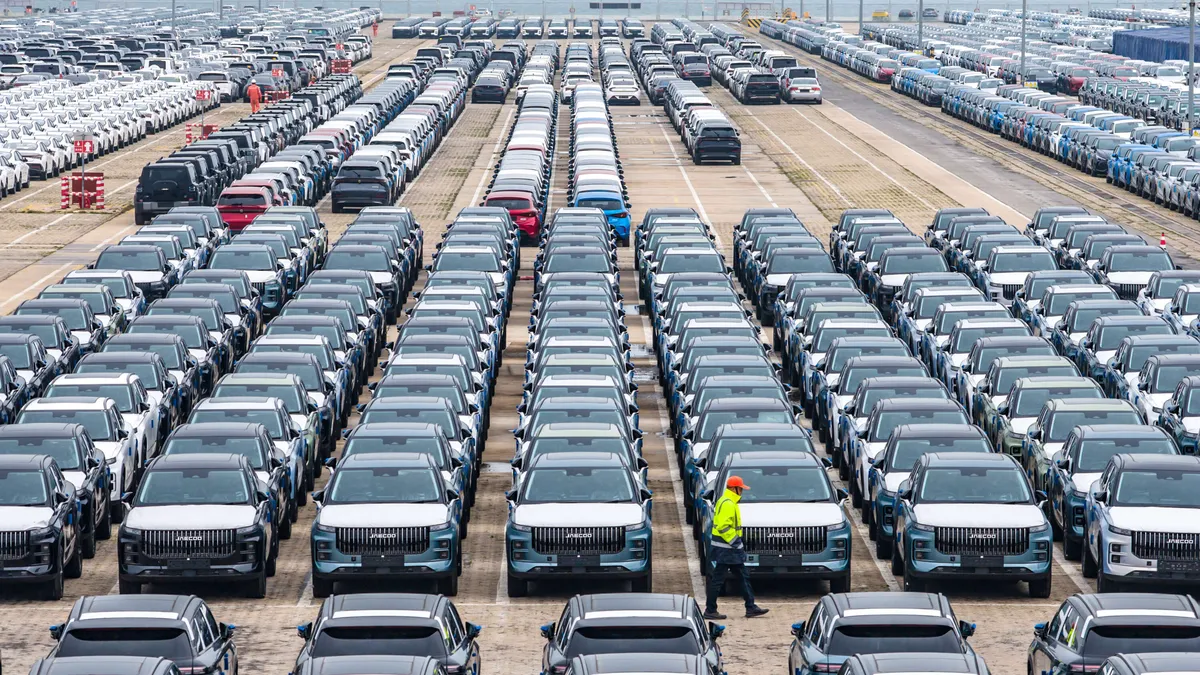
The Chinese Government has announced a new action plan for the peak of carbon dioxide emissions, which sets ambitious goals for the electrification of the world’s largest car market, says Cnevpost.
According to a recent plan, the share of new energy vehicles (NEV) in the country’s entire car fleet should rise to 30 percent by 2030. NEV vehicles do not only mean electric cars, but also plug-in hybrids and electric cars equipped with a combustion engine, or EREVs.
According to statistics from China’s Ministry of Public Security, there were 43.97 million NEV vehicles in the country at the end of 2025, accounting for 12.01 percent of the total car fleet. Of these, there were approximately 30.22 million fully electric cars.
The road map released as part of China’s 15th five-year plan means that the number of electric vehicles in the country must more than double in the next five years. So this means roughly 50-80 million new NEVs over the next five years to meet the target.
Emphasis is on heavy traffic and infrastructure
In addition to passenger cars, the plan sets goals for professional transport. The goal is for the share of new energy transport vehicles to rise to 25 percent by 2030.
The Chinese government demands faster electrification, especially in the public sector and in equipment used in construction sites, mines, ports and airports. The large-scale introduction of heavy electric trucks is also supported.
To support the transition, China plans to significantly develop charging and battery exchange networks. There are also plans to build “zero-emission road corridors” especially on busy highways, where, in addition to charging points, green hydrogen, ammonia and methanol will be used. Similar zero-emission corridors are also being sought for water transport.
Extensive energy breakthrough in industry
Outside of the transport sector, the plan sets strict goals for the country’s energy consumption. Carbon dioxide emissions in relation to gross domestic product must be reduced by 17 percent from the 2025 level by 2030.
The share of non-fossil energy sources in consumption must rise to 25% (in 2025, the share was 21.7%). The target for the installed capacity of wind and solar power is more than 2.8 billion kilowatts. The target for nuclear power capacity is 110 million kilowatts.
Director of the Energy Research Institute Tian Zhiyu states in the report that China is moving from a coal-driven development phase directly towards non-fossil energy sources, bypassing the phase of oil and gas dependence.
In terms of industry, the goal is to establish approximately 100 national-level zero-emission parks and 500 zero-emission factories. In addition, China is establishing a national green transition fund to attract private capital for carbon neutrality projects.
In the future, the strictest energy saving requirements will apply to the steel, aluminum, cement and petrochemical industries.
The German car giant rattles around – The wretched Chinese market and the Iran war ruined profit expectationsElectric cars became disposable in this giant market – Cars that are a few years old are scrapped when the owner wants a new oneSomething happened between the EU and China that has not been seen for yearsRussia’s fuel shortage is hitting Chinese electric car manufacturers
https://symbiota.mpm.edu/profile/userprofile.php?userid=64014
Open Discussions
Samishelby
solanatokensol | Perfil
solanatokensol | Profile
Sami Shelby | Perfil
solanatokensol | Perfil
ANP no AVA: solana token maker | MOOC IFRO
Solanatokensol
Sami Shelby: Blog | IF Goiano – Idiomas
FRAUD RISK ASSESSMENT QUESTIONNAIRE –
solanatokensol | Profile
solanatokensol | Profile
solanatokensol | Profile
solanatokensol | Perfil
solanatokensol | Profile
خدمة الشباك الواحد – sol tools
桃園市上大國民小學 – solanatoke 的帳號內容
| Bogotá mi huerta: el hogar de la agricultura urbana
Solanatokensol
solanatokensol | Profile
TrainingEvaluation- old data –
Sami Shelby's صفحة الملف الشخصي
solforger solana token – NIASRA
Profile | AAC