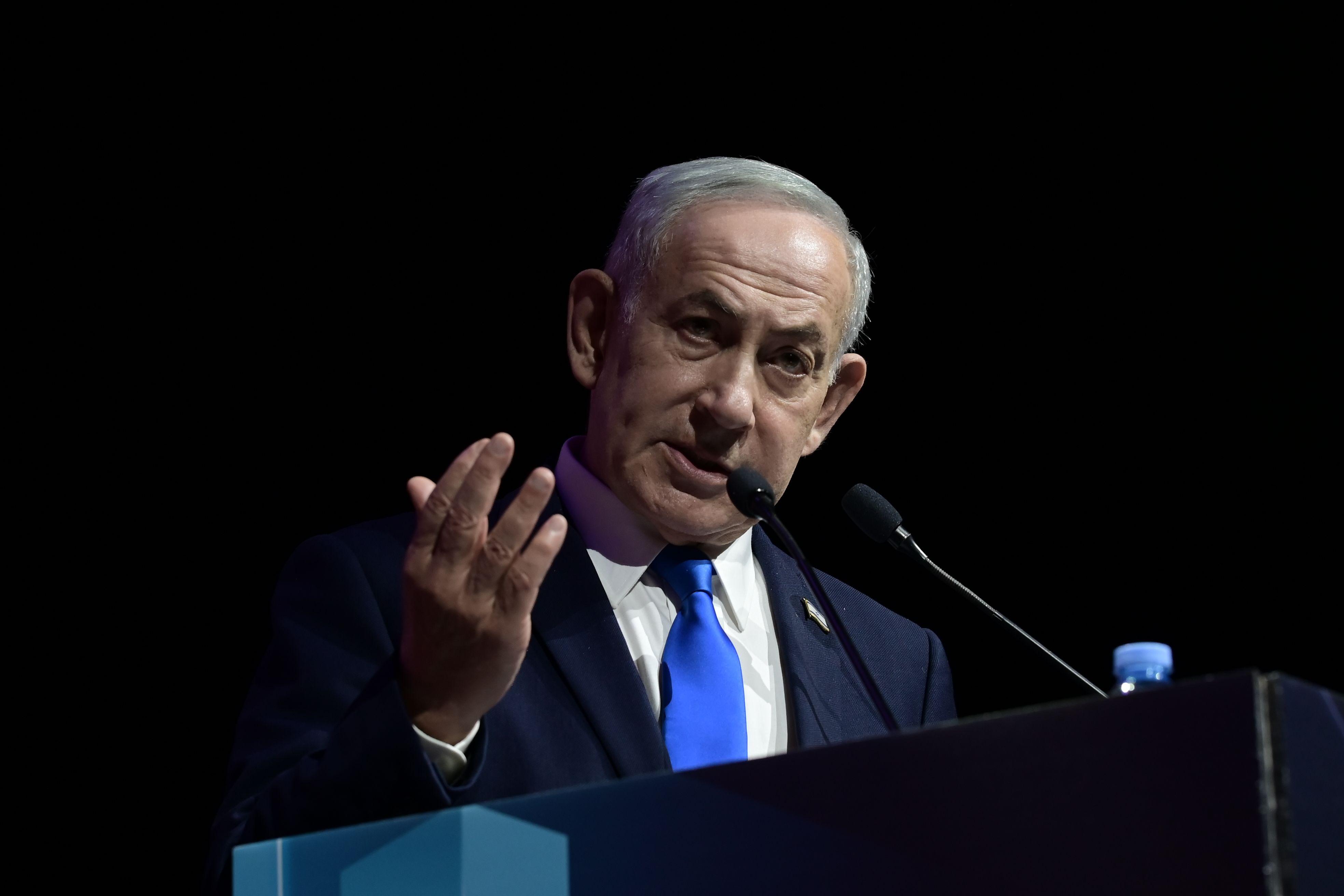
The chairman of the Knesset parliamentary committee, the Likud MP About catannounced that the political elections in Israel will be held on October 27a date established by law, as the current Knesset will conclude its four-year term this week, on July 17. The reports it Times of Israel.
Knesset legal counsel Sagit Afik added during the discussion that the current Parliament “will fulfill its mandate and will not be dissolved,” meaning that no law is necessary for early dissolution. It would be the first election to be held on schedule in Israel in nearly 40 years. Furthermore, the one driven by Benjamin Netanyahu it would be the first government to complete its mandate in over 50 years of history.
Israel elections, Netanyahu’s rivals
Here are Prime Minister Benjamin Netanyahu’s main rivals in the October 27 elections:
Gadi Eisenkot, the general
The son of Moroccan immigrants, 66-year-old Gadi Eisenkot enjoys considerable popular support, largely due to the deaths of his son in combat during the Gaza war and two grandchildren. With limited experience, this former chief of staff, who also served as military attaché to prime ministers Ehud Barak and Ariel Sharon, entered politics in 2022 alongside centrist Benny Gantz, his predecessor as army chief. Maintaining an ambiguous position on the Israeli-Palestinian conflict, he served in Netanyahu’s war cabinet between October 2023 and June 2024, before resigning.
A fervent critic of the conduct of the war in Gaza and the policies of the prime minister, he founded his Yashar (Right) party in September 2025. This party brings together personalities known for their left or right-wing positions, as well as the daughter of two Hamas hostages kidnapped on 7 October and the former head of the Shin Bet (Israeli secret service). His rather slow speaking style distinguishes him from more flamboyant figures in Israeli politics, giving him, some say, an aura of wisdom.
Naftali Bennett, making a comeback
At 54, this former tech entrepreneur has established himself as a leading figure on the nationalist right and he became prime minister. After leading the Yesha Council, the main representative body of the settlements in the occupied West Bank, he entered politics within the national-religious camp, before becoming Minister of Education and then Minister of Defense.
In 2021, he surprised everyone by forming a diverse coalition spanning left and right, with unprecedented support from an Arab-Israeli party. It ended Benjamin Netanyahu’s 12 uninterrupted years in power, but his rule lasted only a year. After a period of retreat, he returned to prominence following the Hamas attack on October 7, 2023. Analysts believe he could attract right-wing voters disappointed by Netanyahu, but not willing to join the center or the left.
A hard-liner on security issues and against the creation of a Palestinian state, appears to some voters as a less divisive alternative to the current prime minister. A former commando, he is considered by many Israelis to be a man of action and uses his alliance with his former running mate, Yair Lapid, the current opposition leader, to gather as many votes as possible.
Yair Lapid, media personality
Former journalist, successful television presenter and then politician, Yair Lapid has been one of the best-known faces in politics for over a decade. Founding the centrist Yesh Atid party in 2012, this 62-year-old quickly established himself as one of Benjamin Netanyahu’s main opponents.
Minister for several times, in particular of Finance and then of Foreign Affairs, he briefly held the position of Prime Minister in 2022 as part of the power-sharing agreement with Naftali Bennett. Omnipresent on social media, he is a convinced secularist, a supporter of a centrist and liberal approach, and was notably one of the faces of the mobilization against the judicial reform that deeply divided the country before 7 October 2023.
However, Lapid struggles to gain support outside his base of urban, secular and moderate voters, and few observers see him winning the prime ministership on his own. With its few seats and its alliance with Naftali Bennett, it could once again find itself in the role of tipping the balance.
Avigdor Lieberman, the ultra-secular
Born in Soviet Moldova in 1958 and settled in Israel in the late 1970s, Avigdor Lieberman is a veteran of Israeli politics. He was Benjamin Netanyahu’s chief of staff and several observers credit him with a key role in Netanyahu’s election victory in 1996.
As the founder of the secular nationalist Yisrael Beiteinu party, he initially relied on Russian-speaking voters before gradually broadening his electoral base to include parts of the right wing. He is one of the few officials to have headed three major ministries: Foreign Affairs, Defense and Finance.
Very active on social media, where he regularly criticizes Netanyahu in a sometimes provocative style, he advocates an uncompromising approach to security. For years he has called for military conscription for ultra-Orthodox Jews and defends a secular vision of the state, which in his opinion is excessively dependent on the demands of religious Jews.
Ircam Forum
Sviridovgena 56546049
AllMyFaves
dalionauto.ru (ДАЛИОН.АВТО — CRM и учет в автосервисе и магазине запчастей) – host.io
Disqus Profile – annaesina
Буккроссер KadeevViktor
Профиль пользователя: Аппелов Андрей Викторович на портале kpilib.ru
Rolandus.org :: Просмотр профиля
Движение ТИГЕЛЬ – Практическая психология, НЛП, соционика, арт-терапия, кинезиология, профориентация :: Просмотр профиля
Forum-ID12175 – Profile from Dalion – powered by ASP-FastBoard
Информация — Профиль SalaevViktor — FlashBoot.ru
Профиль StasMolotov на Пикабу
Dalionauto.Ru
DalionAuto
Member.Php
500px
.
AntonNaev's Pastebin – Pastebin.com
http://www.lifeisphoto.ru/page.aspx?id=92031
::
RateevViktor (@rateevviktor) | Hashnode
Wikidot.com: DalionAuto
Роман Касьянов
Presentations by dalionauto
DalionAuto