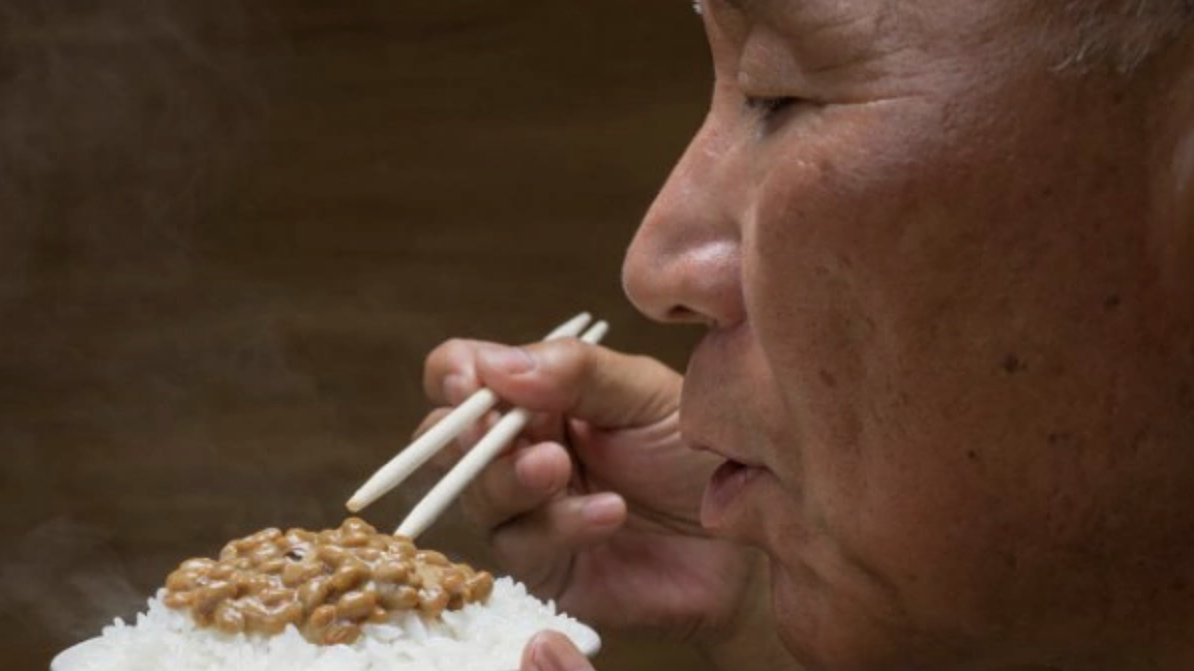
Natto – Japanese fermented soybeans is considered a “super food” that helps maintain bone, joint and cardiovascular health effectively.
In the context of population globalization becoming a trend, how to “aging healthily” (ie prolonging a healthy lifespan) has become the focus of public attention. With an average healthy life expectancy of 73 to 74 years old, Japan currently ranks among the top in the world.
According to family doctor Chen Xinmei (Taiwan, China), besides living habits, “natto” (fermented soybeans) in traditional Japanese culinary culture is an important “god” that helps maintain bone, joint and cardiovascular health.
Dr. Chen Xinmei said, most people know that calcium supplementation is the foundation for keeping bones strong. However, just consuming calcium alone is not enough, it is also necessary to rely on the activity of vitamin K2. If calcium is likened to a building material, then vitamin K2 is the “coordinator” responsible for command. The two core tasks of vitamin K2 include:
-
Conducting calcium into bones: Accurately guide the amount of absorbed calcium to be stored in the bones, thereby strengthening bone density.
-
Avoid calcium entering blood vessels: Prevent calcium from being deposited on the vessel walls, avoiding causing hardening and creating additional burden on blood vessels.
According to doctor Chen Xinmei, in nutritional science, vitamin K is mainly divided into two types: K1 and K2. The roles and absorption efficiency of these two types in the human body are very different:
-
Vitamin K1: Coming from dark green vegetables, the main function is to support “blood clotting”.
-
Vitamin K2 (short chain MK-4): Comes from egg yolks, chicken meat… has a short half-life and is difficult to accumulate stably in the blood.
-
Vitamin K2 (long chain MK-7): Comes from fermented foods, has a half-life of about 68 hours (nearly 3 days). Thanks to its long functional retention time, this form is extremely effective in increasing calcium utilization rate.
Doctor Chen Xinmei has provided a table comparing K2 content in popular foods (per 100 g). In particular, the MK-7 content in natto is at the top of the table compared to all foods:
-
Natto: MK-7 is about 900-1000 micrograms
-
Cheese: About 280-510 micrograms (mostly MK-8, MK-9)
-
Egg yolk: About 31 micrograms (short chain MK-4)
-
Chicken thigh meat: About 20-58 micrograms (short chain MK-4)
-
Sauerkraut: Total amount is about 5 micrograms (MK-7 only accounts for about 0.2 micrograms)
Therefore, the doctor pointed out that, if calculated according to the recommended daily supplement level of 90 to 180 micrograms of MK-7, each person only needs to eat about half a box (20 g) of natto per day to easily meet the standard.
Japanese people often eat natto with breakfast. Image: Haccola
With age, modern people often face double risks: both bone loss and decline in cardiovascular function. Dr. Chen Xinmei emphasized that through daily diet, reasonable supplementation of fermented foods rich in long-chain MK-7 can establish a more effective calcium absorption and distribution mechanism. This helps achieve a dual health care effect: “Bones have calcium, blood vessels do not calcify”, becoming an essential daily choice to build a healthy body.
However, doctors also especially note that because vitamin K itself has the effect of promoting blood clotting, patients who are using anticoagulants who want to supplement high doses of vitamin K2 or change their daily eating habits to eat large amounts of natto must definitely consult an evaluation and advice from a treating doctor or pharmacist first to ensure safety when taking the drug.
Events, Chat & Transfers | Race Timing Solutions
deck: Slides
Home.Php
https://pub45.bravenet.com/forum/static/show.php?usernum=3828411584&frmid=32&msgid=1079676&cmd=show
Προτιμάτε απλές ή σύνθετες διεπαφές παιχνιδιών;
Τι σας παρακινεί να δοκιμάσετε μια νέα διαδικτυακή πλατφόρμα
DSCVR
Εκτιμάτε τις άμεσες συναλλαγές στις εφαρμογές;
Home.Php
Can anybody advice me some cool online games?
online gaming
Can anybody advice me some cool online games?
S18 E10: The One About Teaching Sikhi More Authentically
How to Choose the Best Blonde Shade for Your Skin Tone. Understand cool blonde vs warm blonde and learn more about the Best blonde salon in Toronto.
Do you prefer simple or complex game interfaces?
online gaming
Do you prefer simple or complex game interfaces?
Can anybody advice me some cool online games?
‘Whole Lotta Love’ for town as National Highways funds M5 underpass improvements
online gaming | Project WET
Canj anybody advice me some cool online games?
Redirecting…
Can anyone recommend a good online site?
online gaming
Forum