Increasing memory chip prices make the world’s leading smartphone company unable to maintain profits.
In the past quarter, Samsung’s (MX) mobile business recorded a loss of 0.7 trillion won (about 480 million USD), according to an announcement from the company, July 30.
This segment – including phones, laptops, tablets and wearable devices – earned a profit. 33.2 trillion won (about 23 billion USD), increased over the same period last year thanks to stable sales of both the Galaxy S and Galaxy A series, but failed to achieve profits due to increased component costs.
According to 9to5Google, TM Roh, head of Samsung’s mobile business, in April expressed concern about second quarter losses due to increased component costs and memory chip prices.
Sammobile said that Samsung’s (DX) general consumer equipment industry – including TVs, home appliances and mobile devices – recorded a loss of 544 million USD.
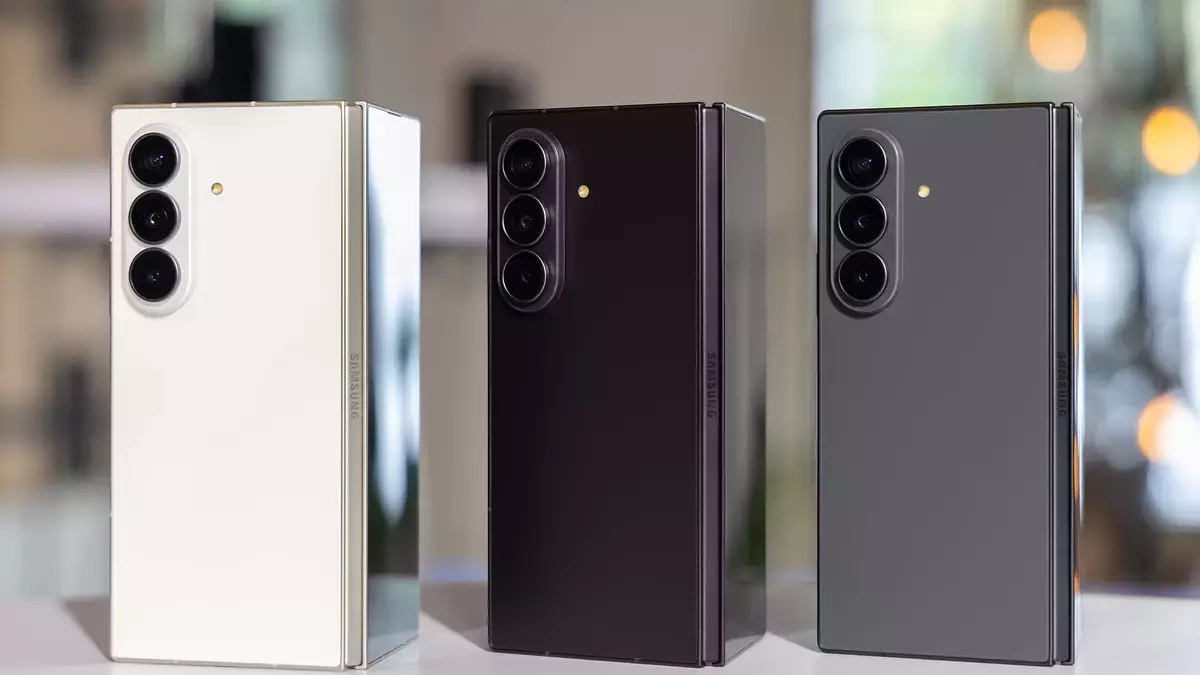
The new Galaxy Z series is expected to bring revenue and profits to Samsung in the coming quarters. Photo: Samsung
On the contrary, increased memory chip prices helped the company’s chip design and manufacturing segment (DS) increase revenue by 56% compared to the previous quarter. Thanks to this positive result, even though the equipment business encountered difficulties, Samsung still had second quarter revenue and profit reaching all-time records, respectively 119 and 62.2 billion USD.
Samsung’s profit in April-June alone this year was greater than the total profit from 2023 to 2025.
“Chip prices enrich one segment of Samsung and harm the other. other factors, making the group vulnerable to memory chip prices and the needs of large-scale cloud computing service providers,” analyst Josh Gilbert from trading platform eToro told Reuters.
Along with the second quarter report, Samsung announced plans to develop business segments in the second half of 2026. Regarding DS, the company said it has multi-year supply agreements with central operators big data, and it is expected that the global chip shortage will become more severe and last until 2028. Based on these factors, Samsung estimates that the chip business will continue to grow rapidly.
Market analyst Kim Seok-hwan at Mirae Asset Securities said that “investors are questioning how long the record high profit margin of the DS segment will last.”
Regarding MX, the Korean technology company plans to focus on “high value-added products” to promote growth in the next quarters, specifically the Galaxy S26 and the newly launched Galaxy Z folding models. Samsung said this business segment will also “implement efficiency improvement initiatives to minimize the impact of rising costs”, but did not specifically mention solutions.
According to Engadget, smartphone prices from Samsung as well as other brands will increase in all segments. Of these, the 200-500 USD segment is likely to increase the most because component costs are accounting for the majority of equipment costs.
https://undrtone.com/Burghard
Adamkaster
Bothoadler
7613135 Elli Klassen
The Official Forum – View Profile: BorkaMaster
christoffazzer's NFT Collection
Bolkoaster
Member.Php
Kullanıcı: Dominikus – Matematik Kafası
View Profile: Ermenfried – HCG Diet Info Forums: HCG Diet Plan Guidance & Support
BandLab – Make Music Online
Eustachius « Giveaway of the Day Forums
OsvaldDanker Profile | LifeInSYS
User LisAsset on maxforlive.com
Dragon Ball Z – Dokkan Battle France
7613142 Adam Meller