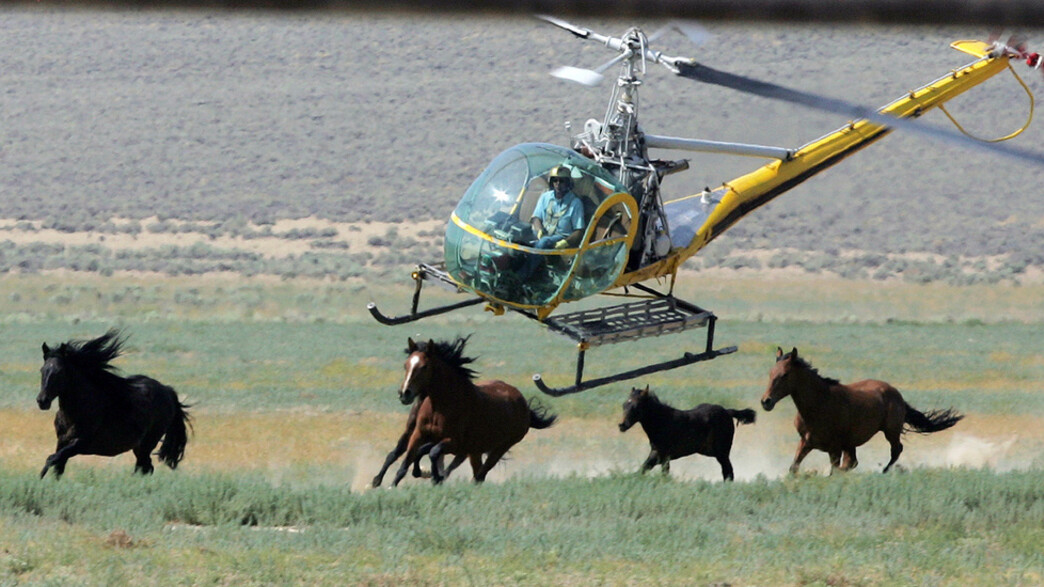
The New York Times exposed the dark mechanism of selling protected horses for slaughter – for financial gain
About 73,000 wild mustangs live on federal public lands in the western United States, where they are supposedly protected from hunting or trapping. But the American government captures tens of thousands of horses, indirectly selling some of them for slaughter, according to a comprehensive investigation published last night (Monday) in the New York Times.
The sale of wild horses by the Bureau of Land Management (the agency responsible for this on behalf of the administration) used to be rare, but began to increase after President Trump took office. In 2025, the number of horses sold jumped by more than 100%, reaching 3,700, according to official government records. The move is ostensibly intended to maintain a viable population of horses, and the sale is made to horses that were captured and not adopted, saving millions of dollars.
Over the years, the Bureau has put forward various deadly proposals to reduce the herds, including sniper shooting, direct sale of horses to slaughterhouses, and the construction of gas chambers. But Congress, aware that the public wanted to protect mustangs, banned the killing of healthy wild horses.
In the office they found a bypass. The horses that are captured are kept for years in a corral in Idaho, and some are transferred to American buyers who in turn sell them for slaughter in Canada, where (unlike the United States) it is allowed to slaughter the wild horses.
The US government can spend more than $3,000 to capture a mustang and bring it to market, but sells each one for just $25. A horse can sell for up to $750 at a slaughterhouse – and that profit potential continues to attract buyers. On the part of the government, handing over the horse instead of continuing to keep it saves about 56 million dollars a year.
“It used to be rare to see a mustang horse at auction, and if we did see one, they were usually old,” Claire Staples, of the Skydog Ranch horse sanctuary, told the American newspaper. “But now we see a huge influx, and most of these horses are young – two or three years old. These are the horses that are easiest to train, and they should be easy to adopt.”
She bought three mustangs at one of the auctions and moved them to her reserve in Oregon. “We are only able to save a few,” she said. “Most of them reach buyers who purchase them for slaughter.”