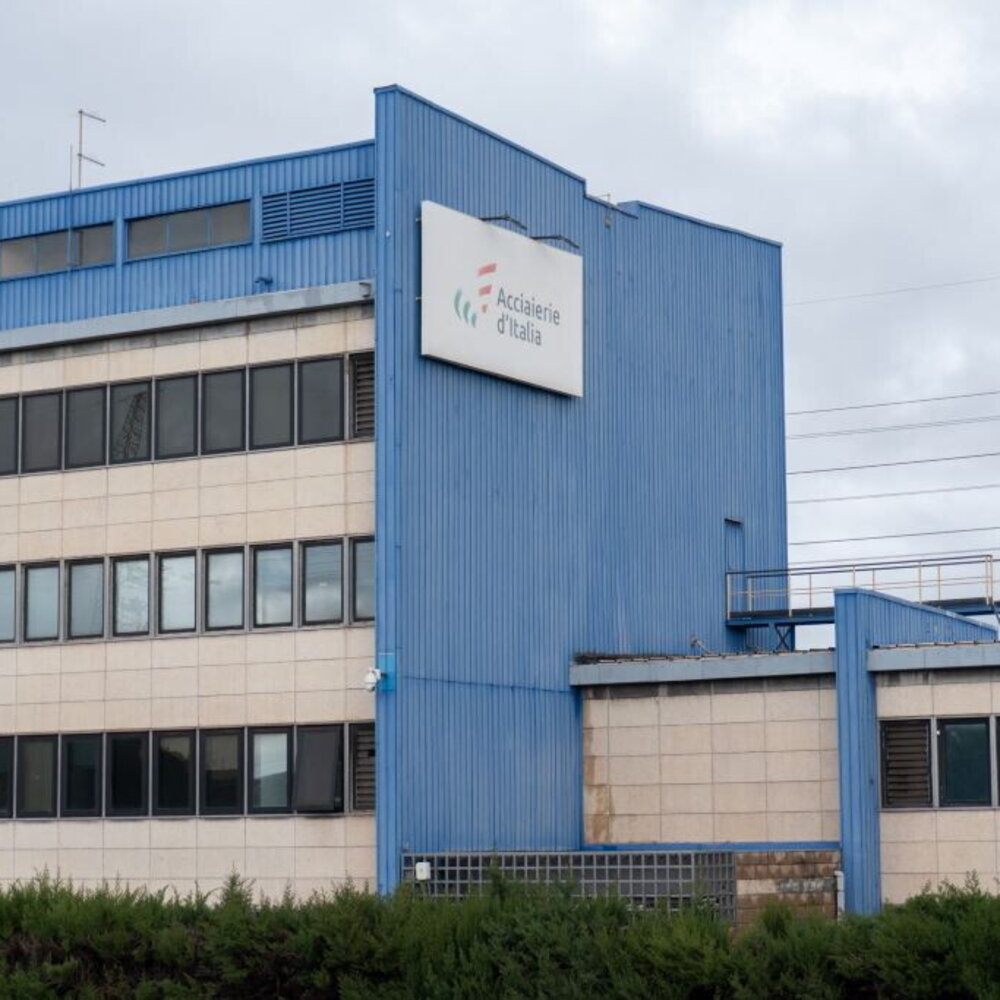
Aigi, the association of the former Ilva contracting companies of Taranto, today sent the “letters relating to the collective dismissal procedure which will involve a number of workers exceeding 2,500 units”.
Nicola Convertino, president of Aigi, explains in a letter that “this is an extreme and painful act, which we would never have wanted to resort to. Firing our workers means depriving ourselves of the most precious heritage and pride of our companies, a human capital built over years of huge investments in training and hard sacrifices. Unfortunately – says Convertino – this measure represents a necessary and inevitable acta direct consequence of the sudden deadline set for the closure of the hot area already in October, for which there is no possibility of restarting”.
Aigi’s motivations
For Aigi, “we have reached this point due to the total absence of reasonable planning that could have made our companies safe, and due to the failure to concretely activate the process of construction of new plants for decarbonisation [dell’ex Ilva]. These conditions would have allowed us to employ our staff on a continuous basis. The 28 letters of collective dismissal that the companies associated with Aigi are preparing to present to the institutions – specifies the president of Aigi – involve 2,500 work units. Behind each of those letters there is a person; behind each person, almost always, there is a family; and behind many of them there are ten, twenty, thirty years of shared work. For this reason, today we do not intend to talk only about numbers, but about an industrial, political, economic and, above all, human defeat.”
Aigi: “A factory that risks shutting down due to consumption”
“A factory of this magnitude – notes Convertino – would have deserved a different fate. One of the largest steelworks in Europe – a plant that for over sixty years has overcome oil crises, recessions, changes of ownership, trade wars, judicial proceedings, seizures, receiverships, financial crises and political conflicts – today risks not dying on the field of a great industrial battle, but rather dying out due to consumption. This epilogue does not take place in the context of an already operational reconversion plan, nor with new factories already built or with thousands of workers accompanied towards new jobs, but through a mere ninety-day countdown“.
“We wish to clarify – says Convertino – that it is not our intention to sanctify Ilva, nor to forget the wounds that this industry has inflicted on the city, the environment and the population in past years. We know that history, but it belongs, in fact, to the past. Today Ilva – it is highlighted in the letter to the unions – is no longer what it was ten years ago: it is a factory that has benefited from millions of euros of investments in plants for the abatement of pollutants. We entrepreneurs know what it means to fire.”
To this day, Convertino still says, “alternatives do not yet exist. We are told that Taranto will host new industries, that investments will arrive and that new businesses will be born. We hope so and are ready to collaborate to make this happen. However, as entrepreneurs, we know the difference between a concrete investment and a declaration of intent. An expression of interest does not constitute a factory, it is not a warehouse and it does not represent a workplace. It will become so, perhaps, in at least 7 or 10 years, in the most optimistic hypothesis. Until there are authorized projects, allocated capital, open construction sites, binding timetables and planned hiring, these alternatives will remain mere possibilities. And one chance is not enough to support a family.”
Aigi: “Shutting down the plant does not mean making it ecologically harmless”
Finally, for Aigi, “shutting down the plants does not mean solving the problem: on this misunderstanding we call everyone to take the utmost responsibility. A large steelworks complex does not become ecologically harmless simply by ceasing production. A plant of this size must be managed, kept safe, reclaimed and constantly monitored. The cessation of activities does not instantly erase plants, materials, structures and environmental criticalities. For this reason, even those who believe the conclusion of the integral cycle is inevitable should demand an orderly transition, financed and technically governed. Letting an industrial giant die – underlines Aigi – is not the same as making it disappear, and all those who invoke the ‘closed factory’ formula must be aware of this. Finally, it exists. a non-negligible and even more dangerous threat: that of having induced an entire generation of workers to believe that they can continue until the end of their career by relying exclusively on social safety nets, the welfare slide of early retirement and the benefits linked to asbestos. It is a welfare mentality that clips the wings of the future of the territory and that we cannot support in the slightest”, concludes the president of Aigi, Convertino.