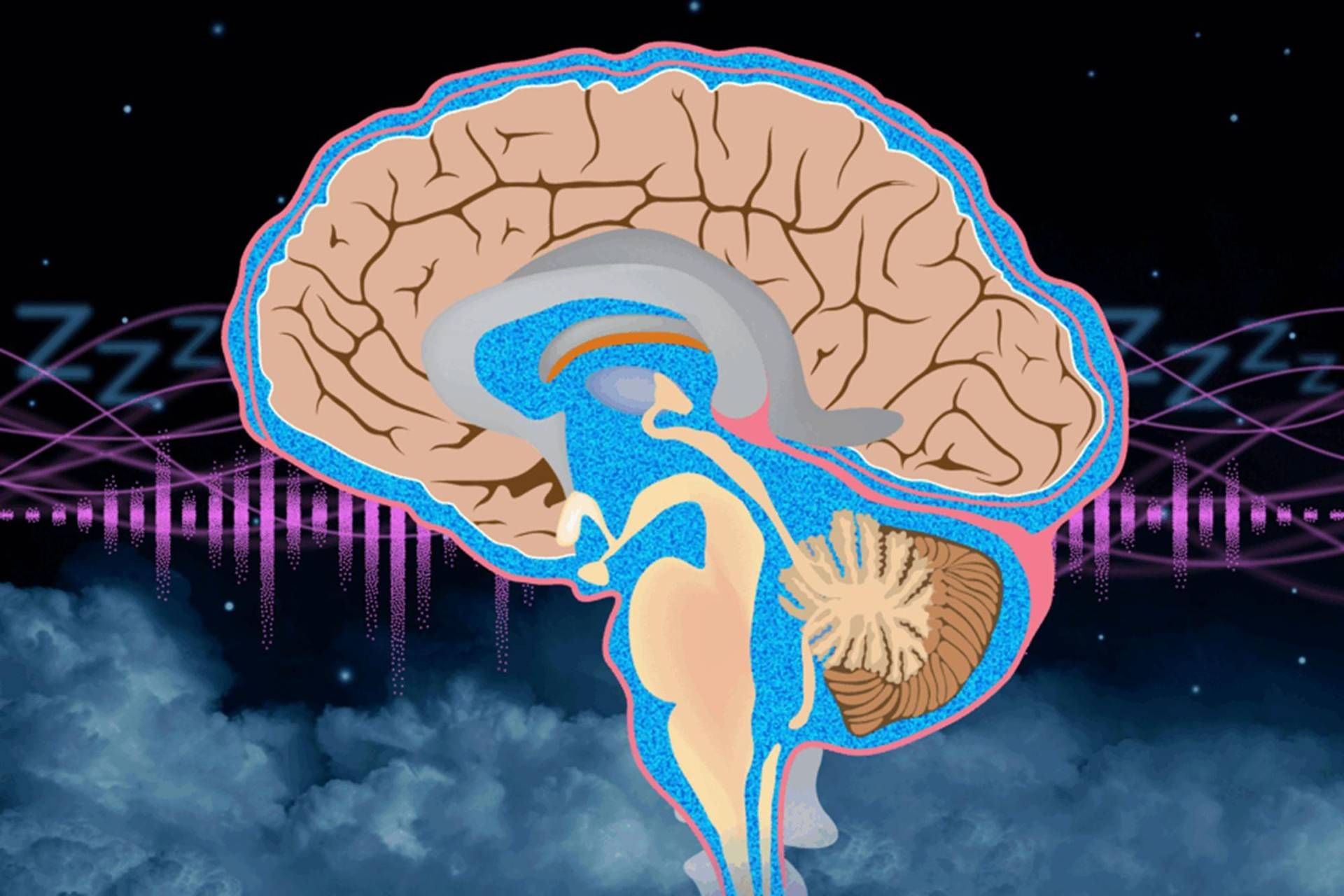
A group of researchers from the Massachusetts Institute of Technology has shown that the range of these cleansing waves can be amplified by exposing subjects to short pulses of pink noise during sleep phases, as this acoustic stimulation modulates the slow electrical waves of the brain, increasing their amplitude and consequently favoring the expansion of liquid flows. Explaining the value of this discovery and its application prospects, Laura Lewis, associate professor of Electrical Engineering and Computer Science at MIT and senior author of the study published in Science Translational Medicinedeclares: “We found that we were able to increase the amplitude of the cerebrospinal fluid flow wave during sleep, which, as far as we know, had never been possible to do before. Now that we can enhance CSF flow during sleep in healthy adults, we’re really excited to bring this technology into clinical populations to see what effects we can achieve”.
In 2019 the researcher had already documented via functional magnetic resonance imaging how cerebrospinal fluid flows were closely related to the slow waves characteristic of deep non-REM sleep, and to intensify these electrical impulses The researchers used 50-millisecond bursts of pink noise, a balanced sound similar to steady rain in which the lower frequencies are more accentuated than the higher ones.. On the dynamics of synchronization necessary to stimulate the brain at the correct time, Laura Lewis specifies: “It is possible to generate more of these slow electrical waves through an acoustic stimulus, as long as it arrives at the right time. Similar to a child on a swing, if you push him at the correct moment of his movement, you can make the swing go higher. The challenge is understanding how to pinpoint the exact moment”.
The trial required overcoming a significant technical obstacle, since the magnetic fields of functional MRI interfere with electroencephalographic readings, which is why the team led by Joshua Levitt has developed an algorithm capable of eliminating imaging interference in less than 100 milliseconds and predicting the peaks of slow waves to allow sound to be emitted as quickly as required. Tests conducted on 14 healthy volunteers confirmed that the sound stimulusemitted at a volume such as not to wake the subject, it increases the amplitude of both brain waves and the flow of fluid, which is pushed outside the brain thanks to the contraction and dilation of blood vessels. The scholars now intend to verify whether this mechanism can improve the quality of rest in patients suffering from insomnia or slow down the progression of neurodegenerative diseases characterized by the accumulation of harmful protein plaques, such as beta-amyloid and the tau protein.
Joshua Levitt says: “Removing brain waste is really important for Alzheimer’s and other forms of dementia, which are caused, in part, by the buildup of molecules like amyloid and tau in the brain. If we can improve the removal of brain waste, we may be able to prevent the buildup of these plaques that lead to diseaseIn parallel with clinical developments, Levitt has launched an entrepreneurial initiative aimed at designing a wearable headband device for home use, designed to deliver synchronized sound stimuli. The research has been supported by several international grants and scholarships, including the McKnight Scholar Award, the Sloan Fellowship, the Pew Biomedical Scholars Award, the Simons Foundation, MIT’s EECS Transformative Research Fund, the National Institutes of Health, the Corundum Convergence Institute, and the Panasonic Fellowship for Artificial Wellness well-being.
Cover image credits: Christine Daniloff, MIT