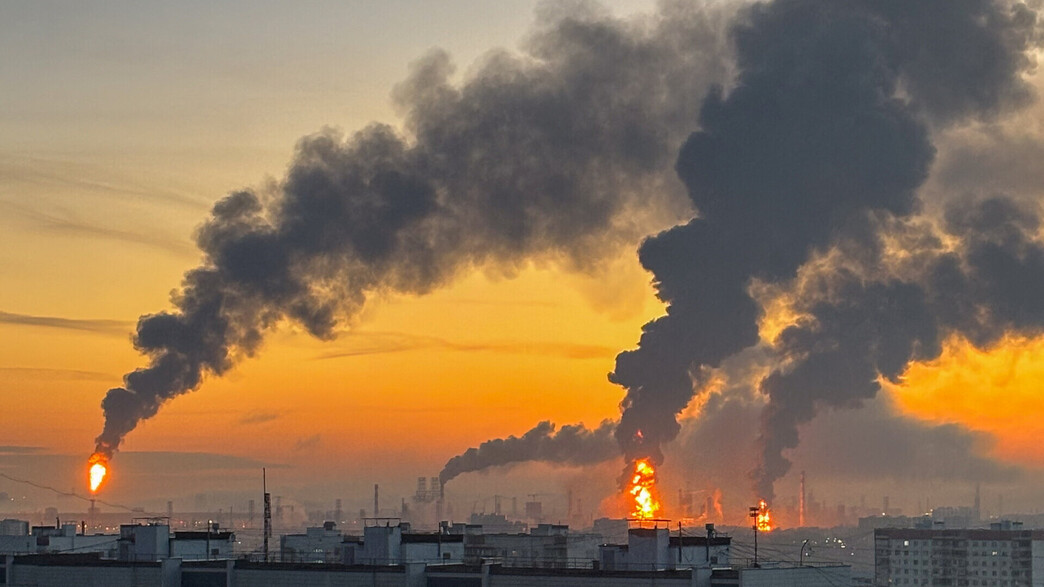
The top security officials in London are warning that the kingdom “is not prepared for a conflict and is abandoning its security”, while the war in the east of the continent is moving into a phase of mutual damage to critical infrastructure • Ukraine hit refineries in the depths of Russia with an unprecedented drone attack, and the Kremlin responded with an orchestrated campaign to destroy the steel factories, logistics centers and food chains of Kiev • The latest updates
A political and security conflict is shaking Britain these days, around the question of the country’s and its army’s readiness for a broad military flare-up against Moscow. The heated debate in London is developing at the same time as a dramatic military escalation on the eastern front, where the war of attrition between Russia and Ukraine has crossed a critical stage: a targeted campaign whose stated goal is direct and mutual damage to the economic lifelines that hold the two countries together.
As Ukraine deepens its attacks on Russia’s refineries and energy infrastructure to strangle the Kremlin’s war budget, Moscow is currently waging a widespread airstrikes campaign aimed directly at Ukraine’s engines of growth, industrial plants and civilian supply chains.
The storm on standby in London: “Playing the violin when the continent is in danger of burning down”
At the center of the public uproar in Great Britain is a direct and sharp attack by the leader of the conservative opposition, Kami Bednock, against Prime Minister Andy Burnham. Bednock accused the government of “dragging its feet and dangerous hesitation” in the face of expanding Russian aggression. At the center of the controversy is Burnham’s refusal to cut welfare budgets in order to finance the increase in the defense budget to 3% of GDP by 2030 – a goal that conservatives demand to be promoted through reforms in housing allowances and the return of the cap on child allowances.
According to Bednock, the British leadership continues to act as if the country is still enjoying its age and is carefree, while ignoring the real steps being taken by neighboring countries such as France and Poland. “Our government is playing the violin while Europe is in real danger of burning down,” claimed Bednock, and warned that Burnham’s message, according to which he would not harm the welfare budgets in favor of a military buildup, “sounds just as well in Moscow as it does in Manchester.”
The political criticism was joined by a series of former British army commanders, who presented a worrying picture of the competence of the royal army. Admiral Lord West, former commander of the Royal Navy, pointed out that the army has been suffering from years of continuous under-budgeting and is in an “extremely precarious situation”. According to West, the West is already in the midst of a war against Russia in the so-called “gray zone” – which includes cyber attacks, threats to critical submarine cables, and drone flights near borders and sensitive facilities.
These words were joined by General Sir Nick Parker, former commander of the British ground forces, who warned that the current government does not internalize the magnitude of the responsibility assigned to it, and does not present to the public the full severity of the risks. At the same time, Lord Dannatt, former Chief of the General Staff, accused Burnham and Finance Minister John Healy of “neglecting the nation’s security”, and demanded that a budget framework be immediately anchored that would bring defense spending to 3.5% of GDP by 2035 at the latest.
In the British government, civil and military emergency measures have already begun to be accelerated in preparation for the possibility of a flare-up. Among other things, government officials have confirmed that they are currently working to rewrite the British “War Book” – the classified document that regulates the conduct of government ministries during a crisis and all-out conflict.
At the same time, a large-scale home defense exercise is planned for next year, along with the launch of an awareness campaign designed to train the public for emergency scenarios. The sense of urgency in London intensified further following recently revealed data, according to which about 340 security incidents involving drones near British Ministry of Defense facilities were recorded in the last year alone.
The battle over the sources of funding: Ukraine is hitting the refineries in Russia
While Britain is dealing with the question of readiness, on the ground itself Ukraine is conducting a continuous operation designed to damage the economic base of the Russian war effort. This past week, this operation reached a new peak, when Kiev launched a large-scale and particularly deep drone strike against targets inside Russian territory.
According to the reports of the Russian authorities, the air defense systems intercepted over 1,600 unmanned aircraft throughout the country, with about 450 of them aimed directly at Moscow and its surroundings. The attack led to damages, fires in residential buildings that led to the evacuation of hundreds of residents, and the death of at least two people. However, the main strategic target of the attack was damage to the facility located inside the Moscow oil refinery – a vital energy infrastructure that has already been attacked by Ukrainian forces in the past.
This attack is part of a systematic and ongoing campaign that Kiev has been leading in recent months, with the aim of hitting the Kremlin’s most important economic artery: the oil and distillery industry, which provides most of the revenue that finances the Russian military. The precision strikes of the Ukrainian UAVs managed to disable significant parts of Russia’s national refining capacity.
As a result, the Russian economy is now facing significant fuel supply disruptions, shortages of petroleum products, sharp price increases and huge lines of vehicles at gas stations in many regions, spread across the country’s 11 time zones. From the point of view of the decision-makers in Kiev, the damage to the energy infrastructure is the most effective way to undermine internal stability in Russia and exact a direct economic price from it for the continuation of the fighting.
The blow planned by Putin: systematic destruction of the pillars of the Ukrainian economy
In response to the growing pressure on the Russian oil industry, the Kremlin formulated an aggressive response plan, which is no longer content with attacks on the front or damage to the power grid, but is aimed at the systematic destruction of the economic and commercial infrastructure in Ukraine.
The president of Ukraine, Volodymyr Zelensky, has warned in recent days that Putin’s goal is clear: “Russia wants to kill the Ukrainian economy, thereby breaking our spirit of resistance.” To achieve this goal, the Russian military is launching waves of attacks using ballistic missiles and advanced jet-propelled UAVs, which target logistics centers, huge warehouses of retail chains, pharmaceutical companies, shipping companies and central distribution centers.
The dimensions of this damage turn out to be particularly devastating. Business sources in Ukraine report that about 2.1 million square meters of modern warehouses – almost half of all advanced storage space in the country – have been completely destroyed since the beginning of the war, with about 900,000 of them destroyed in the last few months alone.
The widespread destruction of the distribution centers caused unprecedented disruptions in the supply chains, and for the first time in years led to a shortage of basic consumer goods and food on the shelves of supermarkets in Kyiv. In some stores they even had to place signs in front of empty shelves that read: “The product was destroyed by Russia.”
At the same time as crushing the logistics system, Russia dealt a fatal blow to the steel industry – one of the traditional pillars of Ukrainian exports and industry. Concerted ballistic missile strikes have completely disabled the country’s three main steel plants that remain active, in the Zaporizhia and Dnipropetrovsk regions, including the plant in Zelensky’s hometown of Karibiya.
These factories, which were responsible for about 90% of the national steel output and employed over 15 thousand workers, received precision hits in their melting furnaces. The management of the “Metainvest” company, which operates some of the facilities, admitted that at the moment it is not clear when and if at all it will be possible to repair the damage, and sadly clarified that “as of today, Ukraine no longer has a steel industry”.
The war of attrition is reaching its peak
The combined damage to factories, warehouses and transportation significantly exacerbates the budget crisis facing the Ukrainian government. The Prime Minister in Kyiv estimated that the loss of tax revenue as a result of the destruction of infrastructure and factories was estimated at approximately 1.5 billion dollars. This, while the country is forced to deal with an annual budget deficit amounting to approximately 27 billion dollars, and relies almost entirely on international aid to finance its current expenses.
Added to the land blow is the ongoing naval blockade imposed by Russia in the Black Sea, which, according to official estimates, takes about 1.5% of Ukraine’s GDP. The repeated attacks on seaports and rivers have severely damaged the ability of agricultural exports, and today allow only about 40% of the normal agricultural produce to be exported from the country. Local agricultural companies are forced to store wheat in huge sacks in the fields are open, when the sea and land trade routes are mostly blocked, and there is a severe shortage of working hands due to the fighting.
Teflon Lined Fittings Manufacturer in Turkey
PTFE Lined Cross Reducer Manufacturer in Malaysia
PTFE Lined Tee Manufacturer in Malaysia
PTFE Lined Tubular Sight Glass Manufacturer in Malaysia
PTFE Lined Valve Manufacturer in Malaysia
Lined Window Sight Glass Manufacturer in Malaysia
PTFE Lined Y Type Strainer Manufacturer in Malaysia
PTFE Lined Strainer Manufacturer in Malaysia
SS PTFE Lined Pipe Manufacturer in Malaysia
PTFE Lined Plug Valve Manufacturer in Malaysia
PTFE Lined Pipe Fittings Manufacturer in Malaysia
PTFE Lined Elbow Manufacturer in Malaysia
PTFE Lined Bucket Type Strainer Manufacturer in Malaysia
HDPE Lined Fittings Manufacturer in Malaysia
PTFE Lined Diaphragm Valve Manufacturer in Malaysia
PTFE Lined Bucket Type Strainer Manufacturer in Egypt
PTFE Lined Diaphragm Valve Manufacturer in Egypt
PTFE Lined Tubular Sight Glass Manufacturer in Egypt
PTFE Lined Y Type Strainer Manufacturer in Egypt
HDPE Lined Fittings Manufacturer in Egypt
PTFE Lined Elbow Manufacturer in Egypt
HDPE Lined Pipe Manufacturer in Egypt
SS PTFE Lined Pipe Manufacturer in Egypt
PTFE Lined Cross Reducer Manufacturer in Egypt
Teflon Lined Fittings Manufacturer in Indonesia
SS PTFE Lined Pipe Manufacturer in Indonesia
PTFE Lined Y Type Strainer Manufacturer in Indonesia
Teflon Lined Pipe Manufacturer in Indonesia
PTFE Lined Tee Manufacturer in Indonesia
PTFE Lined Cross Reducer Manufacturer in Indonesia