In the official history of thought psychological the female contribution remained in the shadows for a long time. If the names of founding fathers like Freud e Jung are known even to those less expert in the subject, while those of many of them remain little known diligently who contributed to theevolution of science of mental processes, behaviors and human relationships.
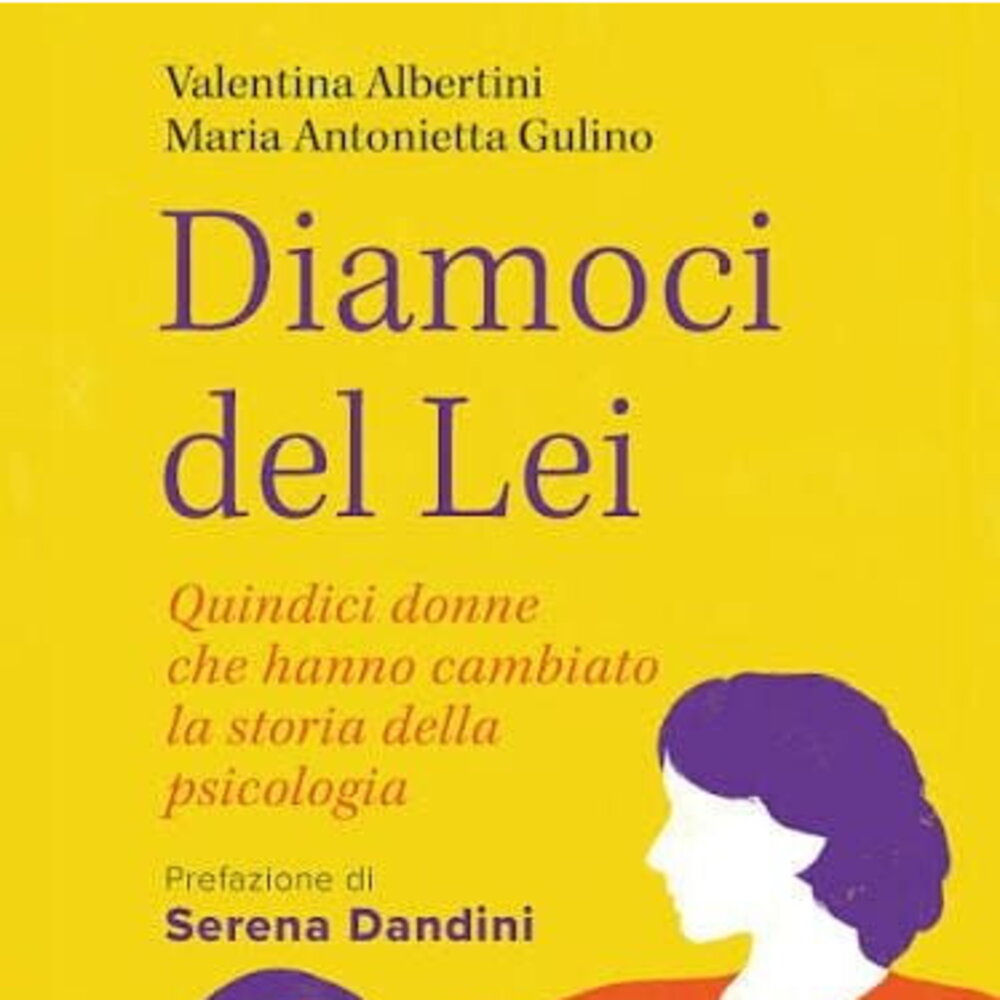
To try to fill this gap it arrives in bookstoresLet’s call ourselves Lei. Fifteen women who changed the history of psychology‘ (Giunti), written historical-scientific essay with four hands by the President of the Foundation of the Order of Psychologists of the Tuscany Region, Valentina Albertiniand by the President of the National Council of the Order of Psychologists, Maria Antonietta Gulino.
With the latter, AGI spoke about the protagonists of the bookof the role of women in the history of the discipline and of the imbalances that still characterize the world of profession and research today.
History and clichés
In addition to recounting fifteen biographies of female scholars, the book also seems to have the popular purpose of tracing an excursus of the history of psychology; is that so?
The text arises from a simple and somewhat amara: from the study of university textbooks, Valentina Albertini and I realized that we had learned the history of psychology through an almost entirely male genealogy.
Women existed, they had produced theoriesresearch and innovative methods, but have often remained on the margins. Retracing fifteen biographies means revisiting the story of the discipline from another angle, asking ourselves the question that guides the entire work: what history of psychology would we have known by also studying his mothers?
Having said that, it is not a ‘technical’ book: it tells the stories, thoughts, lives and societies in which those women were able, or not, to express themselves. We would certainly like young people studying psychology to read it, but it is aimed at anyone.
How much did the centrality of Freud in the collective imagination have an impact on the representation of women more as patients than as protagonists of psychological research?
A lot, especially in the way in which psychoanalysis has been described: reducing some important figures to substantially subordinate roles compared to famous men. Sabina Spielrein represents an emblematic example: long remembered as Jung’s patient, pupil and lover, she was a psychoanalyst and original thinker, capable of anticipating important themes.
Her story shows how easily a woman’s sentimental biography can become more relevant than her intellectual one. The same can be said for Lou Andreas-Saloméwhich ‘freely’ crosses psychoanalysis, and for The Hollingworth yearswhich dismantles presumed ‘scientific facts’ on female inferiority with research. They are protagonists of the discipline in their own right.
The scholars you describe seem to have paid particular attention to social, education and rights issues: is it a stereotype to link this circumstance to gender?
It’s one trap which we wanted to avoid. We weren’t interested in looking for a ‘feminine thought‘, but women who had produced important experimental research and theoretical-scientific thoughts, so much so as to question the orthodoxies of their time. Next to those who have worked on rights there is Mary Ainsworthwhich changes the way we understand attachment, and Brenda Milnerwhich revolutionizes knowledge about memory.
It is true, however, that some scholars have shown what happens when psychology stops speaking only to itself. As Mamie Phipps Clarkwhose studies on the effects of racial segregation on African-American children contributed to the civil and legal battle against discrimination in the USA. Also Eleanor Maccobywith research on divorce and gender, reminds us that psychology can dialogue with courts, institutions and public decision-makers.
Il focus
Among the fifteen examined, is there a figure who particularly struck you?
As a systemic psychotherapist I feel close to Mara Selvini Palazzoliin whose story I find a central idea in my way of understanding psychology: we cannot understand a person by separating him from the bonds in which his existence develops. I am also struck by the intertwining of biography and thought. The little girl who had experienced rejection becomes one of the most important scholars of family relationshipstransforming wounds into healing tools and one’s history into a theory.
The social value
Is your book also a historical text on the path to emancipation?
Yes, because through the biography we talk about relationships between men and women, about rights and possibilities granted or denied. Universities, scientific institutions and places of knowledge have been predominantly male for centuries. Mary Whiton Calkins she completed her doctorate at Harvard without obtaining it for gender reasons; Margaret Floy Washburn she became, in 1894, the first woman to earn a PhD in psychology. Being in history does not mean entering its story.
Many of the women we have written about were publishing, researching, and conversing with great thinkers, yet they remained in the footnotes, often known by their acquired surnames. marriage: a detail that is only apparently personal. ‘Giving the Lei’ to psychology means restoring their name, thought and autonomy, and completeness to the history of the discipline. Furthermore, what those women have, or could not be or do, still questions us about the present.
Current affairs
Today women are in the majority among Italian psychologists. Is this data also reflected in academic positions and top management roles, or do imbalances persist?
They persist. Our profession it is exercised in the vast majority by women, but this has not translated into equivalence in the places of representation and decisions. The forms of exclusion have changed a little, but they still concern careers, recognition, life balance, access to top management and responsibility.
Also my satisfaction in being there first woman at the helm of the National Council of the Order of Psychologists brings with him a question: why did it take so long?
The word ‘first’ makes sense if it prepares a ‘After‘. Even the protagonists of the book have made the doors they opened accessible to others and in the end we write that after these fifteen lives there is ideally a sixteenth woman who is changing psychology: all of us.
To address the problems of contemporary society, how could politics be supported by psychology?
The psychology can help politics to read people’s needs before they become emergencies. The discomfort rarely explodes suddenly, often sending signals already in childhood and adolescence.
Our common commitment it must be to intercept them early, bringing psychology to the places where people live, from schools to local services.
Prevention means reducing today’s suffering and lightening future social and health costs. The book asks the same question: how many people do we still not see? Every era has blind spots and it is the task of those who decide, and ours in professional terms, to reduce them and transform them into resources.
Disqus Profile – lghmqmajop
SDM on Groover
Pump Your Sound
Profile – lghmqmajop – YA Books Central
https://www.pozible.com/profile/elias-wilson
https://trysthub.net/blog/guides/client-etiquette-guide-how-to-book-an-escort-respectfully-and-safely
trysthub
HedgeDoc – Collaborative markdown notes
New landing page
Jack Wright
Fundable | Startup Fundraising Platform
lghmqmajop.bsky.social
Charleswhite65
https://multitasker.llc/
School Idol Tomodachi – tayhmevbcn: Profile
Profile
https://marketping.in
School Idol Tomodachi – vgiecvzdqh: Profile
Profile
HedgeDoc – Collaborative markdown notes
https://smmflare.com
Jamesmartinez15
Fundable | Startup Fundraising Platform
ThomasDiaz65
https://wizstar.com/
School Idol Tomodachi – ptkdngzbxo: Profile
Profile
https://vimoxshah.github.io/clockwork
School Idol Tomodachi – eggipfyjkz: Profile
Profile