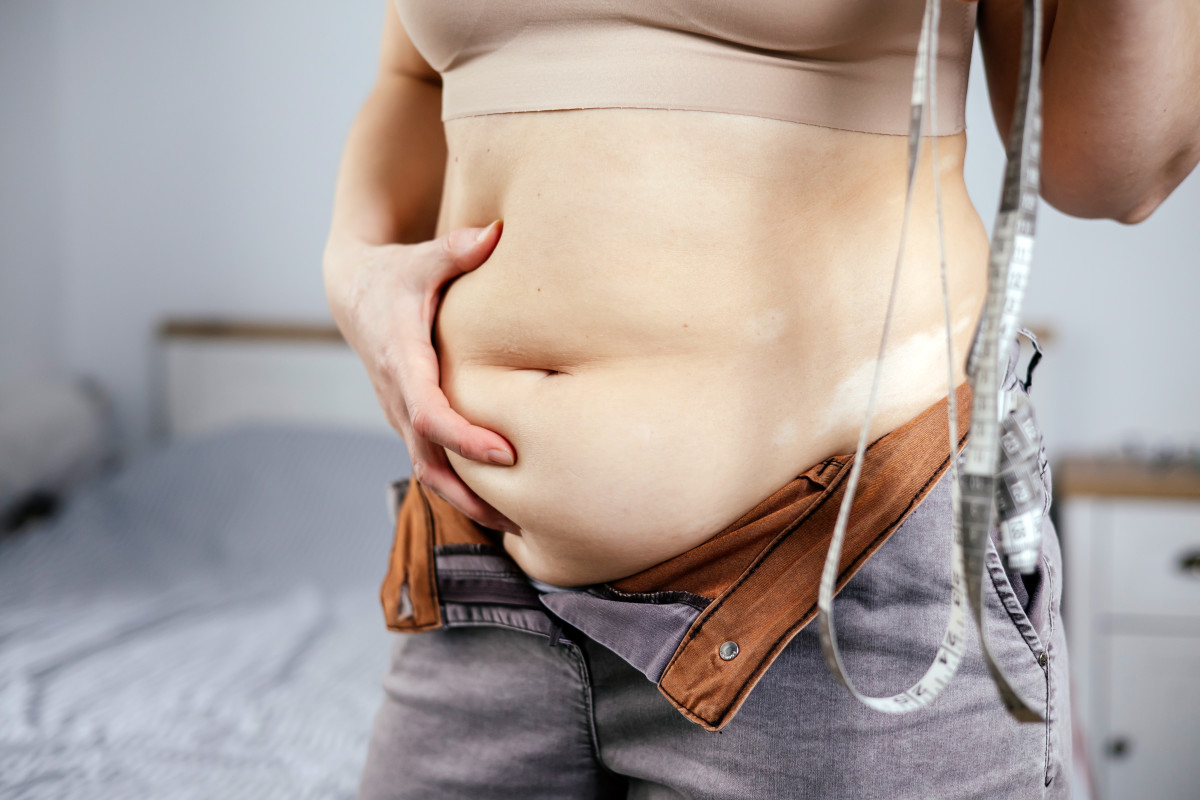
You eat more or less as always, you haven’t significantly changed your lifestyle and you even go for walks. Still, something in the body changes: the pants are tighter in the stomach area, the weight increases gradually, and sometimes even after losing a few kilograms the body does not return exactly to the look you knew. Many women in their 40s and 50s ask themselves: Is the metabolism slowing down? What is the role of hormones? And why does belly fat change?
Visceral fat has a health significance beyond the appearance of the body. Its greater accumulation is associated with an increased risk of insulin resistance, type 2 diabetes, hypertension and cardiovascular disease. Therefore, even when the weight remains stable, a change in waist circumference and body composition may be relevant to health.
In a large-scale study published in 2019 in the scientific journal JCI Insight, as part of the American follow-up study SWAN, the changes in weight and body composition of 1,246 women were examined throughout the period of transition to menopause and after. The researchers found that about two years before the last menstrual period, the rate of body fat accumulation almost doubled, and at the same time a decrease in lean body mass began. These changes lasted until about two years after menopause. It is particularly interesting that despite the significant changes in body composition, no corresponding acceleration in the rate of weight gain was observed. That is, even when the number on the scale does not change dramatically, the body may undergo a significant change in the ratio between fat mass and lean mass.
With age, muscle mass may also decrease. A muscle uses energy at rest, so a decrease in muscle mass can contribute to a certain extent to a decrease in energy expenditure. However, it is not the only explanation for the change in weight: the level of daily activity, sleep, diet and other factors are also influential. Resistance training and proper nutrition can help maintain muscle.
Reducing the amount of food is not necessarily the solution. A sharp reduction in food intake, especially without enough protein and without resistance training, may also lead to loss of muscle mass. During this period you should think not only about the weight, but also about maintaining strength and muscle mass.
A diet with enough protein, along with strength training, can support maintaining muscle mass. You can combine eggs, fish, dairy products, legumes or tofu in the menu, and include a source of protein in meals throughout the day. Foods rich in fiber, such as vegetables, fruits, whole grains and legumes, also contribute to a feeling of satiety and to the health of the digestive system.
An intelligent combination of nutritional supplements can help supplement nutritional needs and support the health and functioning of the body, while personalizing the supplements and dosages to the health status, nutrition and unique needs of each woman, accompanied by a qualified therapist.
Sleep is also important. Hot flashes and night sweats may disturb sleep, and poor sleep may make it difficult to feel well and persist in habits that support health. The relationship between sleep, appetite and food choices is complex and not the same for everyone. If the symptoms of menopause interfere with sleep, you should consider them as part of the overall treatment.
Not all weight gain or changes in abdominal girth are due to menopause. A rapid or unexplained change, unusual fatigue or other symptoms warrant a medical examination. In the follow-up it is also useful to refer to the waist circumference, the blood pressure, the sugar levels and the lipid profile, according to the individual risk factors.
The body continues to respond to diet and exercise even during menopause, but what worked in the past is not always enough. Instead of relying only on weight or a strict diet, you should also pay attention to your body composition, maintain your muscles, combine strength training, eat in a way that supports your needs and treat sleep disorders. Sometimes the number on the scale stays the same, while the body changes.