Europe is largely of oil imports dependent. While prices were still falling in February, the situation has completely changed due to the Iran war and the blockade of the Strait of Hormuz in the Persian Gulf.
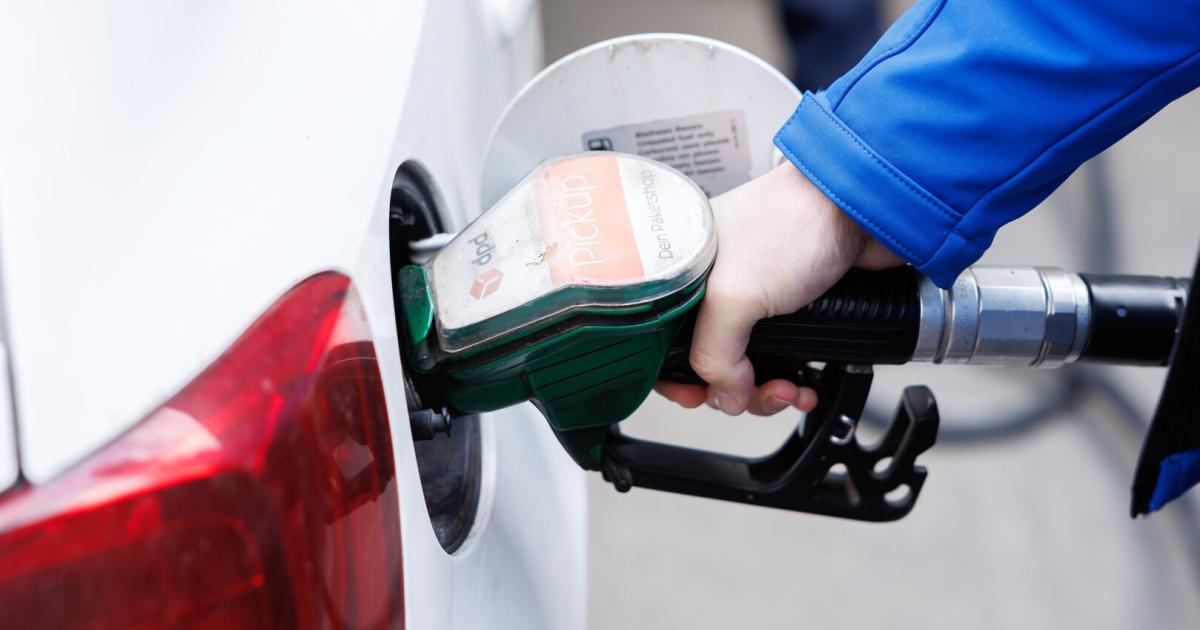
Because of the now high oil prices Inflation in the Eurozone rose from 1.9 to 2.5 percent in March. Austria cannot escape this development. In this country, inflation rose from 2.2 to 3.1 percent in March. The reason for this is – not surprisingly – the increase in the price of mineral oil products such as petrol, diesel or heating oil.
This is in turn a direct result of the oil price increase of around 60 percent in March, the highest increase since records began. The crude oil that is crucial for the European market North Sea variety Brent is currently trading at $116 per barrel. No expert dares to say where the journey will lead. Every assessment can be outdated tomorrow. “That’s coffee brewing,” is the common answer to the question about further developments.
Optimistic estimates assume an early end to the war and limited or repairable damage to the infrastructure, such as liquefied gas plants. This could stabilize the price of crude oil over the next few weeks and months and mean an annual average of between 90 and 100 dollars per barrel. It was around $70 before the Israeli-American attacks on Iran from February 28th.
Worst case scenario
Pessimistic scenarios – a longer war and the lasting destruction of energy facilities in the Gulf region – assume prices of 150 to 200 dollars per barrel. What this would mean for inflation in Austria is currently unclear, but it is certainly worrying. A real price shock could be the result. In comparison, the current forecasts are still very cautious.
Die National Bank recently spoke of annual inflation of more than 4 percent in 2026 in a worst-case scenario. German economists have also cited six percent as possible annual inflation. Inflation in Germany was 2.8 percent in March.
For comparison: In the past crisis years, double-digit inflation rates were sometimes reached in Austria, especially in autumn 2022, which amounted to an annual average of 8.6 percent.
What’s next?
On April 10th, the economic research institutes WIFO and IHS will publish their updated forecasts for 2026 and 2027. IHS expert Sebastian Koch speaks of a base scenario with annual inflation of around three percent. But Koch says: “I can imagine a four before the decimal point.”
WIFO expert Josef Baumgartner feels the same way. The normal scenario, which his institute will present in ten days, also assumes annual inflation of around 3 percent. But Baumgartner knows that everything depends on assumptions about the war in the Gulf. “Donald Trump has it in his hands. The spook can be over at any time or lead to total escalation.”
The government is trying to take measures from Social tariff for electricity up to Fuel price brake to counteract. However, completely decoupling yourself from global market developments is almost impossible, especially if the budget is limited. In this country, the government also wants to use “margin control” to prevent companies from earning crisis cash. In France the government put pressure on it, and the energy company Total introduced a voluntary cap on the price of fuel. In France, March inflation is 1.9 percent.