Trade overview: current reports, trends, indices, stock prices, bonds, foreign exchange and commodities and analyst recommendations
16:30
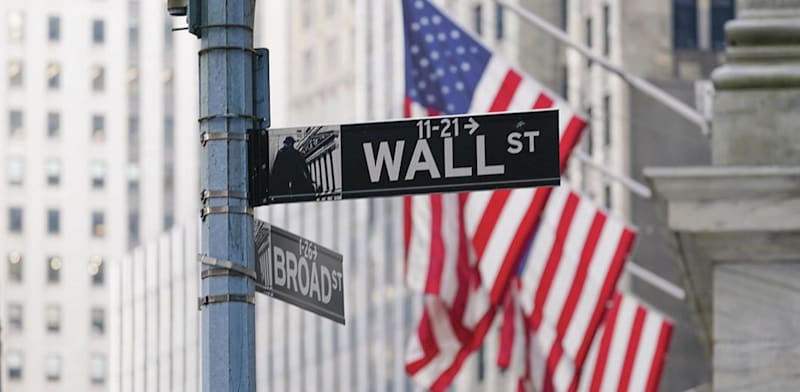
Wall Street opened lower and pulled back from a sharp rise following the US-Iran ceasefire, with the one-day deal looking increasingly fragile ahead of planned talks.
The Nasdaq is down 0.1%, the Dow Jones is down 0.4% and the S&P 500 is down 0.3%.
A two-week pause in fighting in the Middle East, agreed to by the US and Iran, is in danger. Both sides have accused each other of violating the agreement, which hinges on a key condition: that Tehran reopen the Strait of Hormuz, a vital global shipping lane for oil, which was closed for weeks during the conflict.
Oil prices recovered after the sharpest daily decline since April 2020, rising by about 3% amid renewed fears of supply disruptions. Brent crude futures (BZ=F) and their American counterpart, WTI (CL=F), were trading around $97 a barrel.
15:30
The PCE (Private Consumption Expenditures) index, which is the preferred inflation index of the Federal Reserve (Fed) in the US, which was just published, stands at 3% on an annual basis, compared to 3.1% last month and an expected 3%.
Additionally, gross domestic product grew at a slower pace in the last three months of 2025 than previously estimated, the Commerce Department said.
The Ministry of Commerce has revised down the GDP growth rate in the fourth quarter to 0.5% at an annual rate, compared to a previous estimate of 0.7% and an initial estimate of 1.4%. This is after growth of 4.4% in the third quarter.
The gross domestic product is the total value of all goods and services produced in the economy. The Ministry of Commerce stated that the downward correction of 0.2 percentage point in the total GDP figure was mainly due to a downward revision in investments, led by investments in private inventories and especially in wholesale trade.
The Ministry of Commerce’s first official estimate for GDP growth in the first quarter is expected to be published on April 30.
13:20
The declines in Europe worsen a little. The stock markets in Frankfurt and Paris are down by about 0.8%, while the London stock market is down by about 0.4%. The dollar continues to weaken today in the world against the basket of currencies, with the DXY index falling by about 0.2%.
Oil prices continue to climb. The price of American-type oil increases by about 5% and trades around $99 per barrel, while the price of Brent oil increases by more than 3% and trades around $98 per barrel.
11:00
The sentiment in the world markets is getting a little worse, while oil prices continue to climb and approach the $100 per barrel mark again. The DAX index falls by about 0.7%, the CAC loses its value by about 0.6% and the FTSE weakens by about 0.2%.
The price of Brent oil is now climbing by almost 4% and stands at about 98.5 dollars per barrel, while the price of American oil is climbing by more than 3% and stands at about 97.5 dollars per barrel.
10:15
Against the background of the disputes between the US and Iran over the terms of the ceasefire, the European stock markets open the day with a mixed trend. The Frankfurt Stock Exchange falls by about 0.4%, the Paris Stock Exchange loses about 0.3% and the London Stock Exchange advances by about 0.1%.
At the same time, oil prices in the world continue to climb. Brent oil rises by about 2.3% and its price hovers around $97 per barrel, while American oil rises by about 3.2% and its price hovers around $97.5 per barrel.
7:30
stock markets
This morning, Asian stock markets are trading lower, due to concerns about the fragility of the ceasefire and after Iran’s parliamentary speaker accused the US of violating its terms last night. At the same time, the media abroad are reporting that the Strait of Hormuz has not yet opened, and that even the few tankers that passed through it were not carrying oil tankers. The stock market in Tokyo falls by about 0.8%, the Hong Kong stock market weakens by about 0.4%, the Shanghai stock market loses about 0.7%, and the stock market in Seoul falls by about 1.9%. The futures on Wall Street are also down by up to 0.3%.
This morning, President Trump wrote on his social network, Truth Social, that US military forces will remain deployed throughout the Middle East until Iran fully aligns with the “real deal” it reached with the US – and threatened to attack it with even greater force if it does not.
“All U.S. ships, aircraft, and military personnel, along with additional munitions, munitions, and whatever is necessary and appropriate for the management and lethal destruction of an already significantly weakened enemy, will remain in place in and around Iran until the real deal is fully implemented,” Trump wrote. It was agreed upon a long time ago, and despite all the false rhetoric to the contrary – there will be no nuclear weapons, and the Strait of Hormuz will be open and safe. In the meantime our great army is arming and preparing, and even resting, in actual anticipation of its next conquest. America is back!”.
A few moments before the end of the ultimatum set by US President Donald Trump, on the night between Tuesday and Wednesday, the announcement came out that the markets had been waiting for for weeks: a two-week ceasefire in the war with Iran. Winds of optimism spread throughout the capital market and the main indices around the world jumped sharply.
Last night on Wall Street, the S&P 500 index jumped by about 2.5%, the Nasdaq jumped by about 2.8% and the Dow Jones also climbed by about 2.8% – thus recording its strongest day since April 2025. The fear index fell within 24 hours from a level of 27 points to less than 21 points, close to the level that reflects an expectation of calm in the markets.
Also in Europe and Asia, the trading screens were painted bright green. The Eurostox 600 index, which includes the main shares on the continent, rose by nearly 4%, the German DAX jumped by more than 5% and the French CAC by about 4.5%. In Asia, the Japanese Nikkei index jumped about 5.4% and the main indexes in Hong Kong and India rose by more than 3%.
On Wall Street, technology stocks stood out yesterday with sharp increases, led by chip stocks, which were hit by fears of damage to supply chains. The Philadelphia chip index jumped more than 6%. stock Intel It also jumped sharply due to the ceasefire, but also following a dramatic announcement on Tuesday that the company will produce chips for Elon Musk’s conglomerate of companies, including Tesla ו-SpaceX.
Among the technology giants, one stock stood out Meta which jumped by about 9%, among other things, following the launch of a new AI model designed to compete with Google’s and OpenAI’s models.
the bond markets
The hope for the end of the war also dissipated optimism in the bond market and in the US the yields on government debt fell sharply along the entire curve, reflecting a decrease in the risk premium. The two-year bond yield fell by about 4 basis points from a yield of close to 3.85% to 3.79%. The 10-year bond yield also fell by about 4 basis points from 4.37% to 4.3%.
It was announced in Bloomberg that tenders for the raising of US government debt for 10 to 30 years are under consideration after some of the tenders last month, the first since the outbreak of the war in Iran, were rejected by foreign investors. The bond raising that took place on Tuesday brought good results, and the ceasefire also led to a sharp drop in the desired yield on the federal debt (that is, an increase in its price), but it is still noted on the economic website: “The bond yield For 10 years it is still expected to be the highest since July.”
An analyst quoted in Bloomberg wrote that the decline in US bond prices reinforces the fear that foreign investors’ appetite for US debt has weakened: “Sales by foreign officials have received justified attention since the beginning of the war,” it said. at the Fed”.
However, another economist was quoted trying to reassure: “It is too early to determine whether the sale of Treasury bonds by foreign investors is the beginning of a structural decline in demand, or just a reaction to a higher inflation environment and uncertainty in American policy.”
The commodity and currency markets
The announcement of the ceasefire and the partial opening of the Straits of Hormuz following it led to a dramatic drop in oil prices. A barrel of the Brent type, which only a few days ago was still trading at a price of more than 110 dollars, dropped by a double-digit rate to a price of 95 dollars. And yet, these are higher price levels than those before the conflict, of about 70 dollars per barrel. The price of a barrel of WTI, the American oil, also fell sharply and recorded the worst day since April 2020. However, this morning, amid concerns about the fragility of the temporary ceasefire, prices are climbing at a rate of up to 3%, with Brent oil trading around $96.5 and American oil trading around $97.5.
Keeping the Straits of Hormuz open is one of the most central points in the ceasefire agreement.
President Donald Trump said that the two-week ceasefire is conditional on Iran agreeing to a full, immediate and safe opening of the Strait of Hormuz. The Iranian foreign minister said that Tehran will allow safe passage through the strait during the ceasefire, through “coordination with Iran’s armed forces and taking into account technical limitations” – although as mentioned, the world media reports that traffic in the strait is still very little. The Wall Street Journal reported that only four ships crossed the strait yesterday, the lowest number per day since early April.
The drop in oil prices also led to a sharp drop in the world dollar exchange rate. The DXY index, which measures the strength of the dollar against major currencies, fell by about 1% on Wednesday. This, combined with the estimates that the end of the war now limits the impact of the war on inflation worldwide, and the fear of interest rate increases later this year is easing.
Macro
On Wall Street, the scenario of interest rate cuts this year is back on the table. If before the announcement of a ceasefire, the chances of an interest rate cut this year stood at 14%, now they have jumped to about 40% according to the CME Group’s tool, which uses futures contracts that price the level of interest.
“The market is now factoring in a clear bias of one rate cut by the Fed this year,” said Krishna Guha, senior executive at Evercore ISI. According to him, there may be interest rate reductions in other central banks in the world, including England, Europe and Japan.
In the US, this week the markets will receive data that will provide an indication of the effects of the war on the economy. Today the Federal Reserve’s preferred inflation index PCE, the private consumption index, for the month of February, on the eve of the war, will be published. Tomorrow, the Central Bureau of Statistics in the US will publish the consumer price index for the month of March, which will reflect the effects of the war. Economists expect the PCE report to show inflation of 3%. Thus, the index is expected to indicate that the progress towards a more restrained inflation was faltering even before the outbreak of the war against Iran.
As for the consumer price index, Bloomberg economists predict that following the sharp increase in oil prices, the index is expected to show an increase of about 1% – the largest monthly jump since 2022. The annual inflation rate is expected to jump from 2.4% to 3.4% – well above the Fed’s inflation target, which stands at 2%.
forecast
The chip sector has been identified as one of the main beneficiaries of the ceasefire, as it is one of the main ones affected by supply chain disruptions. Bank of America on Wednesday announced its top pick in the sector: the Dutch computer chip equipment maker ASML .
Bank of America wrote that the global semiconductor sector will grow to a $2 trillion market by 2030, and that ASML has a dominant position in semiconductor manufacturing equipment. The bank expects earnings per share of 58.4 to 89.5 euros by 2030, which implies, according to the midpoint, an annual growth of about 23%. Bank of America said ASML is positioned to benefit from structural trends, such as the adoption of artificial intelligence and increasing chip complexity, which are expected to drive sustained demand through the end of the decade.
After the publication of the forecast, the stock jumped by about 9% in European trading. Bank of America rates the stock a “buy” rating and sets a target price of 1,598 euros, which reflects a premium of about 32% on the stock price (after the spike).
https://informativocarioca.com/politica-de-privacidade/
https://informativocarioca.com/politica-kyc-aml/
https://informativocarioca.com/sobre-nos/
https://informativocarioca.com/suporte/
https://informativocarioca.com/termos-e-condicoes/
https://opplehouse.com/the-smart-homeowners-guide-to-protecting-your-property-investment-through-professional-maintenance/
https://opplehouse.com/the-ultimate-guide-to-transforming-your-home-from-dream-to-reality/
https://opplehouse.com/the-foundation-of-comfort-essential-floor-preparation-for-modern-home-designs/
https://opplehouse.com/from-blueprint-to-curb-appeal-elevating-every-corner-of-your-home/
https://www.patreon.com/posts/garden-furniture-155169801
https://openlibrary.org/people/qamarzafar/lists
https://network.crcna.org/user/215286
https://equable-sponge-177.notion.site/High-Availability-Meets-High-Key-Rewards-32fcd648383580758676dd4031e9558e?pvs=73
https://github.com/TanveerArifs/The-Machine-Learning-Engineer-s-Logic-Check/blob/main/README.md
http://forum.tartaclubitalia.it/viewtopic.php?t=612139
https://lookingforclan.com/user/waqasjameel
https://b31.org.uk/author/hemantbisht/
https://staroetv.su/users/149815
https://mydramalist.com/profile/RenaudHerve
https://phatwalletforums.com/user/jitendrapanwar
https://www.checkli.com/udayrathod
https://www.adpost.com/u/yatinjoshi/
https://www.muvizu.com/Profile/VenkateshIyengar/Latest
https://www.designspiration.com/yosedet313/saves/
https://log.concept2.com/profile/2890781