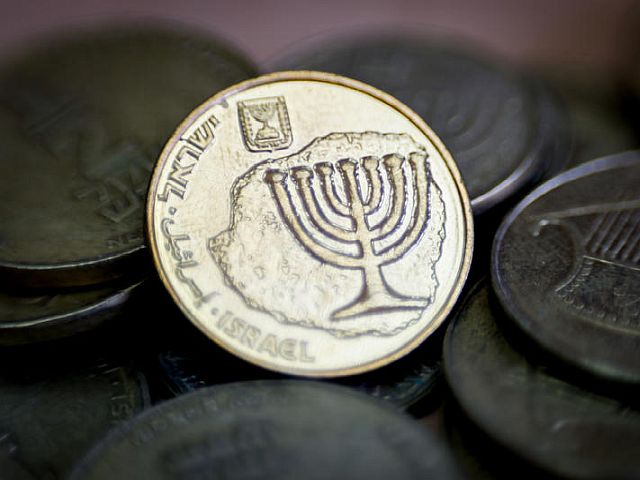
In May 2023, an Israeli businessman contacted the Bank of Israel with a request to accept for exchange damaged coins worth 210 thousand shekels, which he bought from a Chinese metal processing plant and delivered to Israel via Hong Kong, the UAE and Jordan.
The Central Bank rejected the request because the applicant did not provide sufficient explanations about the origin of the money, after which the businessman went to court.
During the trial, which reached the Supreme Court, the plaintiff argued that he had carried out similar operations many times over the past two decades and had never been required to provide any explanation. In his opinion, the only relevant criterion is the authenticity of the coins.
However, the judicial system accepted the position of the Bank of Israel, which insisted that the information provided by the plaintiff does not allow the route of funds to be traced, ITV Channel 12 reports. The Central Bank also announced that there were signs of possible money laundering and terrorist financing, indicating that it was acting in accordance with the new procedure and generally accepted international standards in the field of combating capital laundering.
In the end, Judges David Mintz, Alex Stein and Khaled Kaboub put an end to the proceedings, ruling that it was the central bank’s responsibility to take into account anti-money laundering considerations when considering applications for coin exchange, and that the plaintiff’s responses did not eliminate “red flags” regarding the origin of the coins and the route of their transportation.
The plaintiff was ordered to pay legal costs in the amount of 40 thousand shekels.