UniCredit Bank Austria has set itself the goal, among other things, of growing strongly among small and medium-sized companies. It was said at the beginning of March that opportunities had been missed. The institute recruited 1,000 new SME customers last year, and another 1,000 are expected to be added this year. According to Dieter Hengl, Board Member for Corporates at the institute, half of this has already been achieved. Now the next big step is coming. In one fell swoop, up to 2,500 additional customers are added through an additional purchase.
Specifically, the bank is acquiring the majority of the Austrian customer base of the German payment service provider First Data, which operates in this country under the name TeleCash and is part of the US financial technology company Fiserv. “This step fits perfectly with our SME offensive and to strengthen the payment area,” says Hengl in an interview with KURIER.
With the purchase, around 4,000 terminals and 16 million transactions with a volume of 750 million euros will come to Bank Austria. “We offer our customers complete solutions with the latest generation of payment terminals. For us, the deal is a suitable door opener for faster growth in the entire SME sector,” says Hengl.
Five percent market share
The deal started from scratch and would now achieve a four percent market share in the payment sector. The goal is a double-digit market share, 10 percent by 2027. According to Hengl, 90 percent are completely new customers of his institute. These are spread across Austria, especially smaller retailers or tourism businesses, which are currently primarily serviced by regional banks and have an annual turnover of between 500,000 and 50 million euros.
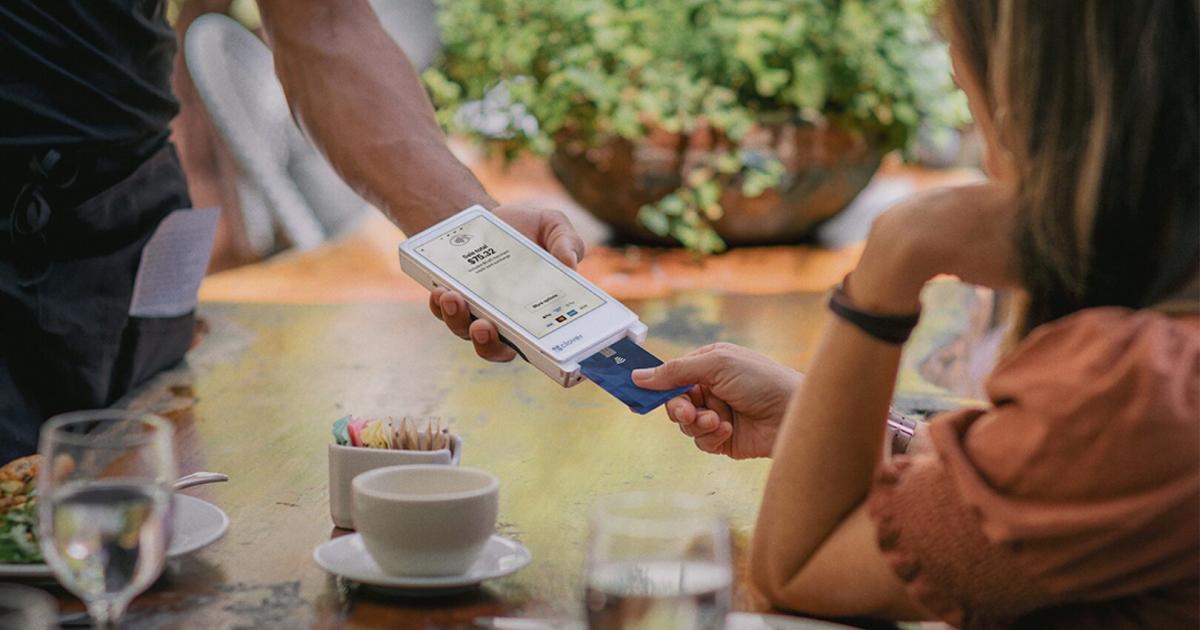
The merchants previously served by TeleCash would be integrated into the Bank Austria platform in September. According to Hengl, Bank Austria will be offering its SME customers Clover, a new hardware and software system from Fiserv, as early as July. The corresponding payment and cash register systems are connected to each other, and retailers have several payment terminals to choose from. “UniCredit Bank Austria offers the complete package of payment solutions,” says Hengl.
The customer focus is on reducing complexity. The devices would be made available to customers at a “very affordable rent” starting at around 15 euros per month. Basically nothing will change for retailers, no devices will have to be replaced and payment processing will continue to work as before without interruption. A helpline will be set up.
With Clover, Austria could become a test market for the entire UniCredit group, said Hengl. “If it proves successful, it could be rolled out to other regions.” In any case, the bank wants to expand its market share in the payment sector to 10 percent by the end of 2027.
Global uncertainties
Hengl also attributes the organic growth in the SME sector to global uncertainties. “Customers need protection for currencies, raw materials and energy. We are the only bank in Austria that offers this.” Smaller companies would often use his institution as a second bank to their regional home institution.
In general, the mood among Austria’s medium-sized businesses is mixed. “Employee cuts and bankruptcies do not trigger a feeling of celebration,” says Hengl. Efficiency programs are used to counteract inflationary tendencies. However, some sectors are still doing well or even excellently, such as pharmaceuticals, health or energy. “A global position is important; medium-sized companies have to look for new markets.”
As a bank it is necessary to support the companies. This also includes addressing unpleasant truths. “It’s not always nice when you have to talk to entrepreneurs in detail,” admits Hengl. “But the customers really appreciate it.”
Good companies have learned from past crises and reduced their debt. “Fortunately, there are many family-run companies in Austria that take advantage of good times to accumulate funds,” says Hengl, praising the personal responsibility of many local companies.
According to Hengl, Bank Austria grew on the financing side by EUR 2.7 billion (plus 6 percent) last year and was therefore significantly above the market. This year, another half a billion euros have already been added. “We are extremely well capitalized and have extremely high liquidity.” On the credit side, there are extremely low risk costs. “We’re hardly worried about outages.”
I want to find a fast and not laggy site where it will be ni
A pleasant entertainment site with bonuses – theorchestrafornow.com
Recommend an entertainment site for relaxing after work
Intereting Website With Games Fr The Eveninssg
⇪ profile
Where can I have fun on the Internet while I have free time?
A fast and understandable platform without lags – Ezega Forums
I want to find a fast and not laggy site where it will be ni
Yume Highlights: 7 Tonnes of Maltitol
I want to find a fast and not laggy site where it will be ni
Recommend an entertainment site for relaxing after work
Just Paste Me
Recommend an entertainment site for relaxing after work
PFA Community Players of the Season Announced and Celebrated!
Bring Them Dead – Discussion Forum: Online platform with generous bonuses
Where can I have fun on the Internet while I have free time?
Interesting websites with games for the evening
Where can I have fun on the Internet while I have free time?
ANSJI to Host Second Annual Justice Symposium on June 13th
Online Platform With Generous Bonuses 2
Recommend an entertainment site for relaxing after work
1871
Where can I have fun on the Internet while I have free time?
Environmental Impact
A Pleasant Entertainment Sie With Bonu