ADB lowered its economic growth forecast for Southeast Asia to 4.5%, maintaining its expectations for Vietnam, in the face of prolonged energy disruption due to the Middle East conflict.
On July 9, the Asian Development Bank (ADB) updated its Asia-Pacific economic growth forecast, lowering growth expectations for the region and most sub-regions.
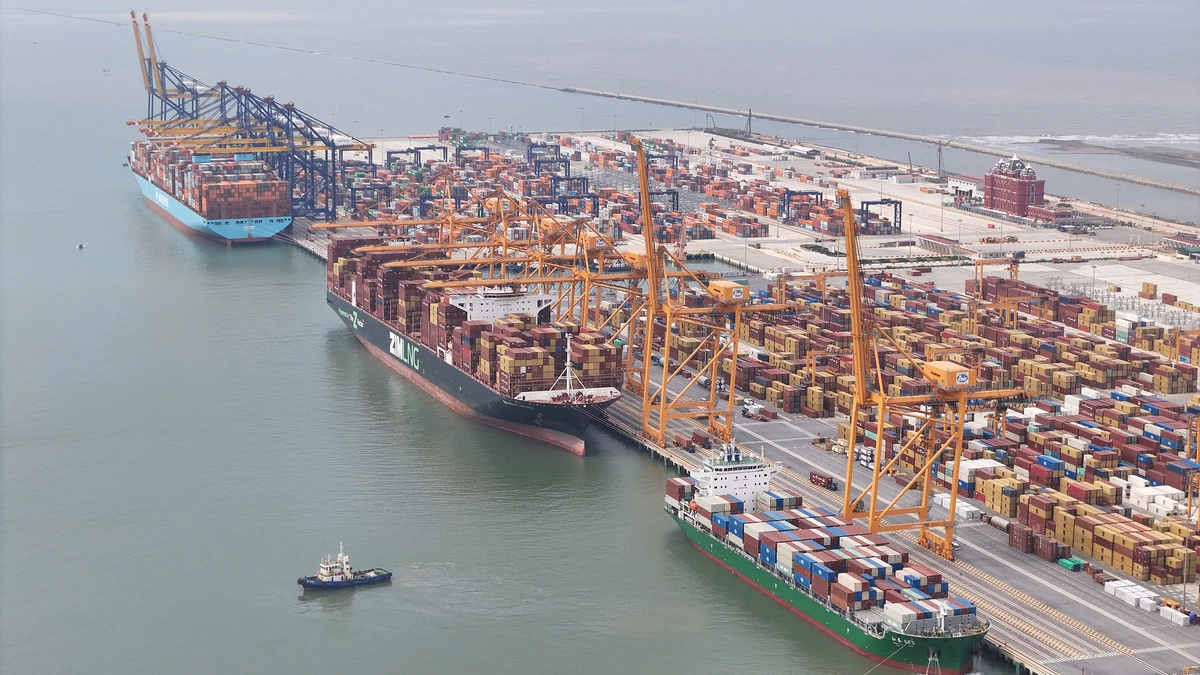
Lach Huyen deep-water port complex, Hai Phong city, June 23. Image: Le Tan
The Middle East conflict has lasted into its fifth month, exceeding the forecast according to the positive scenario ADB made at the end of March. Recently, US President Donald Trump announced that the ceasefire with Iran has ended, and expressed his desire to “completely resolve the problem” instead of pursuing diplomatic efforts with this country.
Faced with persistent conflicts, ADB lowered its Southeast Asia growth forecast to 4.5%, down 0.1% compared to the report three months ago. At the same time, inflation in this area is expected to jump to 3.8%, an increase of 0.7%.
Experts from ADB believe that prolonged energy disruption due to the Middle East conflict will have a more serious impact on the regional economy than expected. This impact spread from the energy sector to fertilizer, other commodities and the supply chain, prolonging inflationary pressures.
In addition, high fertilizer prices cause increased input costs in the agricultural sector. The strong El Nino phenomenon aggravates the problem of food security, which was indirectly affected by the Iran war.
Meanwhile, the US, the region’s major buyer, also reduced growth momentum in 2026 from 2.3% to 2.1%, reflecting declining demand due to high inflation and people tightening spending. This growth rate will continue to decline to 2% next year, in the context of geopolitical instability remaining high. New tariff policies from this country are also factors that destabilize the region’s export activities.
In Southeast Asia, the Philippines and Cambodia had their growth forecasts lowered the most. The Philippines’ growth is expected to be 3.8%, while Cambodia’s is 4.1%, down 0.6% and 0.5% respectively compared to the previous forecast. Thailand maintained a modest growth rate of 1.8%. Brunei is the only case whose growth was raised from 1.6% to 1.8%, thanks to the benefits from high oil prices.
Also according to ADB, Vietnam continues to be the fastest growing economy in the region, with GDP growth forecast to remain at 7.2% in 2026 and 7% the following year.
For the developing Asia and Pacific region, growth is forecast to drop to 4.9% in 2026, down 0.6% from the 2025 level. While China maintains its economy, India’s GDP growth is forecast to decline to 6.6% (down 0.3%) in 2026, as rising energy costs weaken domestic demand.
ADB warns of the risk of renewed conflict and prolonged geopolitical instability. These factors could continue to tighten energy markets, increase risk premiums and exacerbate inflationary pressures.
Mallory Mika.57923
serplifytraffic | Profile
serplifytraffic | Perfil
Mallorymika
Alumni's Survey –
Dispform.Aspx
Mallory Mika – Users – RCIIMS
Dados Abertos UNIFEI
The Outdoor Education
Majlis Graduasi Konvokesyen SMK Pasir Putih – Institut Teknologi A.N.S (300468-V)
Mallory Mika – Users – Portal de Dados Abertos do IFAC
serplifytraffic | Profile
تقييم موقع الجامعة الجديد –
serplifytraffic | Perfil
serplifytraffic | Profile
Mallory Mika's Profile Page
Dispform.Aspx
serplifytraffic
5 Best Services To Buy Organic Traffic And Lift Your Ctr In 2026
7 Best Websites to Buy SEO Traffic in 2026 (Ranked and Reviewed) – Programming Insider
5 Best Sites to Buy Organic Visits in 2026
8 Best Websites to Buy SEO Traffic for Startups and Small Businesses in 2026 – Laugh Puns
6 Best SEO Traffic Providers for Agencies and Freelancers in 2026
Forbidden China Wealth Sound Frequency for Focus, Clarity & Abundance
Dubai Wealth Secret Sound for Wealth and Mental Clarity Enhancement