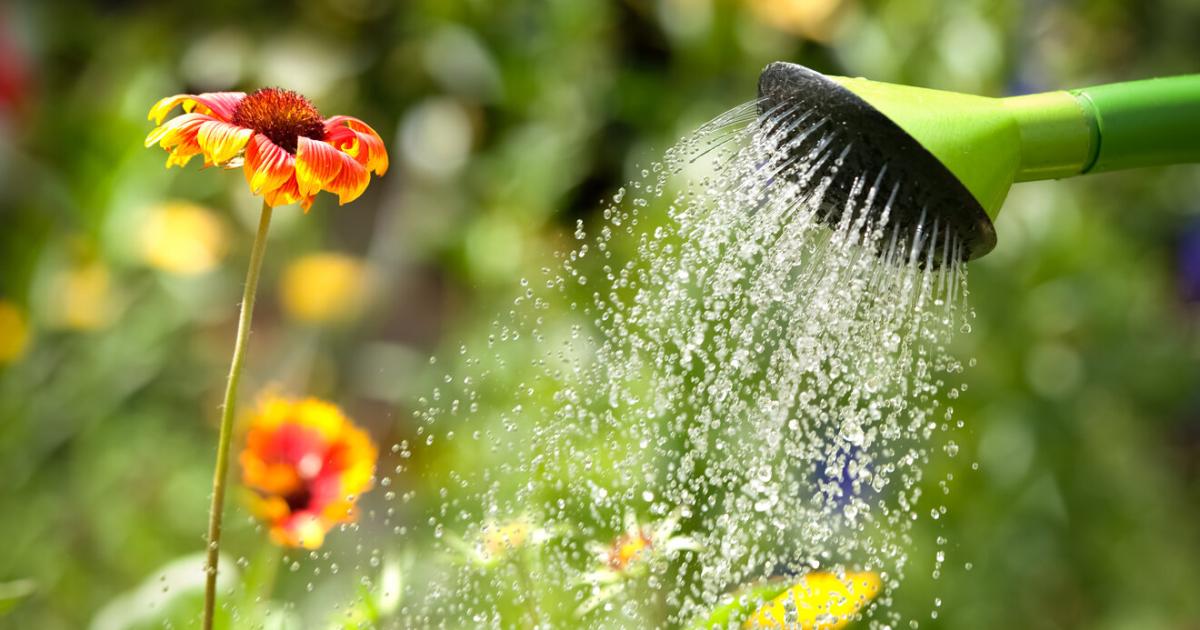
We are in the middle of the next heat wave. No widespread rain is in sight. In general, it rained well below average in most regions of Austria this year. In the east, rainfall deficits are as high as 50 percent.
Most plants suffer massively and often dry out. However, precious drinking water should not be used for irrigation. So what should a garden look like that can withstand hot days and long periods of drought? “We have to say goodbye to English lawns, cultivated plants and monocultures and instead focus more on native wild plants, shade trees and herb lawns when planting,” explains Erika Saria from Naturschwärmerei.
She founded the Naturschwärmerei association in Eggersdorf near Graz in 2019 together with her sister Edeltraud Pirker. The two women have set themselves the goal of introducing people to nature again. They support schools, property developers and private individuals in making their gardens climate-fit. “We should think of the garden as being determined by nature, where humans do not interfere. Then the plants can thrive wonderfully,” says Saria. “The garden should best be planned in such a way that watering is not even necessary.”
Nature instead of culture
The educational scientist completed her training as a natural garden professional in 2018. She explains: “Native wild plants are more resilient to heat and drought than cultivated plants.” Therefore, she recommends lady’s mantle, sedum, cranesbill or houseleek as perennials. Suitable shrubs include elderberry, rowan, willow, hawthorn, dirndl bush or spar, which can also be grown into a small tree. Annual, very heat-tolerant plants such as poppies or marigolds provide beautiful flowers.
Shade instead of sun
So that the garden does not dry out so quickly, around 50 percent of the area should be shaded. Large, free-growing plants are particularly effective. “But you also have to be patient. Because a tree, a field maple works very well, simply needs time to grow. Important: The final size must fit the area of the location.” But bushes and hedges also provide shade. A drawn canopy of leaves also protects against drying out. This means trellises or pergolas can be built for climbing plants such as ivy or wild vine.
Mulching also protects the soil from drying out. Grass clippings, leaves or plant residues retain moisture in the soil, reduce watering effort and improve water storage during heavy rain.
Meadow instead of lawn
The meadow should be mowed as rarely as possible. The higher the grass, the more shade falls on the ground and the less quickly it dries out. “The classic English lawn is no longer up to date; the so-called herb lawn, where daisies, dandelions, clover, etc. can grow, is more robust and heat-tolerant,” advises the expert.
Rain instead of drinking water
Lush planting instead of sealing is the motto. Rainwater must be able to seep into the ground. The rain barrel should also be placed back in the garden so that the water can be collected specifically for later use. If there is a need for watering, it’s better to water rarely but extensively, Erika Saria appeals: “A tree might need 100 liters of water once in the summer. A watering can full doesn’t do anything.”
Deep watering – ideally in the early morning hours – promotes strong roots and makes plants more resistant to heat. Then they can also survive heat waves like the ones we are experiencing this summer. Exception: If new plants are planted, they must be watered regularly.