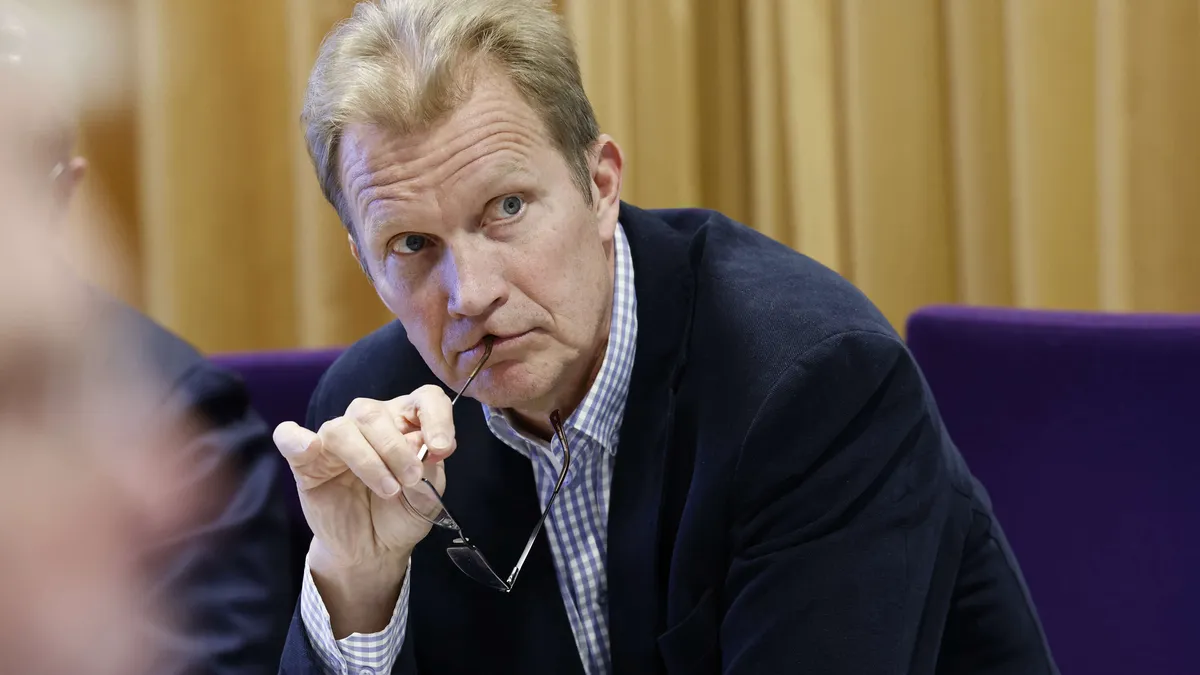
Energy company St1: no principal owner Mika Anttonen requires better commitment and skill from the leaders to carry forward the energy breakthrough.
Anttonen, who spoke at the University of Tampere’s leadership symposium today, stated that the energy revolution has only one and only goal.
“There is no other goal in climate work than to reduce the carbon dioxide concentration in the atmosphere,” Anttonen stated.
At the same time, Anttonen reminded that the energy transition is a long-term process.
The transition to a completely new energy system and the abandonment of fossil fuels require an estimated 50–70 years.
“It’s a marathon and a relay race, where each generation and operator has to take care of their own part and pass the baton on to the next ones.”
Stock companies at a miserable level
In his presentation, Anttonen criticized the largest domestic listed companies for their lazy investment in research and product development.
He stated that when you look at Finland’s 20 largest listed companies, 18 of them have not invested much in research.
“Product development and research investments were at an absolutely miserable level.”
Nokia is, according to Anttonen, a positive exception.
“Nokia puts a lot of money into it, but many others have kind of cleaned it up to such a level that it doesn’t create growth. It doesn’t create innovations or know-how either,” Anttonen explains.
“On the company side, we have a small management problem in that we don’t have managers who have worked for a long time in a company that has grown.”
Companies’ excellence and research investments would be needed to develop a new type of energy system.
According to Anttonen, the next 20–30 years will largely be spent inventing new things. After that, the construction work of the new energy system will take another 30–40 years.
“At the center of this change are people, and specifically people with excellence. Without people who know how to do these things, nothing happens at all”
Unrealistic goals
According to Anttonen’s assessment, mistakes have been made in the past in the management of climate and energy work by setting unrealistic goals.
Just five years ago, leaders generally committed to the goal of one and a half degrees, but the promises remained empty letters.
Anttonen stated in his presentation that this has resulted in people’s cynicism regarding climate goals.
“A person needs a goal that he can somehow imagine himself achieving. This way he is really motivated to do something.”
“The most important management issue in this energy transition is to say right from the start that listen, my dear friends, that we will get to a completely new energy system, but it will take us 50-70 years,” Anttonen emphasized.
The goals must be ambitious, but achievable. If this is not the case, then “there are no results from doing so”.
Leaders are required to have a strong personal belief in the matter and the skill to set goals in such a way that people’s motivation is maintained.
“You have to believe in what you are doing and show it to everyone, otherwise it will be difficult. That is very important in climate work.”