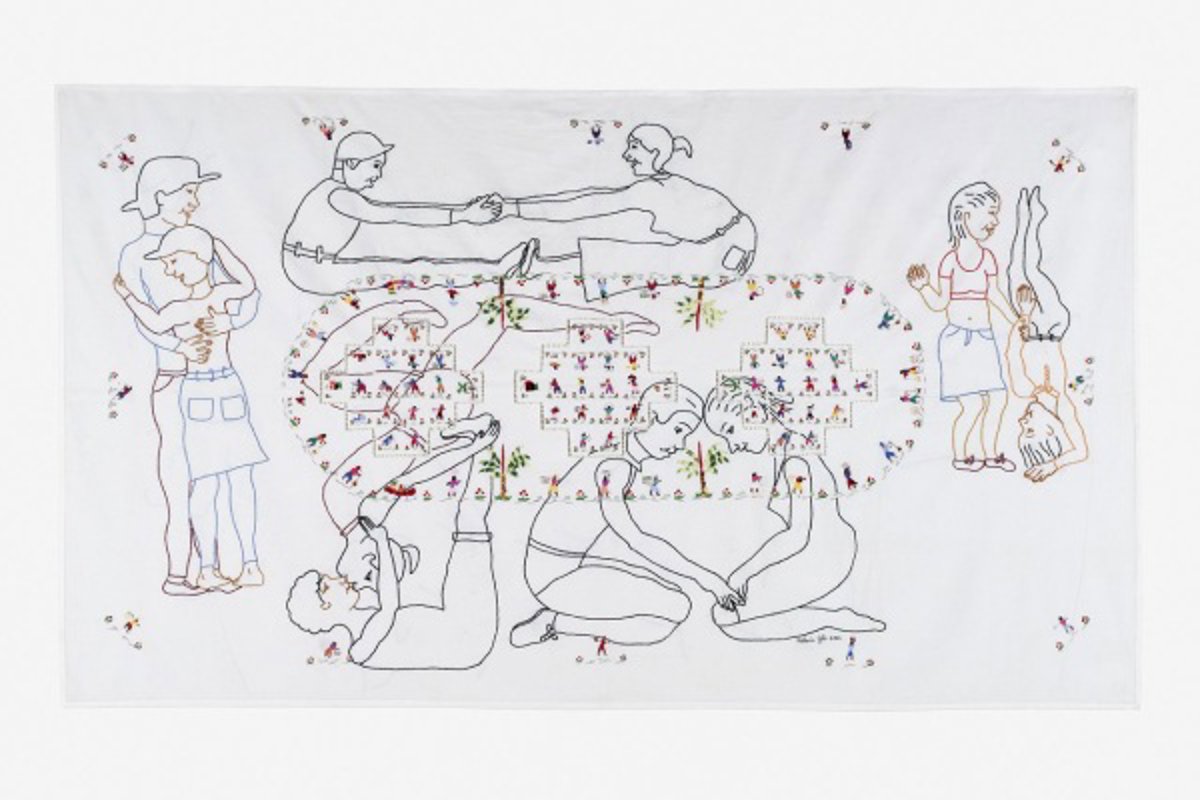
TheBank of Spain will inaugurate next September a new exhibition to present its textile collection,‘The flexible plane’, which will be open from September 28, 2026 to March 27, 2027 in the Banco de España exhibition hall. Spain.
As reported by the institution, the exhibition proposes a tour through textile art understood as a space of convergence between art, architecture and industry, in which the fabric is transformed into an active element that contributes to organizing the space, absorbing sound and generating sensory experience.
The exhibition addresses issues such as the capacity of tapestries to tell stories, the confluence in the fabric of artisan and industrial or the recovery of this artistic discipline based on the claims of feminism.
The route is structured in two areas. The first brings together aselection of classic carpets and tapestries from the Bank of Spain Collectionand highlights their role in defining the architectural environment: ordering spaces, modulating light and sound and contributing to the configuration of institutional spaces.
In this part of the tour, as it has been advanced, “the functional and the representative come together” through manufactures from the Royal Tapestry Factory or sets such as those by Geraert Peemans, Urbanus Leyniers or Jacques Neilson.
The second part of the exhibition explores the meaning of textiles beyond functionality. In this case, the woven pieces become “tools of formal experimentation and critical reflection, influencing their political, social and symbolic dimension”, he stressed.
This second area is articulated around proposals by artists such as Esther Ferrer, Elena del Rivero, Narelle Jubelin, Elo Vega, Isabel Oliver Teresa Lanceta, Yto Barrada, Patricia Esquivias, Mercedes Azpilicueta, Andreas Maria Fohr, Manuel Chavajay or Dora García.
The Bank of Spain has explained that, as a whole, the exhibition presents textiles as “an open field in which materiality, history and language come together, articulating as a network of relationships in which each piece helps to understand the fabric as a surface, as a structure and as a form of thought.
“The title of the exhibition, The flexible plane, alludes to this ability of the textile to adapt, articulate the space and generate new readings of the collection from a transversal perspective,” he concluded.