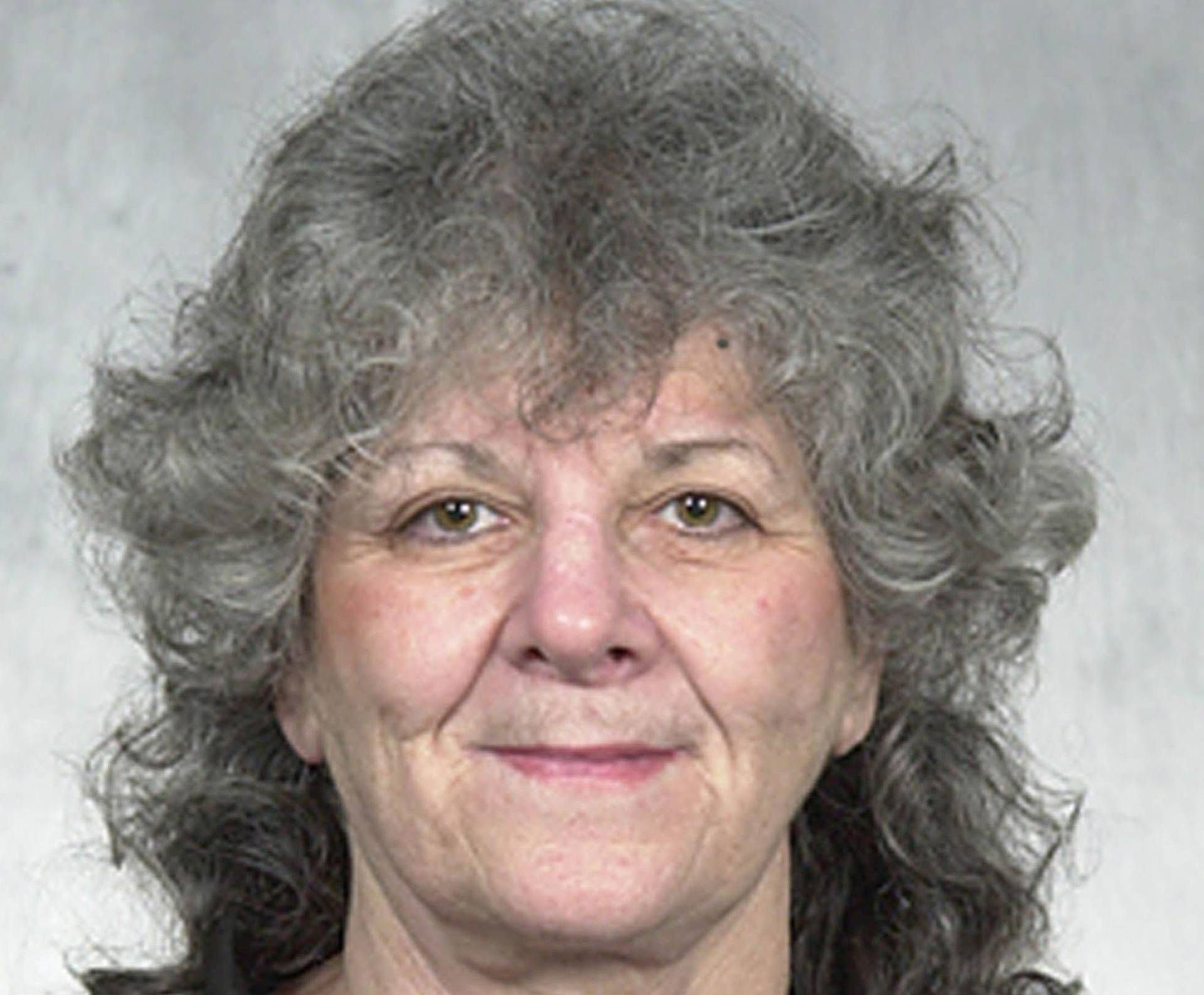
Israeli chemist and biologist Ada Yonath, winner of the Nobel Prize in Chemistry in 2009one of the leading figures of contemporary structural biology, protagonist of research that has contributed to revealing the molecular mechanisms of life and opening new avenues in research against bacterial infections, is died Monday 31 August at the age of 87 in Tel Aviv.
The news of his passing was reported by the Weizmann Institute of Science, the Israeli research institute based in Rehovot, about 20 km south of Tel Aviv, where Yonath had spent most of his career and where he continued to work until the last days of his life. Yonath had been honored by the Royal Swedish Academy of Sciences, first Israeli scientist to receive the Nobel, together with Thomas A. Steitz and Venkatraman Ramakrishnan, for studies on the structure and function of the ribosomethe complex molecular machinery responsible for the synthesis of proteins in cells.
Born in Jerusalem on June 22, 1939, Yonath had studied chemistry at the Hebrew University of Jerusalem, where she graduated in 1962 and then obtained a specialization in biochemistry. In 1968 he obtained his doctorate at the Weizmann Institute of Science, specializing in X-ray crystallography. After his doctorate he carried out research in the United States, at the Mellon Institute in Pittsburgh and at the Massachusetts Institute of Technology in Boston. In 1970 she returned to the Weizmann Institute, where she founded the first Israeli laboratory dedicated to protein crystallography. Here he undertook research considered extremely difficult at the time: determining the structure of the ribosome, an enormous complex made up of RNA and proteins that plays a central role in the functioning of every cell. The ribosome translates the information contained in the genetic material and uses it to build proteins. Understanding its structure therefore meant being able to observe one of the fundamental processes of life at a molecular level.
When Yonath began working on the problem, many scientists believed it was virtually impossible to obtain sufficiently stable and ordered crystals of such a large and complex biological structure. The Israeli researcher nevertheless decided to continue. After thousands of attempts, in 1980 she and her collaborators succeeded in producing the first crystals of ribosomes, an achievement that paved the way for their analysis using X-ray diffraction. In the following years Yonath developed innovative techniques to make the study of biological crystals possible. These include cryobiocrystallography, based on the rapid freezing of crystals at very low temperatures to reduce the damage caused by exposure to the powerful X-rays used in the experiments. The work culminated between the late 1990s and the early 2000s. In 2000, research groups led by Yonath at the Weizmann Institute and at a Max Planck Society facility in Hamburg succeeded in determining the complete three-dimensional structures of the two subunits of a bacterial ribosome. The result made it possible to study the functioning of the ribosome on a practically atomic scale.
The discoveries also had important consequences for medicine. In 2001, Yonath’s groups determined how several antibiotics bind to the ribosome of bacteria, preventing the production of proteins necessary for their survival. These studies allowed us to better understand the mechanism of action of some drugs and the processes through which bacteria develop resistance to antibiotics. Yonath’s research thus helped lay the foundations for an approach to the design of new antibiotics based on the molecular structure of their targets, in a field that has become increasingly important in the face of the spread of antimicrobial resistance.
The highest international recognition arrived in 2009. Yonath received the Nobel Prize in Chemistry together with Steitz and Ramakrishnan. She was the first Israeli woman to win a Nobel, the first woman from the Middle East to receive the award and, after 45 years, the first woman awarded the Nobel Prize for Chemistry.
Yonath had received numerous other international awards throughout his career, including the Israel Prize for Chemistry, the Wolf Prize in Chemistry, the L’Oréal-UNESCO Award for Women in Science and the Röntgen Medal. He was also a member of important international scientific academies and had received honorary degrees from around 40 universities around the world.
The president of the Weizmann Institute, Alon Chen, remembered Yonath as a scientist capable of choosing “a path that others considered impossible” and pursuing it for decades “with determination, curiosity and courage”. According to Chen, work on the ribosome has transformed understanding of one of life’s fundamental processes and opened up new possibilities in the fight against antibiotic resistance.
Yonath continued to carry out scientific activities until the end of his life. The Weizmann Institute underlined that, in recent days, the researcher continued to do research, publish scientific articles, run her own laboratory and maintain international collaborations.
His personal story began in conditions far from those of large scientific laboratories. Born and raised in Jerusalem in a family of modest economic conditions, she lost her father when she was still a child. Her mother had worked hard to allow Ada and her sister to continue their studies. As a girl, Yonath said she found books one of the main tools for fueling her curiosity. His career would take that curiosity from the small house in Jerusalem to the most important laboratories in the world, all the way to the Nobel Prize. (by Paolo Martini)