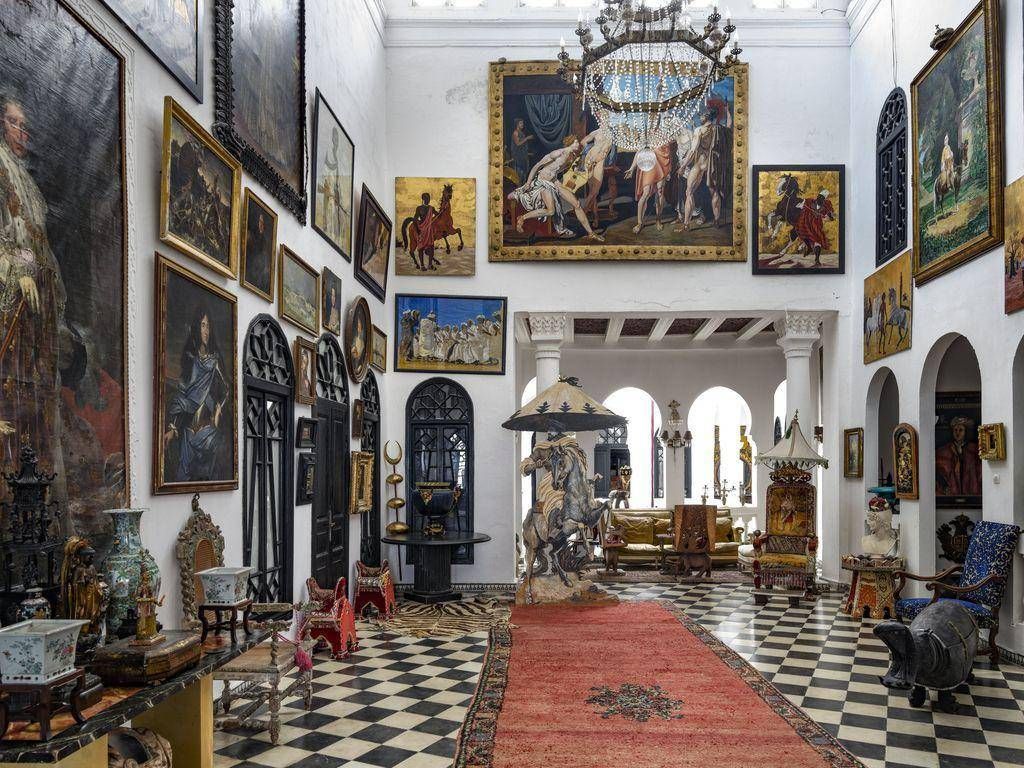
The new Di Meo Calendar brings the journey between Naples and the great cities of the world to Tangier. The photographs by Massimo Listri and the texts by 12 authoritative interpreters of Italian and international culture tell the story of two cities overlooking the Mediterranean, united by a vocation for meeting, exchanges and dialogue between peoples and cultures. Naples and Tangier, two cities that are only apparently distant. Two shores of the same sea, two ports, two places of passage and contamination, where over the centuries men, languages, religions, trade, arts and imaginations have met and transformed. This is the journey at the center of the ‘Di Meo Calendar 2027 – Naples Tangiers, Mediterranean Dialogues’, the new chapter of the cultural project conceived and curated by Generoso Di Meo, which for 25 years has been connecting Naples with Italian and international cities through art photography, history, art and culture, and which will be presented tonight at 8.30 pm at Moulay Hafid, the Palace of Italian Institutions. A touch of silver will be requested from guests.
The presentation was preceded by a welcome cocktail at the Tangier American Legation, a historic building which today houses a museum, a cultural and research center and which represents the only National Historic Landmark of the United States located outside American territory. An editorial project which, once again, goes beyond the dimension of a simple calendar to become a true collector’s item, capable of describing a place through images, stories and different points of view. The photographs are signed by Massimo Listri, a recognized master of architecture, art and interior photography, with whom Calendario Di Meo has collaborated since 2013. His lens enters the spaces of Tangier and restores its identity through a sequence of architecture, courtyards, gardens, museums, places of worship and historic homes. A city made of geometries, light, decorations, stratifications and memory.
The cover and images of the calendar lead the reader right into the Moulay Hafid Palace, a symbolic place of the Italian presence in Tangier, and then through the spaces of the city. From religious architecture to historic homes, from museums to gardens, up to the places that tell the cosmopolitan dimension of the city. It is therefore not just Tangier that is the protagonist, but the relationship created between Tangier and Naples. “The choice of Tangier – explains Generoso Di Meo – was born from the desire to connect two cities suspended between memory and modernity, separated by a short stretch of the Mediterranean but united by their ability to be a crossroads of cultures. The images of Massimo Listri and the texts of the authors who participated in the project help us to look at Naples and Tangiers not only for what they have been, but for what they continue to represent. Places in which differences can become dialogue”.