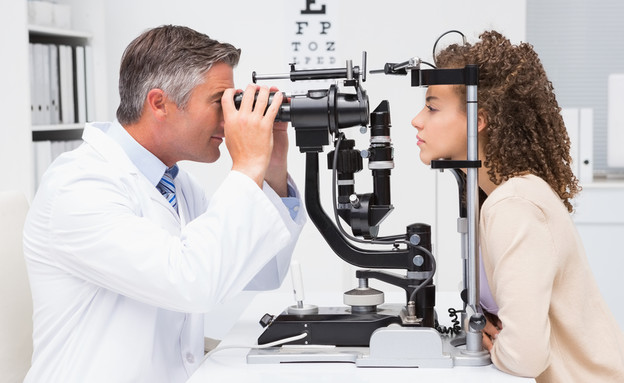
In the recent past, people came to the eye doctor mainly when their glasses no longer fit or when they were diagnosed with diseases such as cataracts. Today, thanks to advanced tests, more accurate treatments and a broad look at all parts of the eye, it is possible to identify problems earlier, adapt more accurate solutions and in some cases prevent significant deterioration down the road
Certain vision problems develop gradually, without us noticing. A little more blur when driving at night, a little more glare from car headlights, more eye rubbing due to dryness or allergy. Many assume that such changes are a natural part of age, from working in front of screens or from life itself, and only when the difficulty becomes a real challenge do they turn to testing.
But experts emphasize that vision problems do not always begin to develop when we feel them. They can start years earlier due to various problems in the cornea, lens or retina, intraocular pressure or the tear mechanism. Therefore, the challenge today is not only to treat a specific complaint, but to understand and diagnose the eye as a complete system.
“In many cases, the patient does not even know how to explain what has changed in him,” says Dr. Yosef Doev, a physician and senior ophthalmologist, medical director at Dr. Levinger Medical Centers in Jerusalem. “He can say, for example, that he has a kind of ‘curtain’ in his vision, that he gets blinded at night or that it is suddenly difficult for him to read. From this complaint, you need to understand where the problem really is.”
When the difficulty in seeing is just the end of the line
Blurring, glare, dryness or difficulty reading may feel like a distinct and clear difficulty, but in ophthalmology they can sometimes be a sign of a wide variety of completely different conditions. In one patient the source will be in the cornea, in another in the natural lens of the eye, in a third in the retina or intraocular pressure. Therefore, even those who come for an examination because of a desire to remove glasses or correct their vision, need a comprehensive diagnosis that looks at the entire eye and not just the number on the glasses.
This approach makes it possible to identify in time problems that have not yet turned into a real crisis. A young person may come because of a suspicion of keratoconus or a desire to remove glasses, a person in their 50s may complain of difficulty reading up close, and an older patient may come due to cataracts, night glare or a gradual decrease in visual acuity. In each case, the question is not only what is bothering the patient now, but what is behind the difficulty and what solution will serve him in the long run.
“The great advantage of our work is the ability to connect different areas of expertise,” emphasizes Dr. Duyev. “For example, in cataract surgery we are not just talking about removing the cloudy lens. We also talk about vision correction, checking which lens will serve the patient in the best way, is there a cylinder that needs to be addressed, what is the condition of the cornea and retina, and what does his daily routine look like, in order to understand which solution will really lead to an improvement in the quality of life after the operation.”
The step up in cataract treatment
Cataract surgery has long been more than just replacing a cloudy lens. In the past, the main goal was to restore the patient’s normal vision as much as possible. Today, thanks to advanced intraocular lenses (called premium lenses) and more accurate tests, it is possible in many cases to plan the surgery as part of a broader and more adapted vision solution.
Alongside normal lenses, there are today multifocal lenses that allow vision correction for different ranges and serial lenses that also fix a cylinder. This means that, in suitable cases, the dependence on glasses can be significantly reduced after the operation. “Once upon a time, the options in this kind of surgery were much more limited,” says Dr. Duyev. Today there are lenses that also provide a solution for distance, for working in front of a computer, for reading and for cylinder. This is a significant change in what can be achieved with such an operation.”
The same concept is also relevant to people in their 40s and 50s, who do not suffer from cataracts but begin to experience difficulty reading up close. In suitable cases, and after a careful examination, surgery to replace a clear lens can be considered – a procedure similar to cataract surgery and called CLEAR LENS. According to Dr. Duyev, the surgery usually lasts about 10-12 minutes, and many patients reach about 80 percent of the expected improvement the very next day, and within about a week they get closer to the final result.
Keratoconus: stop the problem before it progresses
In keratoconus, early diagnosis can change the course of the disease. This is a disease of the cornea that usually appears in adolescence or at a young age. In a normal state, the cornea has a convex and relatively regular shape. In keratoconus, it becomes thinner and gradually changes its shape, so that the light rays do not refract in it regularly. The result can be blurred and smeared vision that is difficult to correct with regular glasses.
“Keratoconus is a disease that is very important to diagnose in time,” emphasizes Prof. Boris Knizer, director of the corneal and corneal transplant unit at the Soroka Medical Center, and a senior surgeon at Dr. Levinger Beer Sheva (Seven Eyes). According to him, in some areas of the country the disease is more common, due, among other things, to a combination of genetic predisposition, allergies, and repeated eye rubbing. “Eye rubbing sounds like a small operation, but for those who have a tendency For keratoconus, it can exert mechanical force on the cornea and make the situation worse.”
The main treatment designed to stop the progression of the disease is called cross-linking, or strengthening the crosslinks in the cornea. During the treatment, vitamin B2 is dripped into the cornea and then expose it to ultraviolet light in a controlled dose. This combination encourages the creation of biochemical bonds that strengthen the cornea and stabilize it. “The goal is not to eliminate the disease, but to stop it in time,” Prof. Kneiser emphasizes. According to him, about 70 percent of children who are diagnosed with keratoconus may experience progression of the disease, so it is not worth waiting until the vision is significantly damaged. With appropriate treatment, and with avoiding rubbing the eyes, stabilization rates can reach about 90 percent.
Keep what is possible, take care of what is needed
Even when the corneal disease is already advanced, the goal is not necessarily to replace everything – but to preserve as much as possible of what is still healthy. In very advanced stages, when vision can no longer be improved with glasses, special contact lenses or stabilizing treatments, a corneal transplant may be required. But this field has also undergone a significant change in recent years.
Today, instead of replacing the entire cornea, in some cases it is possible to perform layered transplants that replace only the damaged layer and keep healthy parts of the original cornea. “The new technologies allow us to avoid complete replacement in some patients,” explains Prof. Kneiser. “The aspiration is always to preserve as much of the patient’s natural tissue as possible and replace only what is necessary.”
The same principle is also true in other situations, such as pterygium – the growth of tissue from the conjunctiva towards the cornea, which can cause irritation, discomfort, aesthetic damage and sometimes also deformity of the cornea and damage to vision. In appropriate cases, the tissue can be surgically removed, but according to Prof. Kneizer, even before arriving at the operating room, it is important to talk about prevention, and especially sun protection for those who work long hours outside.
Technology is important, but it does not replace patient cooperation
Innovative technology is an amazing tool, but the experts agree: it is not enough on its own to maintain eye health. “Surgery is one step in the treatment, but certainly not the last,” clarifies Prof. Kneiser. “After corneal surgery, for example, follow-up, correct use of eye drops, reviews and the cooperation of the patient are of enormous importance. Medical success is almost always the result of joint work.”
Vision is something that deserves a broader view: modern ophthalmology is not satisfied with spot correction of the vision, but examines the source of the problem, the condition of the entire eye, the patient’s lifestyle and the chance of preventing future deterioration. “We are doctors who come from different worlds, and this is precisely the advantage of our joint work,” explains Dr. Duev. For me, this is exactly the value of being able to connect the fields.”