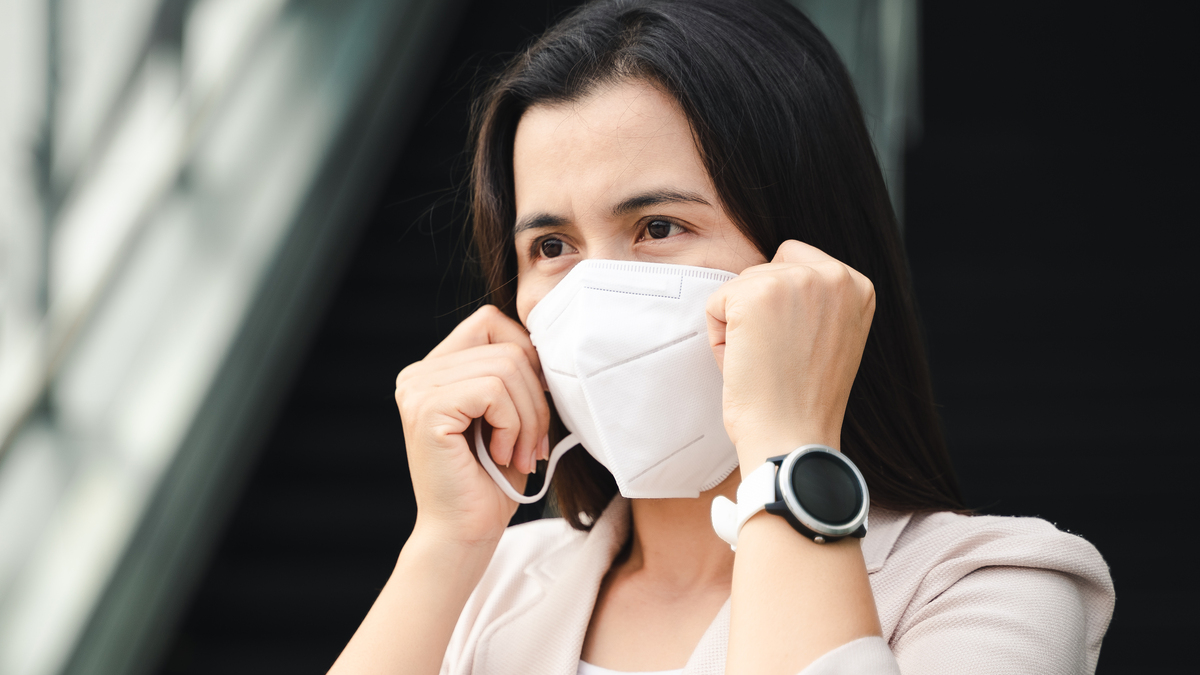
Urban smog damages mucous membranes and disrupts the respiratory microflora, requiring intensive protection solutions in addition to normal cleaning.
Every day, the respiratory tract is directly exposed to millions of fine dust particles, vehicle fumes and pathogens in the urban air. Recent studies show that air pollution not only affects the lungs but can also impact the respiratory microflora – an important part of the body’s natural protective barrier.
According to State of Global Air 2024, air pollution is linked to 8.1 million deaths in 2021, of which more than 700,000 are in children under 5 years old. For groups who regularly work on the road, exposure levels may be higher.
Air pollution affects the respiratory system. Image: Vecteezy
According to WHO, PM2.5 has a diameter of no more than 2.5 micrometers, equivalent to about 1/30 of the average width of a human hair. With this size, dust particles can penetrate deep into the lungs and some can enter the blood circulation. Before reaching the lungs, air must pass through the nose, throat and airways – the first places exposed to dust and exhaust gases.
After exposure to dust and smoke, cleaning the nose and throat helps dilute mucus and wash away dirt and some agents from the nasal cavity. However, cleaning dirt and taking care of the microbiological environment are two different mechanisms. Nasopharyngeal irrigation does not add beneficial bacteria to the respiratory microflora. Therefore, in addition to hygiene and limiting exposure, methods that directly impact the microbiological environment in the mucosa are being researched.
Images of LiveSpo Navax products and information about research related to supporting respiratory health. Image: LiveSpo Pharma
In recent years, the application of probiotics has opened up new approaches in respiratory care. Among them, there is LiveSpo Navax nasal spray probiotic spore technology, researched and developed by Vietnamese scientists.
This approach has been evaluated through randomized controlled clinical trials on a number of respiratory diseases in children. Studies published in Scientific Reports in 2022 and 2023 noted that LiveSpo Navax helps reduce viral load, shorten recovery time and improve symptoms in children infected with RSV and influenza. Another publication in Communications Medicine in 2025 showed that adding probiotic spores to the regimen helps reduce treatment time and antibiotic use in children with RSV pneumonia and bacterial co-infection.
Livespo Pharma accompanies Grab drivers through the “Smooth Breathing Station” campaign. Image: Livespo Pharma
To support health care for people who often have to work on the streets, this August and September, Livespo Pharma Co., Ltd. cooperates with Grab to launch the nationwide campaign “Respiratory Calming Station”. The program will bring nose and throat care consultation and LiveSpo Navax to more than 12,000 Grab drivers nationwide.
With the message “Smooth breathing – Add Livespo Navax”, LiveSpo continues to bring advanced scientific solutions on probiotic spores closer to the community, towards the mission: “For a future without antibiotics”.