Pregnant women suspected of amniotic leakage need to see a doctor immediately so that the doctor can determine whether there is really amniotic leakage or not and evaluate the condition of mother and baby. If it is determined that there is amniotic leakage, the pregnant woman needs to be hospitalized for monitoring by a doctor. Ultrasound is not the only method to diagnose amniotic leakage but mainly helps evaluate the condition of the fetus and the amount of amniotic fluid after determining the presence of amniotic leakage.
During an ultrasound, doctors often evaluate the amount of amniotic fluid using two parameters. One is AFI (amniotic fluid index), calculated by the total depth of amniotic cavities in 4 regions of the uterus; AFI less than 5 cm is considered oligohydramnios. Two is MVP (deepest amniotic cavity); When the deepest amniotic cavity is less than 2 cm, it is also considered oligohydramnios.
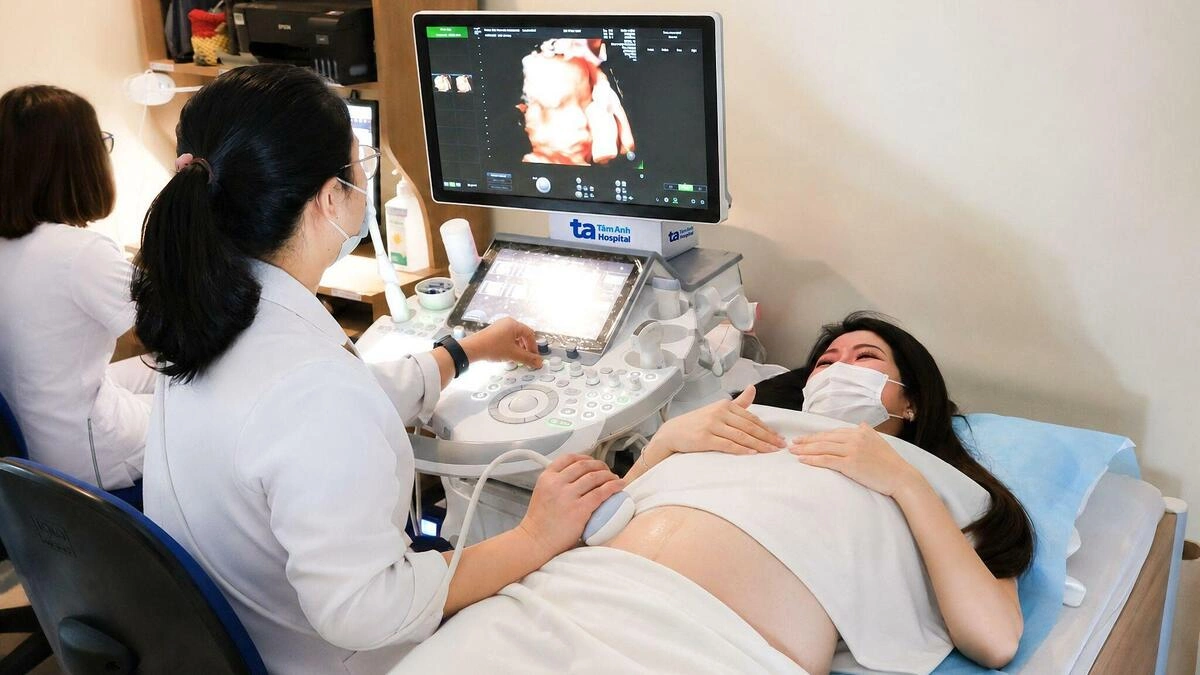
MSc. Dr. La Hong Chau does an ultrasound for a 32-week pregnant woman. Illustration photo: Tam Anh General Hospital
The amount of amniotic fluid can change depending on the level of amniotic leakage and the time from start. Therefore, ultrasound can be performed repeatedly during monitoring to evaluate the progress of amniotic fluid volume and check the development and condition of the fetus. In necessary cases, Doppler ultrasound is used to evaluate fetal circulation.
In addition to assessing the amount of amniotic fluid, on ultrasound, the doctor also observes the characteristics and echogenicity of the amniotic fluid. In some cases of severe amniotic infection or when the baby has fetal distress and meconium appears in the amniotic fluid, the image of the amniotic fluid on ultrasound may change, becoming more echogenic and brighter. However, these are supportive signs that should be evaluated in conjunction with the clinical status of the mother and fetus.
Pregnant women need to closely check for signs of labor or signs of infection. If the mother has no signs of infection or threat of premature birth, and the amount of amniotic fluid is still enough to continue the pregnancy, the doctor can continue monitoring and conservative treatment.
For pregnant women with amniotic fluid leakage, the risk of infection may increase due to the breakdown of the fetal protective barrier. Therefore, mothers need to be closely monitored for symptoms such as fever, abdominal pain, uterine pain, abnormal vaginal discharge or other signs suggesting infection.
If the pregnant woman has an infection or the ultrasound shows that the amount of amniotic fluid is no longer there, continuing to support the fetus will have many potential risks. The fetus is at risk of fetal distress, premature birth, neonatal infection, and even death. The mother may suffer from chorioamnionitis, endometritis, and sepsis, which can be severe and life-threatening. The doctor advises the family about terminating the pregnancy, either by giving birth naturally or by cesarean section.
The goal of monitoring is to balance the benefits of prolonging pregnancy (reducing the risk of premature birth) and the risk of infection and fetal distress if the pregnancy continues, thereby choosing a safe time and method of birth.
You should go to a medical facility that specializes in obstetrics to be examined directly by a doctor, perform diagnostic tests to confirm, and do an ultrasound to check the status of amniotic fluid. From there, the doctor advises on appropriate treatment to ensure maximum safety for the pregnancy.