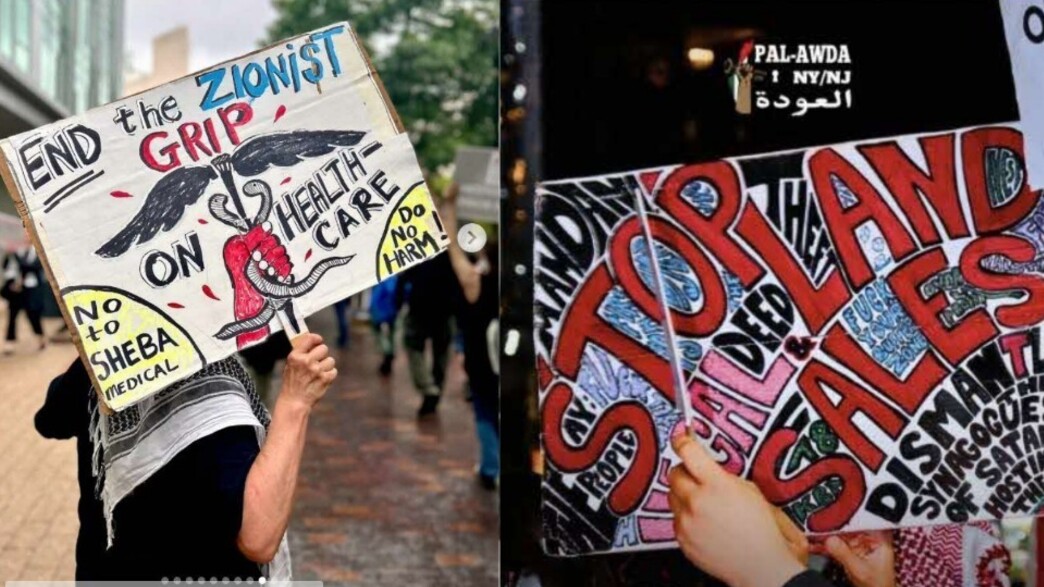
“It is better not to answer the question if you are Jewish anymore, because your name sounds too Jewish”: This is one of the testimonies that emerges from a new study by the Anti-Defamation League (ADL), which is published today (Wednesday) and reveals a disturbing reality of fear, discrimination and exclusion among Jews in the American health care system. The study describes staff members who are afraid to reveal their identities, medical students who fear harm to their professional future, and patients who wonder if their Jewishness might affect the treatment they will receive.
The study, titled “Anti-Semitism in the American Health Care System,” includes three qualitative reports based on interviews and focus groups conducted by the Anti-Defamation League’s Rating and Evaluation Institute. 115 people participated in it: 31 Jewish medical students, 44 health professionals and 40 Jewish patients. The study involving students was conducted in collaboration with the American Jewish Medical Association (AJMA).
One of the most striking testimonies came from a health professional. He said that he was advised to hide his Jewishness for fear that it would affect the treatment of patients. “On one occasion I was actually told never to reveal that I was Jewish, because this could affect the treatment of patients,” he said. According to him, he was told: “Maybe it’s better not to answer this question anymore, and just avoid it somehow, because your name sounds too Jewish.”
“Afraid of damaging the professional future”
Jewish medical students described a fear of harming their chances of admission to studies, grades and opportunities to be admitted to internships. Some of them said that they hide or downplay their Jewish or Israeli identity for fear of the consequences for their professional future. Others reported anti-Semitic statements, social isolation and a lack of understanding of Jewish identity and anti-Semitism in educational institutions.
Professionals who already work in the health system also described doubts about revealing their identity. Some of them said that they were considering whether to wear Jewish symbols, to speak openly about their Judaism or to request adjustments for their religious needs. Others reported manifestations of anti-Semitism from colleagues, superiors and patients, as well as within professional networks.
The patients’ testimonies raised a concern that revealing their Jewish identity would affect the treatment and medical treatment they would receive. Some of them even said that they were looking for medical staff members who felt safer in their presence. Along with this, they described difficulties in getting kosher food, in accessing rabbinic services in hospitals, and in being able to observe Shabbat during hospitalization or treatment.
“Anti-Semitism is taking root in the institutions that train the next generation of doctors”
“When a person enters a hospital, he is placing his health, and sometimes his life, in the hands of another person. The last thing he needs to worry about is whether the fact that he is Jewish will affect the treatment he receives,” said Jonathan Greenblatt, the global executive director of the Anti-Defamation League. This undermines the foundations on which the health system should be based: compassion, trust and the promise that every person will be treated with respect.”
“We see signs that anti-Semitism is taking root precisely in the institutions responsible for training the next generation of doctors and caring for our communities,” said Evelyn Shakman, CEO of the American Jewish Medical Association. “Jewish medical students describe how they hide their identity, fear reprisals and wonder if they will be able to develop a professional career without facing discrimination.”
She further added that “these experiences should concern anyone who believes in the integrity of the medical profession. Medical schools have the responsibility not only to train doctors for the future, but also to ensure that prejudice and discrimination have no place in the environments where they study, specialize and ultimately treat patients.”
At the same time as the studies, the Center for the Study of Extremism of the Anti-Defamation League published another document, which deals with the activity of anti-Israel groups in the American health care system. According to the organization, groups including Healthcare Workers for Palestine and Doctors Against Genocide organized protests at hospitals and professional conferences, distributed training materials for organizing protests and put pressure on medical institutions not to host speakers identified as Zionists. The Anti-Defamation League claims that some of the activity crossed the border and also included the glorification of violence and terrorist organizations.
Along with the hard evidence, the participants also described medical institutions that provided support to Jewish employees and patients, among other things through supportive faculty and colleagues, Jewish employee networks, rabbinic services, kosher food and adjustments for religious needs.
Following the findings, the Anti-Defamation League and the American Jewish Medical Association of Hospitals are calling on medical schools and other health institutions to act against anti-Semitism, strengthen oversight and accountability mechanisms, and ensure that Jews and Israelis can receive treatment, work and study without fear of discrimination. Both organizations called on Jewish employees and patients to report anti-Semitic incidents and make their voices heard.
4beginnt.com alternatives – similar sites like 4beginnt.com
Tap Bio
Tap Bio: A Link In Bio Tool for Everything You Share
Internet Archive: Digital Library of Free & Borrowable Texts, Movies, Music & Wayback Machine
Tap Bio · GitLab
Tap Bio
https://500px.com/p/tapbio/
Tap Bio – Listen Free on Audiomack
Client Challenge
Tap Bio, by Tap Bio
5194672
Subscribe to Tap Bio on Gumroad
Rodo – Restauracja Bawełna
Przerwa
Centrum Konferencyjne Synergia – ul. Wólczańska 128/134 , 90-527 Łódź – Sale konferencyjne – Confero.pl
Przerwa Catering & Design (domy weselne) – Łódź
One moment, please…
Wildz Casino Aciklamasi 2024 Adim 1 100 Eklenen Bonus 200 %100 Ucretsiz Dondurme
Hollywoodbets Hesabi Zahmetsiz Kayit Rehberi
Bangladeste Canli Pinco Casino Yerel Kumarhane Ve Cevrimici Oyun
Gfvltjinou
Bitstarz Casino Ortak Sistemi
Tamamen Ucretsiz Endikasyon Yukari Eklenen Bonus Guney Afrikadaki Canli Bahis Casino Pinco Para Yatirmadan Web Tabanli Casinolar Subat 2024
Fjvv
saleweselne.com Competitors & Similar Websites | Siteprice.org
Żegnamy lato na ROCKOWO! – Restauracja Len i Bawełna
Restauracja Przerwa