SM league Returning after a 12-year hiatus, Jokerit has started its season with two losses. The winning goal shootout against Sport resulted in one point, but Lukko showed his place on Saturday, and the 2–7 loss left no explanation.
Now it has become clear to everyone that building a team of Jokers has failed. Even before the start of the season, the disproportion of the team could be seen. On the scale of the SM League, a lot had been invested in attack, less in defense and little in goalkeeping.
The truth has been even harsher. Based on two games, the Jokers have a screaming goaltending problem. Twosome Wine Vehviläinen and Olle Erikson Ek have not been successful behind the current defense of the Jokers.
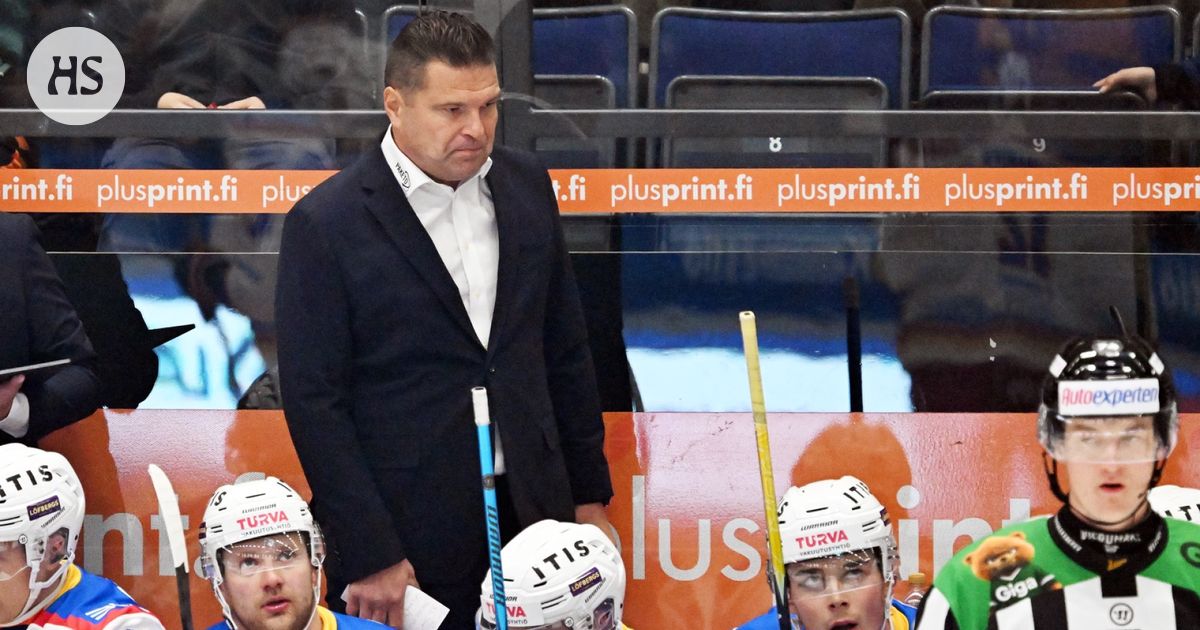
In addition, it is worth considering whether the head coach Tomek Valtonella prerequisites to coach at this level.
Valtonen’s quick dismissals may be necessary, but they do not leave a good impression of the Jokeri club management. Two years ago, Jokerit moved after the first Mestis match of the season Tero Määtä from head coach to assistant coach and hired Risto Dufvan as head coach.
Second quick kicks in such a short time would already be a trend.
If the Jokerit decides to change the coach, the club may also need to consider whether the sports management is in sufficiently stable hands.
Sports director Olli-Pekka Yrjänheikki has been on his mission throughout the Joker’s Mestis match, but it could be seen in advance that there were flaws in the team’s construction. They are becoming concrete now.
The Jokers also have a couple of other problems that affect how the team is built and how the club’s near future is built. Those problems are related to money.
Jokers started selling individual tickets for this season’s matches exceptionally early in the summer. It was a way to keep company in people’s thoughts, but also a way to get cash flow.
Jokers only had a cash flow problem, which was solved by selling bulk tickets well in advance.
The clubs of the SM league live on the income of the previous season during the summer quiet season, i.e. the playoff money and the last installments of TV contract money and sponsorship contracts. That’s how everyone works. From big clubs like Tappara to Jukurei.
Jokers, who played in Mestiš, did not have this kind of cash flow.
That doesn’t mean the Jokers’ finances are in bad shape. The club only had a cash flow problem, which was solved by selling bulk tickets in good time.
It, in turn, affects the current period’s cash flow. Part of the income has already been consumed in the summer.
This situation will be corrected next summer, when the Jokers have their first league season behind them.
Slightly a similar type of problem is the contract with Veikkaus. Jokerit signed a contract with the betting monopoly a year ago, which extends until 2031.
The Jokers were in a hurry to get a lucrative contract because they needed money to play in Mestis. The team was really expensive by the standards of the second level and the expenses were high, and the monopoly company Veikkaus was still the only possible betting partner at that time.
According to insider information, Jokerit received around half a million euros from Veikkaus for the Mestis season. In the league, the annual value of the contract rises to 700,000 euros.
When the betting market opens up next year, Jokerit will be behind compared to other big clubs in that regard for the first few years. According to informed estimates, giants such as HIFK and Tappara can make betting partnerships worth more than a million.
In the coming seasons, Jokerit will therefore give other big clubs equalization equal to the salary of one first-tier player due to their Veikkaus contract.
Major the financial problem is the home arena in Pasila.
Belonging to the owners of the arena Heikki Viitikko is also Jokerie’s major owner, but Jokerie’s lease agreement is with the arena operator Live Nation.
It is known that Live Nation would not have wanted Jokers in the arena at all. The hockey team was just a necessary compulsion imposed by the arena owners.
Live Nation’s people at the European headquarters of the global events giant were so ignorant about hockey arenas that they thought the ice was melted after every game, even though in Pasila Arena, Tampere and all NHL arenas protective plates are installed on the ice before other events during the hockey season.
For the Jokers, the contract with Live Nation is anything but cheap.
In addition, Jokerit suffers from the times of the construction of the arena Harry Harkimon of errors.
When Harkimo did not get enough outside funding for his arena in the mid-1990s, he sold the arena’s premises to companies and private parties.
At the same time, the neighboring club HIFK runs all the restaurant operations and receives side sales revenue at every event.
Everywhere else, for example in the Nokia Arena, the arena company owns the premises. Five- or ten-year leases are concluded for them.
For example, in Tampere, Ilves and Tappara both have pitches that are part of their lease and that the clubs can sell not only for their own games but also for other events.
When this year the European Volleyball Championships and then the World Floorball Championships will be played in Tampere Areena, Ilves and Tappara will get additional income by selling their tickets to those events.
Jokers have no such advantage. Jokers can only sell their tokens to their own games.
At the same time, the neighboring club HIFK runs all the restaurant operations in an almost demolished old ice rink in Helsinki, and receives sales proceeds from every event. In Pasila Arena, that money goes to Restelli.
Jokers the return to the SM league was a jackpot for the league, but for many reasons difficult years are ahead for the narrrilud.
Therefore, building the team should have been a success. It would have been one less sorrow.