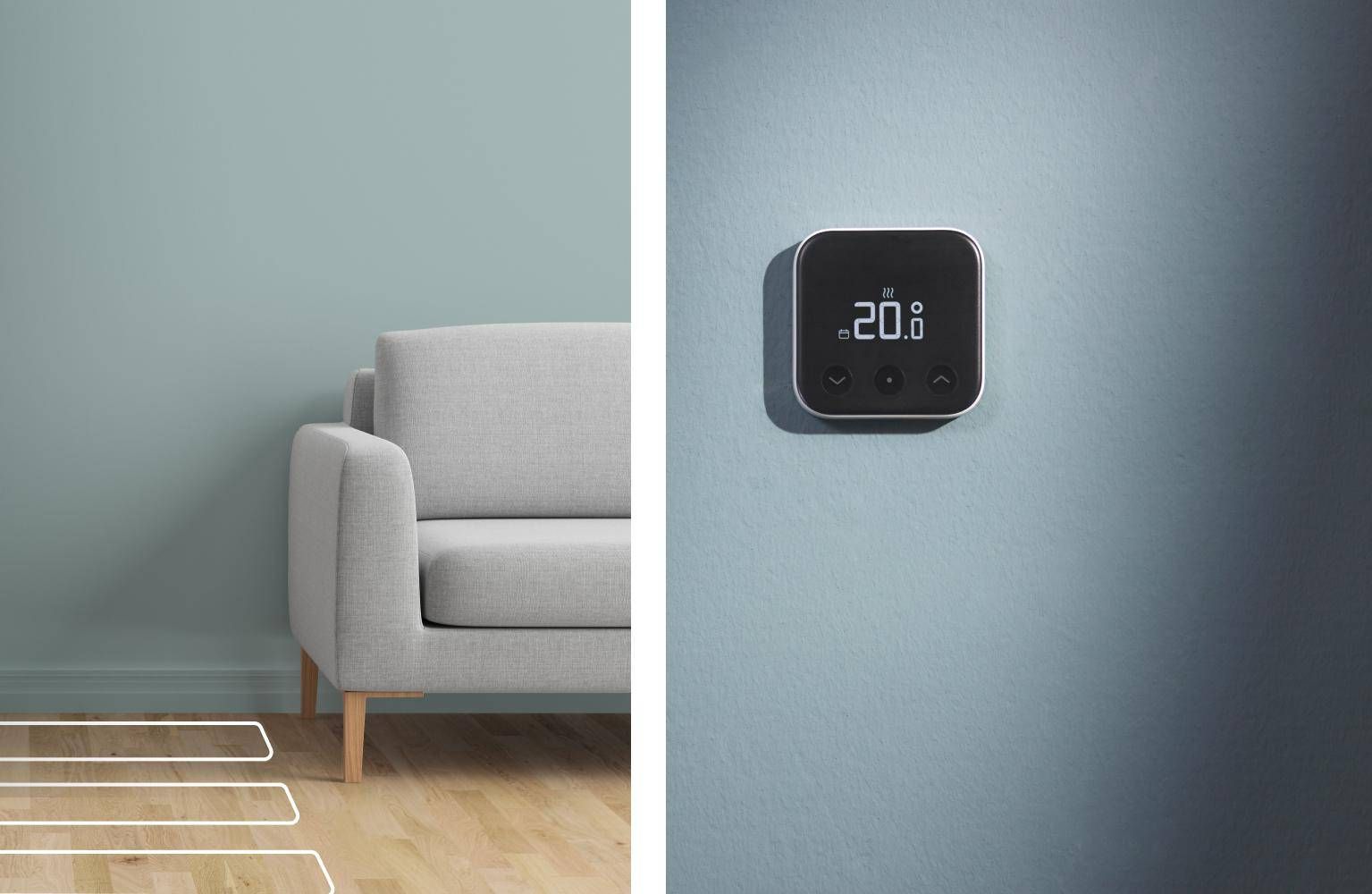
The European home energy management market is experiencing a phase of structural consolidation, driven by the need to mitigate price instability and accelerate the transition towards renewable sources. tado° has made it official that it has achieved operational profitability, a milestone supported by the connection of over 5.5 million smart thermostats across the continent. This step marks the evolution of the company from a hardware manufacturer to a complex software platform, capable of managing heating, cooling and electricity consumption in a coordinated way. “The strong growth of recent years and our leadership position in the European market have allowed us to achieve profitability as a company“, said Johannes Schwarz, co-founder and CEO of tado°, underlining how financial independence allows us to accelerate the group’s technological expansion.
The current technological approach combines the use of smart thermostats with the analysis of dynamic electricity tariffs, allowing consumption to be automatically shifted towards the most economical and efficient time slots. This automation, designed to adapt to the variety of European heating systems, from heat pumps to gas boilers, up to district heating, allows an average reduction in consumption estimated at around 22%. The integration of these tools transforms the home into a real energy hub, where room-by-room control optimizes the use of the resource without compromising living comfort. Christian Deilmann, co-founder of the company, highlighted the centrality of the debate on energy security by observing that “the cheapest kilowatt hour is the one you never consume“.
From a long-term perspective, the company strategy aims to integrate heating, solar energy and electric vehicle charging into a single intelligent system driven by artificial intelligence. In parallel with the operational strengthening, a participation program was introduced that makes employees virtual shareholders, promoting a culture of shared ownership. With the increase in the share of wind and solar energy in the electricity system, the ability to balance supply and demand through smart technologies becomes a fundamental requirement for grid stability and household savings.