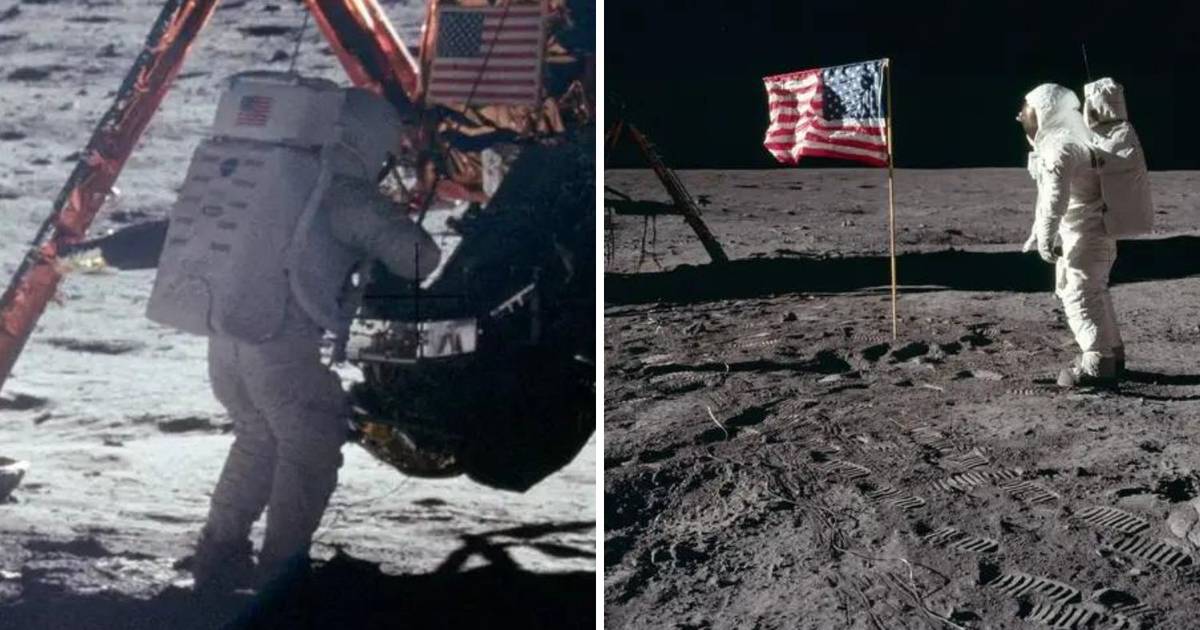
Soon, NASA plans to launch the Artemis 2 mission, which will send four astronauts on a trip around the moon. Their flight around our closest space neighbor will pave the way for a new landing, and in the long term, for the establishment of a permanent lunar base. The Artemis program required years of work, thousands of people and has cost around 86 billion euros so far. However, many people wonder why America is going back to where it was. was.
More than 50 years ago, the American Apollo missions made history when man first stepped onto the surface of the Moon. After a total of six landings, the Moon appeared to be off the target list. The BBC analyzes why the US invests so much time, effort and money in returning to our natural satellite?
Valuable resources hidden under the dust
Although Mjesa’s surface may seem dry, dusty and barren, it hides much more.
- The Moon has the same elements as the Earth – claims Professor Sara Russell, a planetary scientist from the Natural History Museum in London, for the BBC.
- One example is rare earth metals, which are very scarce on Earth, and there could be areas on the Moon with sufficient concentration for mining – she added.
In addition, there are metals like iron and titanium, as well as helium, which is used in everything from superconductors to medical equipment. However, the most valuable resource is the most depletable: water. Water is the key to life on the moon. In addition to providing drinking water, it can be separated into hydrogen and oxygen, producing air for breathing and rocket fuel. Scientists believe that significant amounts of water ice reside in permanently shadowed craters at the Moon’s poles.
The New Space Race: USA vs. China
The American Apollo missions of the 1960s and 1970s were fueled by the space race with the Soviet Union. This time, the main competitor is China. China’s space program is advancing rapidly; they successfully landed rovers on the moon and claim that they will send people by 2030.
Being the first to plant a flag in the lunar dust still brings prestige, but now the key is where you plant it. The US and China want access to resource-rich regions, which means securing the best possible terrain. Although the United Nations Outer Space Treaty of 1967 says that no country can own the Moon, the rules on resource exploitation are not so clear.
Additionally, NASA has a long-term goal: to send humans to Mars during the 2030s. Given the technological hurdles, that’s an ambitious deadline, but the Moon is the first step. By establishing a permanent base, NASA can perfect the technology to provide air and water, produce energy, and build habitats that protect against extreme temperatures and dangerous space radiation.
The “From the Moon to Mars” plan also includes the development of new technologies, such as the Space Reactor-1 Freedom mission, a nuclear-powered spacecraft that should shorten the travel time to Mars.
The moon as an archive of Earth’s history
Scientists are eagerly awaiting new samples from the Moon. The rocks brought back by the astronauts of the Apollo missions completely changed our understanding of the Earth’s satellite.
- They told us that the Moon was formed in an incredibly dramatic event, when a body the size of Mars collided with the Earth, and the pieces that separated formed the Moon – explains Russell.
Since the Moon was once part of the Earth, it keeps a record of 4.5 billion years of our planet’s history. With no tectonic plates, wind or rain to erase these traces, the Moon is a perfect time capsule.
- The Moon is a fantastic archive of the Earth. To get a new round of rocks from another area of the Moon would be fantastic – says Russell.
Inspiration for the 21st century
The grainy, black-and-white footage of the Apollo missions turned the space dream into reality. Although few became astronauts, many inspired by these events chose careers in science, technology and engineering. The Artemis missions, which will be broadcast live in 4K resolution, are expected to inspire a new generation. The crew of the Artemis 2 mission, which includes Christina Koch, the first woman to fly around the moon, Victor Glover, the first black person, and Jeremy Hansen, the first non-American, symbolizes a new, more diverse era of space exploration.
https://oslo-takmester.mobirisesite.com/reparasjon-i-oslo.html
https://oslo-takmester.mobirisesite.com/blikkenslager-i-oslo.html
https://oslo-takmester.mobirisesite.com/pris-nytt-tak-i-oslo.html
https://oslo-takmester.mobirisesite.com/pris-takfornying-i-oslo.html
https://oslo-takmester.mobirisesite.com/pris-taktekking-i-oslo.html
https://oslo-takmester.mobirisesite.com/pris-taksikring-i-oslo.html
https://oslo-takmester.mobirisesite.com/pris-reparasjon-i-oslo.html
https://oslo-takmester.mobirisesite.com/pris-blikkenslager-i-oslo.html
https://oslo-takmester.mobirisesite.com/socialmedia.html
https://oslo-takmester.mobirisesite.com/businesslistings.html
https://oslo-takmester.e-monsite.com/pages/nytt-tak-i-oslo.html
https://oslo-takmester.e-monsite.com/pages/takfornying-i-oslo.html
https://oslo-takmester.e-monsite.com/pages/taktekking-i-oslo.html
https://oslo-takmester.e-monsite.com/pages/taksikring-i-oslo.html
https://oslo-takmester.e-monsite.com/pages/reparasjon-i-oslo.html
https://oslo-takmester.e-monsite.com/pages/blikkenslager-i-oslo.html
https://oslo-takmester.e-monsite.com/pages/pris-nytt-tak-i-oslo.html
https://oslo-takmester.e-monsite.com/pages/pris-takfornying-i-oslo.html
https://oslo-takmester.e-monsite.com/pages/pris-taktekking-i-oslo.html
https://oslo-takmester.e-monsite.com/pages/pris-taksikring-i-oslo.html
https://oslo-takmester.e-monsite.com/pages/pris-reparasjon-i-oslo.html
https://oslo-takmester.e-monsite.com/pages/pris-blikkenslager-i-oslo.html
https://telegra.ph/Hvem-er-en-erfaren-blikkenslager-i-Oslo-som-leverer-arbeid-av-topp-kvalitet-03-27
https://telegra.ph/Hvem-tilbyr-profesjonell-taksikring-i-Oslo-til-riktig-pris-12-12
https://telegra.ph/Hvem-kan-levere-profesjonelt-blikkenslagerarbeid-i-Oslo-til-riktig-pris-03-27