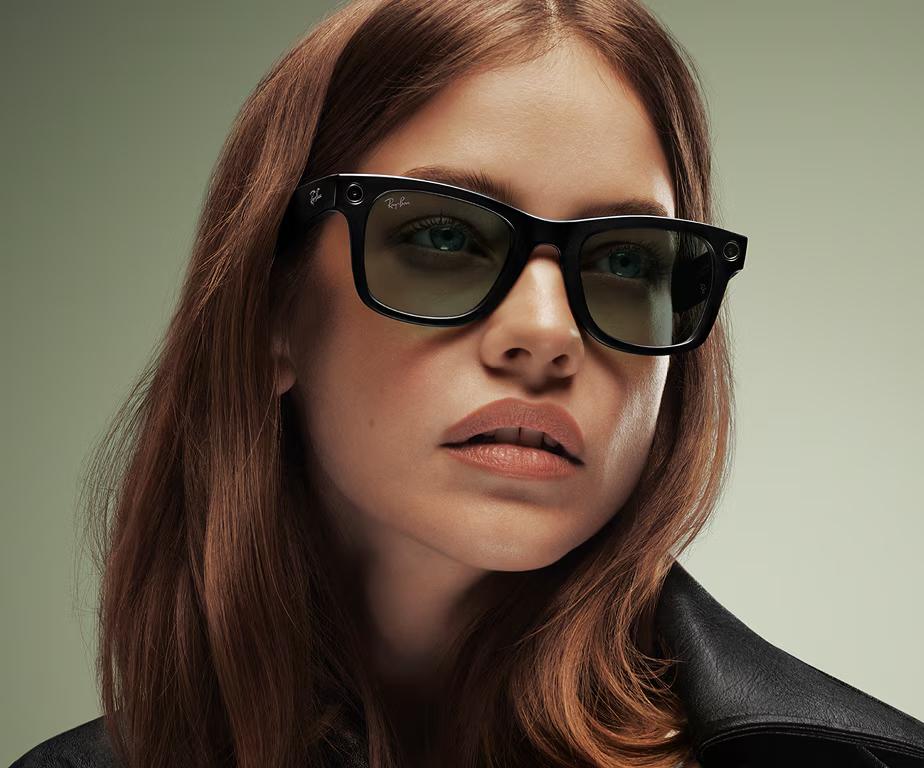
As reported by the Financial Times, Meta is developing a new generation of smart glasses equipped with advanced continuous sensing capabilities. The prototype, called “super sensing”, would be able to capture images every few seconds and record audio streams in the background. The technological objective is to allow integrated artificial intelligence to process environmental information in real time, responding to user needs without requiring manual activation for each individual command.
The management of multimedia flows represents one of the most complex aspects of the project, especially due to the implications on data privacy. To limit legal issues and the impact on infrastructure, the hypothesized system would not preserve the original video or audio recordings, nor make them accessible to the user. The device would instead exclusively extract the metadata of visual and audio information, sending only these synthetic packets to central servers for querying by the virtual assistant. Although this architecture reduces the exposure of raw files, the industrial group is still evaluating the use of this information for training its artificial intelligence models.
The choice to keep the LED indicator off during continuous detection mode introduces an element of debate with respect to recent corporate security policies. Recently, in fact, the holding company introduced a software update aimed at blocking the camera of models already on the market if the signaling LED is tampered with or covered. On the contrary, a strategic document from July 2025 highlights the desire to reserve the indicator light only for explicit acquisitions initiated by the user, excluding it during passive environmental analysis, such as scanning a text, to prevent the surrounding public from becoming accustomed to the constant presence of the visual signal.
The transition towards stably active wearable devices is part of the long-term strategy outlined by the group’s top management. During the presentation of the financial results for the first quarter of 2026, CEO Mark Zuckerberg confirmed his intention to transform smart glasses into truly ubiquitous personal assistants, capable of operating autonomously throughout the day. The official statements from company spokespersons reiterate the commitment to the development of technologies integrated into everyday life, specifying that the protection of privacy will remain a fundamental pillar in the design of the final hardware, which will necessarily have to reconcile social acceptance with the evolution of digital services.
thestarbrisbane • WatchMaker: Watch Faces for Wear OS & Apple Watch
exibart.com
Chordie Guitar Chords and Lyrics
Connect.gt
thestargoldcoastcasino – Public Profile – NeocoreGames
thestargoldcasino's Profile | Beautifully Diverse Stock Photos
wrestpointcasino on Brownbook.net
264294
Wrestpointcasino
wrestpointcasino , Car Parts , Phnom Penh , Phnom Penh , Cambodia , adpost4u.com Free Classifieds
wrestpointcasino | Profile
spielbankbadfussing's profile
Spielbankbadfussing
spielbankbadfussing at My poetic side
About
Substance 3D Community Assets
Free Checklists By spielbankbadwiessee
Spielbankbad Wiessee (Spielbankbadwiessee) – Contributor Profile on Dreamstime
spielban-badwiessee Public Profile. Anybody can publish or broadcast IP cameras and webcams on CameraFTP.
Profile – spielbankbadwiessee – Melanoma Research Foundation
spielbankfeuchtwangen | Moshpyt
spielbankfeuchtwangen
spielbankfeuchtwangen | VelvetJobs
spielbankfeuchtwangem
spielbankfeuchtwangen – Campfire